











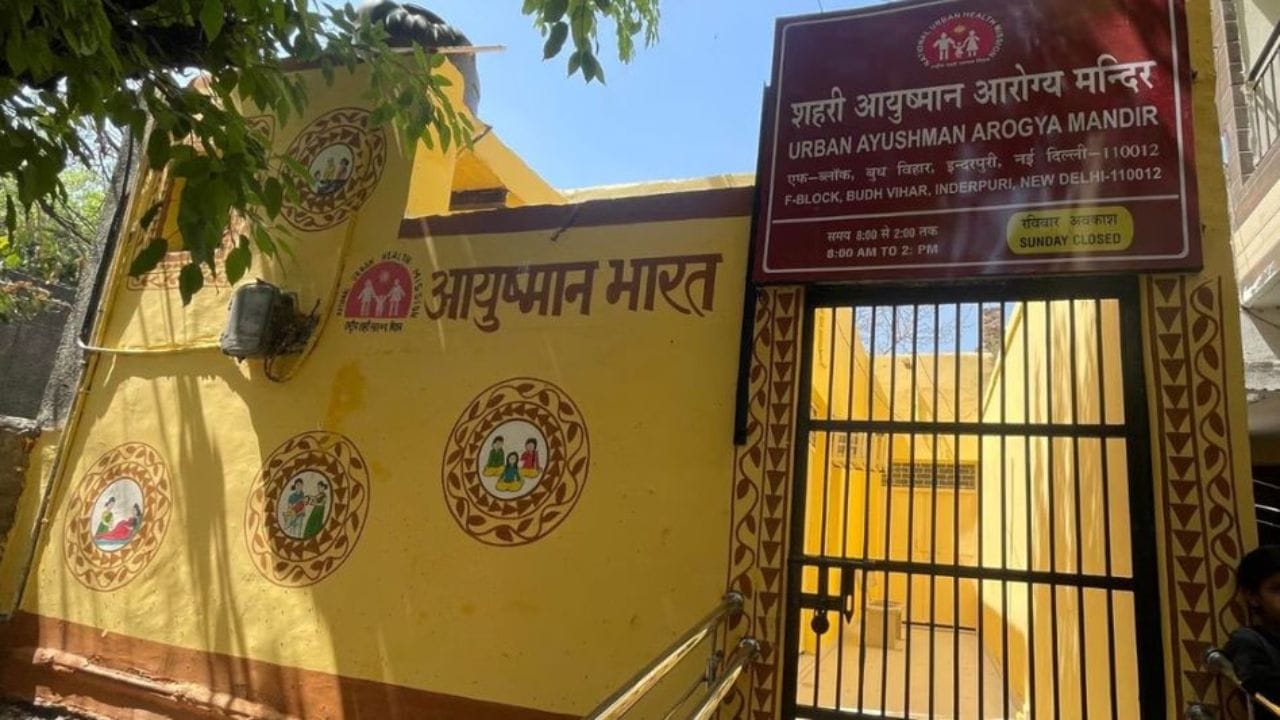
Delhi authorities have approved a major expansion of primary healthcare by converting vacant Municipal Corporation of Delhi (MCD) buildings and dispensaries into Ayushman Arogya Kendras. The move will bring essential medical services closer to neighbourhoods across the capital, with roughly 400 centres earmarked for MCD properties as part of a wider plan to establish 1,100 centres citywide.
Ayushman Arogya Kendra Delhi to be located in vacant schools and community centres
Officials said around 250 Ayushman Arogya Kendras are due to open by March. Most of these will occupy empty school buildings and underused community centres in densely populated areas, making it easier for residents to access free primary care without long travel times.
Manish Chaddha, chair of the MCD Medical Aid and Public Health Committee, noted that previous neighbourhood-level clinics offered limited services and often lacked medicines. The new Ayushman Arogya Kendras will provide a broader range of primary healthcare services and better resourcing through a partnership between the central and Delhi governments and the municipal corporation.

Under the scheme, each centre will receive financial assistance from the Delhi government. The package allocates Rs 25 lakh per centre for establishment, including Rs 12 lakh for medical equipment and diagnostics and Rs 2 lakh for furniture and other purchases. The municipal corporation retains responsibility for overall primary health management and will operate the centres as part of its network.
Authorities identified 122 community centres that are either vacant or show minimal bookings, and many MCD school buildings are currently unused. By reusing existing structures, the programme seeks to limit construction costs and speed up roll-out.
The Ayushman Arogya Kendras will offer 12 types of screening and consultation services free of charge, covering common primary care needs. Officials expect the centres to reduce pressure on larger hospitals and improve early detection and treatment of illnesses at the local level.
Health administrators argue that the initiative will strengthen the municipal primary health infrastructure and address accessibility gaps in neighbourhoods that previously relied on small, under-resourced clinics. By embedding care in community sites such as schools and local halls, the programme aims to reach vulnerable populations including the elderly and those with limited mobility.
Implementation will be phased, with priority given to areas with higher population density and limited nearby health facilities. Municipal authorities will coordinate staffing, equipment procurement and community outreach to ensure residents know where services are available and what the centres provide.
Local leaders welcomed the plan as a pragmatic use of idle public space that delivers tangible health benefits. If roll-out proceeds as planned, Delhi’s network of Ayushman Arogya Kendra Delhi centres could serve as a model for other cities seeking rapid, low-cost ways to expand primary services by repurposing existing municipal assets.
Officials say the new centres will not only provide consultations and screenings but will also help integrate municipal primary care with broader state and national health programmes, ensuring referrals and continuity of care when more advanced treatment is required.
Key Takeaways:
- Delhi will repurpose vacant MCD schools and community centres to open Ayushman Arogya Kendra Delhi, improving access to primary care.
- Approximately 400 centres will be set up in MCD buildings, with 250 scheduled to open by March and 1,100 planned overall.
- Each centre receives government support of Rs 25 lakh for setup plus funds for equipment and furniture; 12 free health checks and consultations will be available.
- The initiative aims to strengthen the municipal primary health network and bring free basic medical services closer to residents.








