











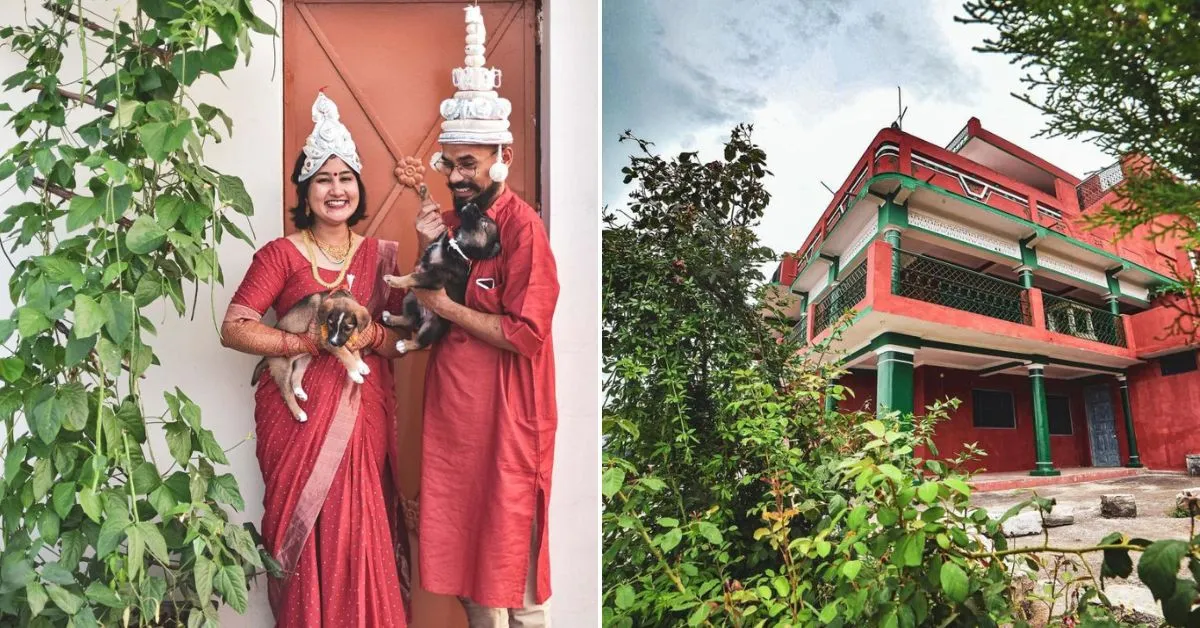
Set amid deodar and oak-pine forests at roughly 2,000 metres above sea level, the Doi Homestay in Nathuakhan, Uttarakhand, has built a reputation for low-impact hospitality and home-cooked meals drawn from the couple’s own orchards and kitchen garden. Sambit Dattachaudhuri and Disha Kapkoti, the proprietors, opened the homestay during the pandemic after funding and testing their concept through a travel company that ran curated slow-travel road trips across the Himalayas.
Doi Homestay Uttarakhand as a model for sustainable stays
The couple began hosting long-term guests in July 2020 and later extended services to shorter stays. Their experience as guides on multi-day trips to Sikkim, Meghalaya, Himachal and Kashmir helped them refine the guest experience and understand the economics of small-scale hospitality. Those trips also provided the financial runway to lease and renovate an old house in Nathuakhan in late 2019.
Unlike many commercial properties, the Doi Homestay seeks to reduce its environmental footprint. The site includes orchards of apricots, peaches, plums, apples and pears, a backyard tea garden cultivating Uttarakhand tea, and beds of vegetables, herbs and strawberries. The owners aim for self-sufficiency, using produce from the property in their continental and regional menus. An in-house cook prepares local dishes while Sambit and Disha contribute Italian and Middle Eastern items when ingredients permit.

Practical sustainability extends to waste management. With no municipal plastic collection in the village, the homestay gathers plastic waste and sends it to an upcycling plant in Haldwani. The couple describe the effort as ongoing rather than complete, but it is a deliberate part of their operational strategy.
Accommodation is intimate: five rooms named after fruits in the orchard—Malta, Kiwi, Plum, Apple and Apricot—each suited for one to two guests. The property is remote; guests travel at least 15 kilometres to reach the nearest town with restaurants. To address this, packages include three meals a day. Rates for long-term single occupancy run from Rs 33,000 to Rs 39,000 for 30 days, and short-stay pricing starts at Rs 2,100 per person per day.
Views of the greater Himalayan range are a consistent highlight. Guests report waking to vistas of snow-clad peaks such as Trishul, Nanda Ghunti, Chaukhamba and Neelkanth, and using nearby trails for hikes to villages, streams and waterfalls. Repeat visitors praise the food, hospitality and safety of the homestay; several guests emphasise the value of local interactions and the chance to experience village life.
Beyond hospitality, the founders are expanding their local offering with plans for a pizzeria and bakery at Seetla, around seven kilometres from the homestay. The move fits their model of leveraging local produce and skills while creating additional attractions for visitors and employment for nearby communities.
The Doi Homestay’s story illustrates a pragmatic route to rural tourism that blends entrepreneurship with environmental care. By financing the project through curated travel services and building operations around local resources, Sambit and Disha have created a replicable example of small-scale, sustainable tourism in the Indian Himalaya.
For bookings and information visit their website or contact +91-9871083849 / +91-9654485394.
Key Takeaways:
- Family-run Doi Homestay Uttarakhand combines sustainable practices and local produce to offer immersive rural stays.
- Founders used curated slow-travel trips to finance and refine their homestay model before launching in 2020.
- The property emphasises self-sufficiency with orchards, Uttarakhand tea, and an in-house chef; plastic waste is sent for upcycling.
- Packages range from short stays to month-long retreats, with plans for a nearby pizzeria and bakery.








