











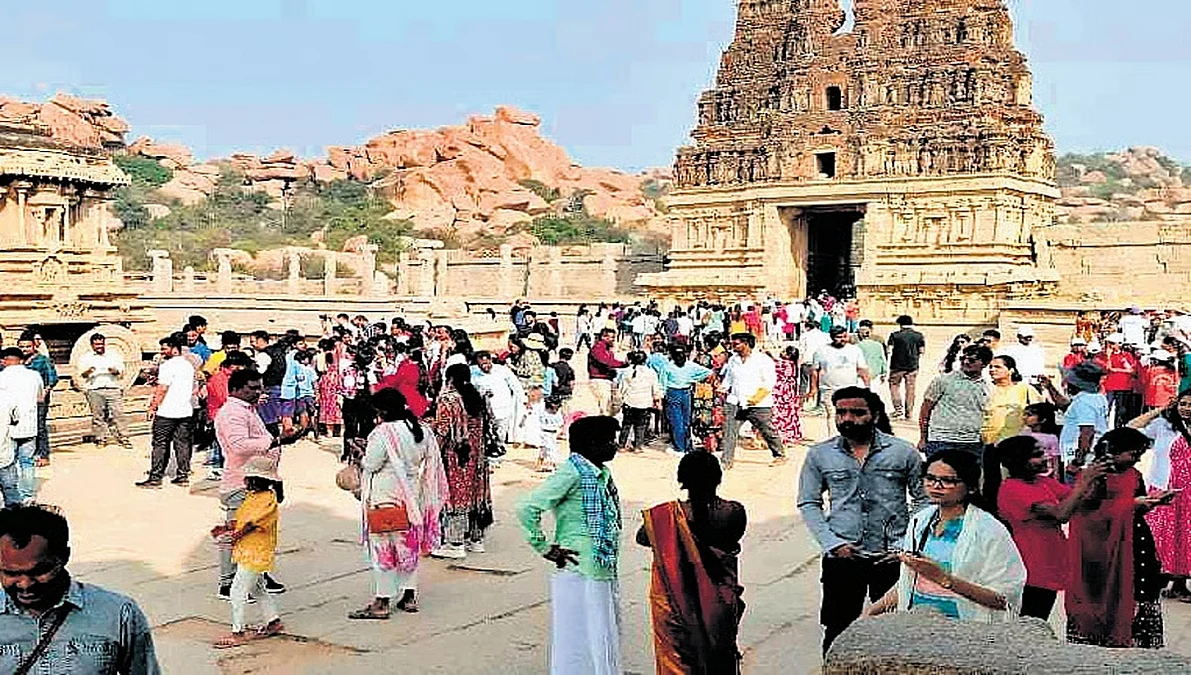
Hampi, the UNESCO World Heritage site in Karnataka, recorded an unprecedented surge in visitors last week as officials estimated between 400,000 and 500,000 tourists visited the ancient ruins. The influx, largely fuelled by Christmas holiday school and college excursions from Karnataka and neighbouring states, resulted in crowded monuments, long queues and a welcome boost to the local economy.
Hampi tourism surge strains local accommodation
Key attractions such as the Stone Chariot, the Virupaksha Temple and several other well-known monuments reported heavy footfall throughout the week. Visitors encountered long lines at principal monuments and viewing points, and many popular sites remained busy from dawn until dusk. The high numbers marked what district officials described as the highest visitor count in recent years.
The arrival spike brought immediate economic benefits. Street vendors, local eateries and small hospitality businesses reported significant increases in sales. Auto-rickshaw drivers and tour guides said they were booked for most of the week, and several smaller enterprises noted a marked rise in demand for local crafts and food.

However, the surge also revealed gaps in infrastructure. Several tourists complained that accommodation options were insufficient to meet demand. One visitor from Hyderabad told reporters that although Hampi was beautiful, facilities did not match the volume of visitors; lacking room availability, they and others spent the night at a community hall. Local stakeholders and tourism managers said similar shortages were being reported across the hospitality sector.
Smaller yet significant sites outside Hampi also recorded steady traffic. The Magadi bird shrine, close to Gadag, reported about 1,000 daily visitors, indicating that nearby cultural and natural attractions benefited from the wider uptick in tourism.
Authorities and tourism experts have called for prompt, planned action to manage future growth. Suggestions include expanding budget lodging options through targeted budget allocations, improving public amenities including sanitation and drinking water, and strengthening transport links and signage. Officials stressed that any expansion must be carefully designed to avoid damage to the site’s cultural and historical value.
Local partners and conservation specialists emphasised the need for sustainable tourism planning. They recommended measures such as regulated visitor flows at sensitive monuments, support for community-based accommodation schemes, and investments in waste management and visitor facilities that do not compromise the integrity of the heritage site.
District officials said they are discussing long-term plans with heritage and tourism bodies to balance conservation with access. While the immediate priority is to relieve accommodation pressure and improve basic facilities ahead of future holiday periods, the broader goal will be to establish systems that ensure Hampi remains both accessible and protected for generations of visitors.
For now, the surge underlines Hampi’s enduring appeal and its role as an economic lifeline for surrounding communities. The authorities and local stakeholders face the dual challenge of harnessing tourism’s economic benefits while ensuring the site’s protection and the comfort of its visitors.
Key Takeaways:
- Hampi tourism surge attracted an estimated 400,000–500,000 visitors in one week, driven largely by Christmas holiday school and college trips.
- Popular monuments including the Stone Chariot and Virupaksha Temple saw heavy crowds and long queues, boosting income for local vendors and guides.
- Accommodation shortages forced some visitors to stay in community halls, prompting calls for increased budget lodging and improved public facilities.
- Local authorities and tourism experts urge planned, sustainable upgrades to protect Hampi’s heritage while accommodating future growth.








