











Mandya district authorities have launched a concerted push to convert 4,250 acres of agricultural land to organic and natural farming, officials said. The move, announced by Mandya Zilla Panchayat Chief Executive Officer K.R. Nandini, is intended to support sustainable land management, improve nutrition through millet promotion and strengthen rural livelihoods.
Mandya natural farming gains momentum
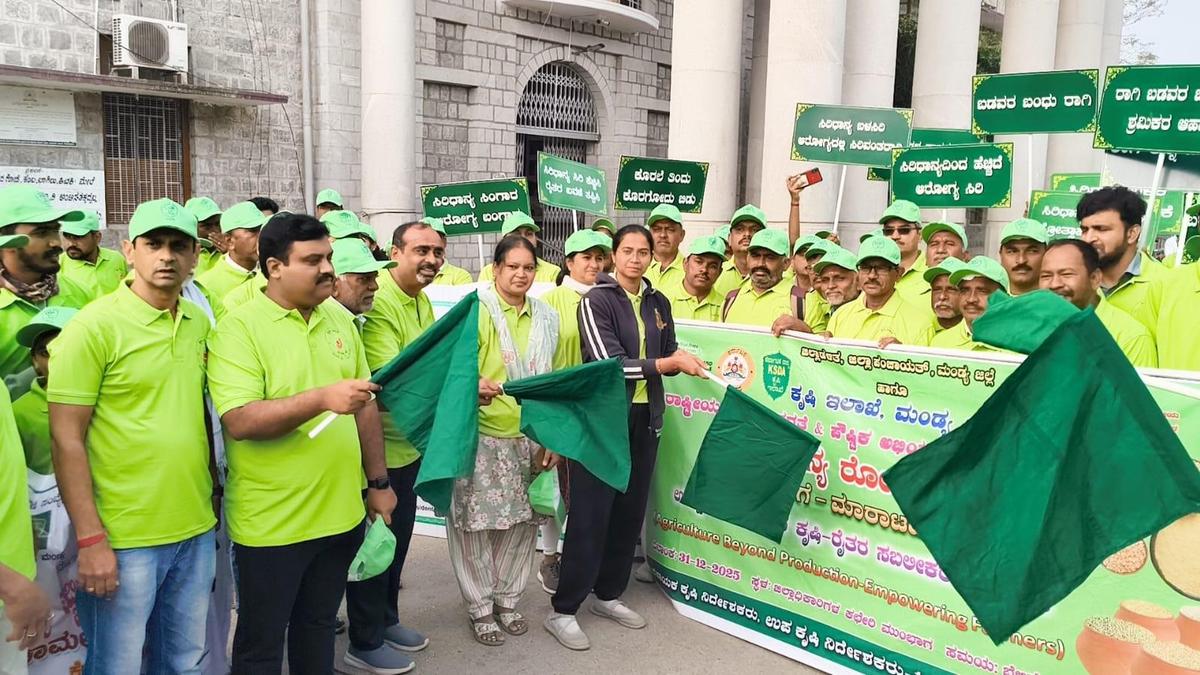
Ms Nandini flagged off the ‘Siridhanya Road Show’ on 31 December outside the Deputy Commissioner’s office, an awareness campaign organised by the Agriculture Department under the Food and Nutritional Security (Nutri-Millets) scheme. The initiative targets younger consumers, showcasing the benefits of millet cultivation and consumption and encouraging households to adopt millet-based diets.
“Educating the next generation about millets is a collective responsibility,” Ms Nandini said, emphasising the role of women in preparing clean, nutritious and appealing millet dishes. As part of a New Year outreach, the Zilla Panchayat, National Rural Livelihood Mission (NRLM) and the Agriculture Department made millet-based sweets and products—grown through organic methods—available to the public at prices under ₹100. The campaign attracted nearly 450 orders, signalling strong local interest.

The harvest-to-market model is also being developed. Ashok, Joint Director of Agriculture, noted that Mandya has become a state leader in forming Farmer Producer Companies (FPCs). These FPCs have so far procured some 500–600 tonnes of paddy, a step that supports the concept of farmers taking control of marketing and value realisation.
Officials stress that while India has largely achieved food security, farmers continue to face challenges securing stable incomes. Post-harvest activities and market access were identified as crucial avenues to raise earnings, with authorities urging farmers to view agriculture as an enterprise rather than solely as production.
Natural farming, Ms Nandini added, succeeds when practitioners exchange knowledge and scale collective practices. The district has highlighted natural farmers at the Atmashreshta Krushi awards and is sharing their experiences through training sessions led by Krushi Sakhis. Such peer-to-peer learning is expected to accelerate adoption and improve outcomes.
The drive also carries a social dimension. By promoting millet-based products and organising training and procurement through women’s self-help groups, the programme aims to provide livelihood support for rural women. Officials say the combined focus on sustainable practices, nutrition and market linkages could create a resilient value chain for millets in the district.
Mandya’s officials underlined the long-term imperative: the district’s fertile soil and water resources are finite assets that must be preserved for future generations. Expanding natural and organic farming, they argue, will help maintain soil health, conserve water and reduce dependency on external inputs.
As the programme moves beyond its initial phase, the authorities plan to scale up outreach and training, expand procurement channels through FPCs and strengthen market opportunities for value-added millet products. If successful, Mandya could provide a model for integrating sustainable agriculture, nutrition security and rural income growth across the state.
Key Takeaways:
- Mandya natural farming initiative aims to bring 4,250 acres under organic and natural practices to boost sustainability and farmer incomes.
- ‘Siridhanya Road Show’ and millet-based products promote millets to younger consumers and support women-led self-help groups.
- Farmer Producer Companies in Mandya have procured 500–600 tonnes of paddy, encouraging farmers to treat agriculture as an enterprise.








