











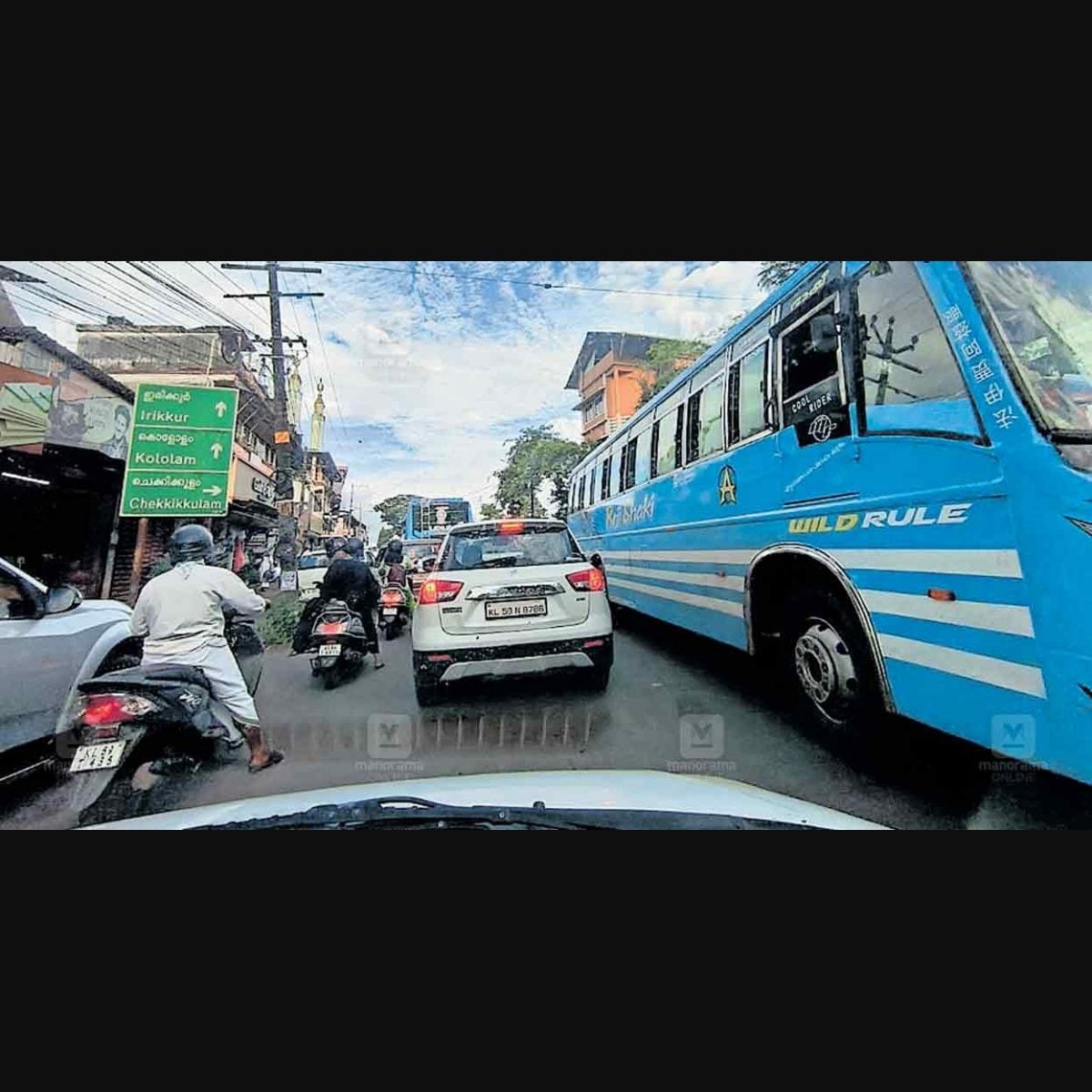
Mayyil Town, a growing market centre in Kannur district, is grappling with mounting traffic congestion and a chronic shortage of parking that are beginning to hamper daily life and local commerce. The problem has intensified as recent bridge repairs and local development have brought more vehicles through the town, exposing limitations in road width and public space planning.
Mayyil Town infrastructure under pressure
Roads designed for far lower traffic volumes are now frequently clogged by vehicles parked on footpaths and road edges. Residents and traders report that ambulances, visitors to nearby medical facilities and travellers heading to Kannur airport or pilgrimage sites such as Velam Ganapathi Temple must often negotiate narrow, obstructed streets. The result is regular bottlenecks and delays that affect emergency response times and the vibrancy of local markets.
The town hosts several government institutions and banks, including the Government Higher Secondary School, police station, sub-district education office, a primary health centre and multiple nationalised bank branches. These institutions, together with growing through-traffic from areas such as Payyannur, Irikkur and Thaliparamba, have amplified demand for kerbside space. Locally parked vehicles frequently block pavements, forcing pedestrians into the carriageway and raising safety concerns.

Local authorities have attempted to tackle congestion on multiple occasions in recent years, but enforcement and implementation of proposed measures have fallen short. One major constraint is the panchayat’s lack of owned land suitable for creating formal parking facilities. Without a viable site for off-street parking, proposed schemes remain difficult to implement and the town continues to rely on informal roadside parking that compromises traffic flow.
Urban planners point out that the issue in Mayyil is not only about more cars but also about the need for an organised traffic-management plan. Short-term measures such as regulated on-street parking, clear signage, designated loading zones for businesses and timed restrictions during peak hours could reduce congestion quickly. Medium-term solutions include identifying land for multi-level or peripheral parking, improving pedestrian infrastructure and widening key approach roads where feasible.
Community voices stress the importance of a coordinated approach involving the panchayat, district administration and state departments. Stakeholders say that targeted interventions around the hospital, schools and bank clusters would offer immediate relief, while a comprehensive town plan would guide infrastructure upgrades that match traffic growth. Public consultations and local business buy-in will be essential to ensure that any scheme is practical and sustainable.
Given Mayyil’s role as a transit point between several important local destinations and its growing civic footprint, planners warn that failing to act now will lead to greater economic and safety costs later. Restoring mobility will not only ease daily commutes but also support trade, emergency services and tourism related to nearby pilgrimage sites. Resolving land constraints for parking remains the most significant hurdle, and creative public-private partnerships or temporary land leases could provide interim relief.
In summary, the Mayyil Town infrastructure challenge requires a mix of immediate enforcement, short-term traffic interventions and medium-term land-use planning to create dedicated parking and wider pedestrian-friendly streets. Without coordinated action, congestion will continue to undermine the town’s development potential and the quality of life of its residents.
Key Takeaways:
- Mayyil Town faces growing traffic congestion driven by narrow roads and insufficient parking facilities.
- Increased vehicle movement follows bridge restorations and rising local development, straining existing infrastructure.
- Panchayat land shortages and ad hoc roadside parking make long-term solutions difficult without coordinated planning.
- Calls for traffic management, dedicated parking zones and land acquisition are essential to restore mobility and support growth.








