











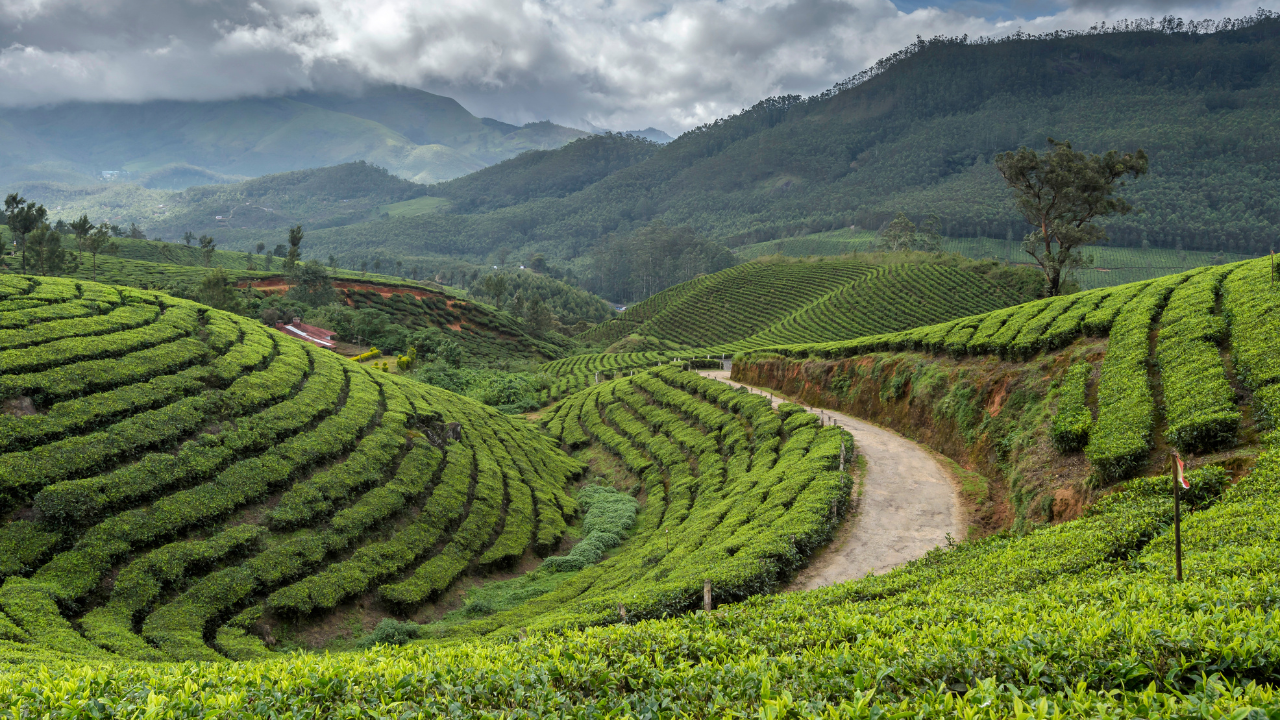
Munnar, tucked into Kerala’s Western Ghats, has long been known for its rolling tea plantations, cool mountain air and lingering mist. Visitors often describe the town as the ‘Kashmir of South India’ because of its soft light, sweeping views and calm pace. That reputation rests on a handful of accessible sites and a straightforward route from Kerala’s transport hubs.
Munnar Kashmir of South India Highlights
At the centre of Munnar’s appeal are its natural reserves and viewpoints. Eravikulam National Park draws most visitors who want to see the Nilgiri Tahr, a mountain goat native to this region. The park’s high grasslands open into broad vistas where low clouds can drift across the slopes, offering excellent opportunities for short walks and wildlife observation.
The tea gardens define much of Munnar’s visual identity. Neat rows of bushes contour the hills and the local Tea Museum explains how the crop moved from plantation to teacup. A walk or drive through these estates is an easy way to appreciate the region’s agricultural history and to enjoy panoramic views with a hot brew in hand.

For calmer waters, Mattupetty Dam offers mirrored views of the hills and a relaxed boating option. Photographers favour the dam for early morning reflections and gentle strolls along the reservoir. Nearby Top Station provides the most expansive outlooks. When skies are clear, visitors can see far into the plains below and watch the colours change with the rising sun.
Waterfalls are part of the Munnar experience, too. After the monsoon, Attukad Waterfalls swells into a dramatic cascade as it cuts through dense greenery. The sound of rushing water and the surrounding forest make it a refreshing stop on a day of local exploration.
Practical travel information matters for planning. Munnar has no airport or railway station of its own, so most travellers fly into Cochin International Airport, about 110 kilometres away, or arrive by train at Aluva, roughly the same distance. From either point a taxi or bus ride carries you up through forests and tea estates to the hill station. The road journey is part of the experience, offering steady views and frequent photo opportunities.
The best time to visit is typically between September and March when the weather is cool and clear, ideal for sightseeing and outdoor activities. The monsoon months from June to August turn the hills an intense green, but heavy rain at times limits access to some trails and viewpoints. Summers remain mild, so Munnar is a viable escape from coastal heat for much of the year.
Whether you seek quiet mornings wrapped in mist, structured walks through protected grasslands, or simple afternoons with a cup of local tea, Munnar delivers a compact, accessible hill-station experience. Small guesthouses and boutique hotels cater to travellers who value tranquillity and easy access to the area’s main attractions. For those planning a visit, allow at least two to three days to see the highlights without rushing.
As domestic and international travel rebounds, Munnar remains one of India’s most reliable hill stations for visitors who want clean air, green views and a slower pace of life. With straightforward connections from Cochin and Aluva and a clear seasonality, it is well placed for travellers seeking a brief respite in Kerala’s highlands.
Key Takeaways:
- Munnar Kashmir of South India remains a top Kerala hill station celebrated for its misty tea gardens and cool climate.
- Must-see sites include Eravikulam National Park, the Tea Gardens and Museum, Mattupetty Dam, Top Station and Attukad Waterfalls.
- Nearest airport and railhead are at Cochin and Aluva respectively, each about 110 km away; best time to visit is September to March.








