











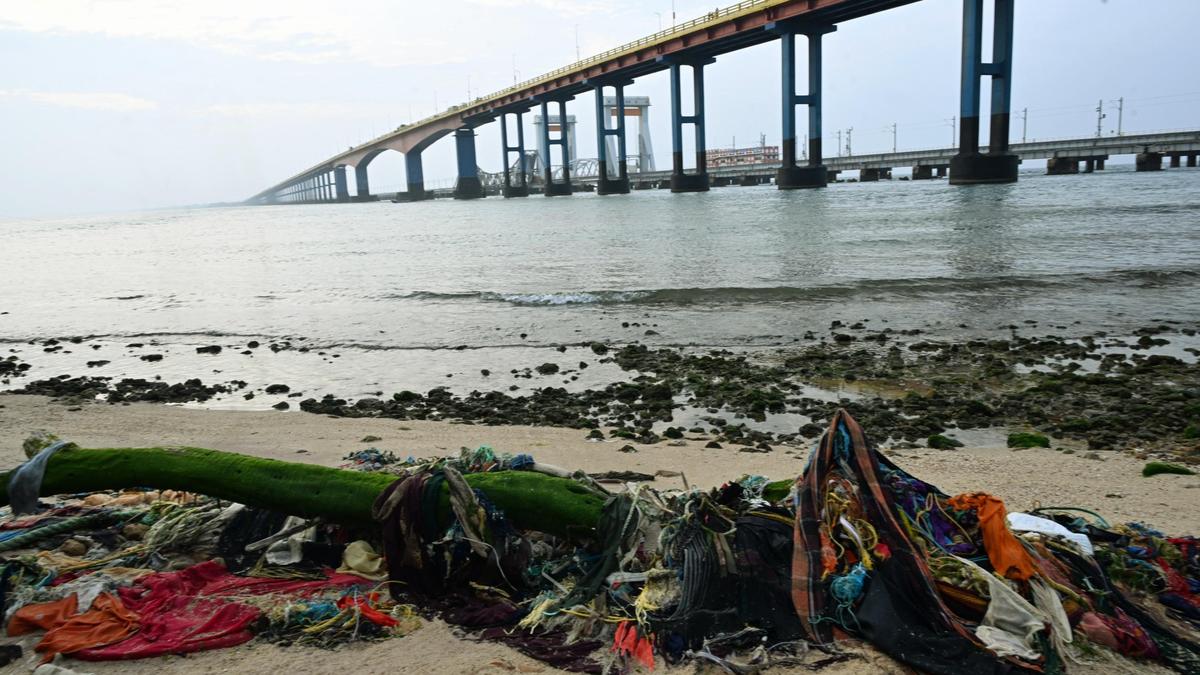
Local fishermen and municipal officials in Rameswaram are raising the alarm over an escalating pollution problem centred on the Pamban bridge, where devotees are discarding ritual garments into protected coastal waters. The practice, rooted in belief that throwing away clothes cleanses one of sins, has shifted from traditional sites near the Sri Ramanathaswamy Temple to more congested shorelines, with visible harm to marine life and the fishing community.
Pamban bridge pollution
P. L. Jimmy Carter, a fisherman based in Pamban, said the problem intensifies during the Margazhi season, when large numbers of Sabarimala pilgrims pass through the area. “Many devotees throw towels and other garments into the sea after visiting the temple. With overcrowding near Agni Theertham, they now perform the ritual along the Pamban shore,” he said, pointing to an increase in fabric debris washed ashore or snagged on underwater rocks.
The discarded textiles do not break down quickly. Carter explained that synthetic and blended fabrics can take decades to decompose. As a result they either litter beaches or become entangled in fishing gear and boat propellers, causing mechanical damage. Local fishermen report repair bills running into lakhs of rupees when engines are fouled by fabric build-up.

Environmental consequences extend beyond navigation hazards. Fabrics drifting in the water can smother benthic habitats, injure or trap marine animals, and introduce microfibres into the food chain as they degrade. The affected stretch of sea around Pamban and Rameswaram is part of a sensitive marine zone, and several species of fish and invertebrates that support the fishing community are at risk.
Until recently, rituals performed at Agni Theertham were mitigated by a municipal removal programme that periodically retrieved discarded garments from the water. However, the municipal official responsible for Rameswaram acknowledged that the shift in where devotees perform the ritual has outpaced those measures. “We will consider placing signboards at the bridge and other points to warn people about the consequences of throwing clothes into the sea,” the official said, adding that public messaging would form part of the response.
Fishermen and local residents are urging quicker, more visible action. Proposed measures include installing warning boards on Pamban bridge and surrounding access points, increasing the frequency of clean-up operations, and coordinating with temple authorities to manage pilgrim flow and discourage the ritual on fragile shorelines.
Community-led awareness campaigns could be effective, advocates say, especially if supported by clear information on legal penalties for polluting protected marine zones. Enforcement, however, remains challenging during peak pilgrimage periods when crowds are large and dispersed. Some stakeholders suggest dedicated collection points where devotees can deposit garments for proper disposal, combined with outreach by temple management and municipal staff.
For now, fishermen continue to bear the immediate costs. Carter urged the local administration to act promptly: “Put up warning signs on the bridge and educate people. If action is delayed, the damage to our livelihoods and to marine life will only grow.” As officials weigh measures, the incident highlights the wider tension between traditional religious practices and contemporary conservation needs along the Indian coast.
Key Takeaways:
- Pamban bridge pollution is increasing as devotees discard ritual garments into the sea, threatening marine life near Rameswaram.
- Fishermen report entanglement of fabrics in propellers and rising repair costs, while many garments take decades to decompose.
- Local authorities plan signboards and may expand removal mechanisms; fishermen urge stricter enforcement and public awareness.








