











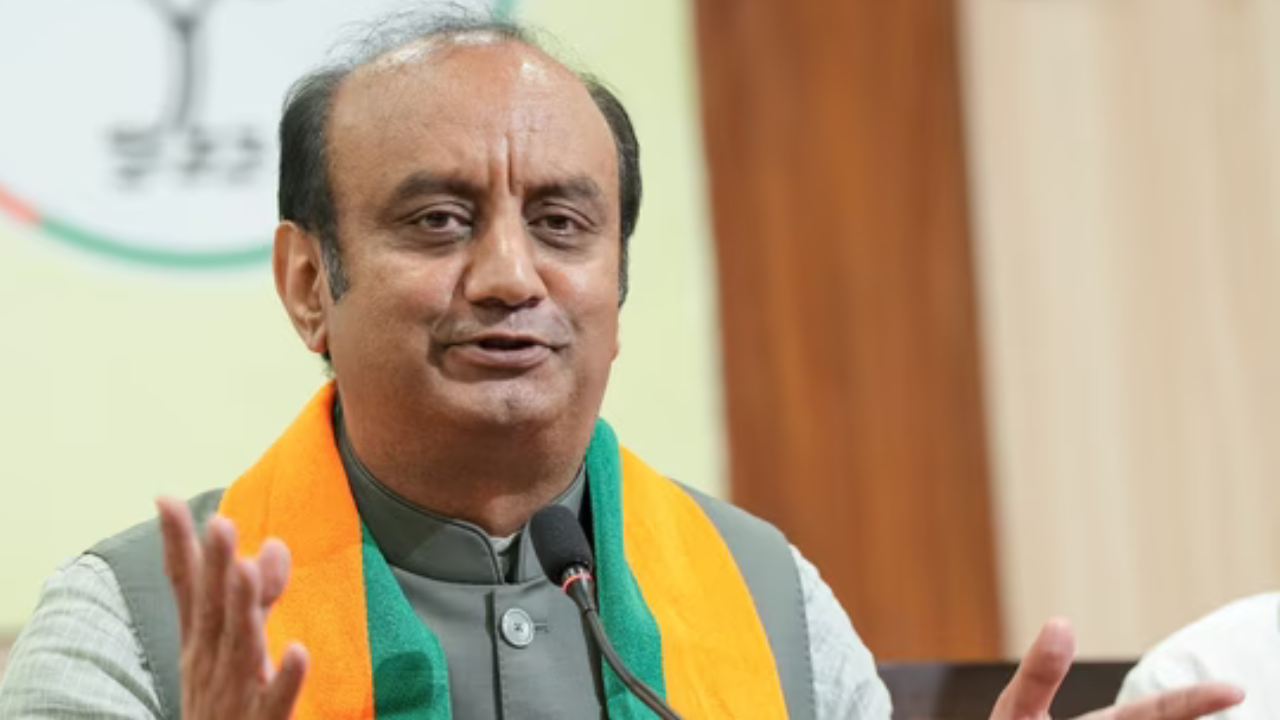
An old clip of Bharatiya Janata Party national spokesperson Sudhanshu Trivedi giving an unusually detailed New Year greeting has resurfaced and drawn widespread attention online. Posted again by Trivedi on January 1, the recording captures him tracing the origins of the modern calendar before offering what he described as congratulations on the “English New Year.”
Sudhanshu Trivedi New Year wish draws attention
In the short video, Trivedi proceeds through a rapid summary of calendar history. He cites the Roman god Janus as the eponym for January, mentions the Roman king Numa Pompilius, credits Julius Caesar with the initial major reform, and notes Pope Gregory XIII’s correction in 1582. He adds that the calendar was later adopted by Britain in 1752. The clip ends with the line: “On the first day of this English New Year, I congratulate you all.”
The post has prompted a mixture of amusement and debate. Many social media users applauded Trivedi’s recall of historical detail, dubbing him “chalta phirta Google” for his apparent encyclopaedic knowledge. Others questioned the choice of phrasing, particularly the reference to an “English New Year,” which some felt was an odd way to mark a global occasion.

Experts and commentators have pointed out that Trivedi’s factual outline aligns broadly with established chronology. The Gregorian calendar, introduced by Pope Gregory XIII in 1582, aimed to correct the Julian calendar’s drift against the solar year. The reform adjusted the rules for leap years and removed several days in October 1582 to bring the calendar back into alignment with astronomical events. Britain and its colonies adopted the Gregorian system in 1752, at which point the British civil year was brought in line with most of continental Europe.
Trivedi’s reference to earlier Roman influences is also rooted in accepted historical accounts. January takes its name from Janus, a Roman deity associated with beginnings and transitions. Numa Pompilius is traditionally credited with early Roman calendar adjustments, while Julius Caesar introduced the Julian calendar in 45 BCE, which remained in use until the Gregorian correction.
Beyond historical detail, the clip underlines how political figures’ seemingly routine remarks can take on new life online. The combination of a factual mini-lecture and an offbeat phrase proved fertile ground for memes and commentary. Some users praised the educational tone of the message, while others treated the moment as light entertainment.
For many viewers the exchange was harmless and even instructive. It prompted renewed interest in the origins of the calendar most people use daily, and gave rise to brief discussions about how cultural and political histories influence commonly used terms. At the same time, a handful of commentators said officials may wish to be mindful of wording when addressing widely observed dates to avoid unintended controversy.
As the clip continues to circulate, it serves as a reminder that social media can revive past remarks and recast them for new audiences. Whether viewed as an informative aside or a quirky viral moment, the video has secured renewed attention for Trivedi and for a subject most people take for granted: why January is called January and how the Gregorian calendar came to be the international standard.
Key Takeaways:
- Sudhanshu Trivedi’s New Year greeting, referencing Roman and Gregorian calendar history, resurfaced and went viral on social media.
- Netizens praised the BJP spokesperson as a “chalta phirta Google”, sparking both amusement and debate.
- The clip outlines the evolution from Janus and Numa Pompilius to Julius Caesar and Pope Gregory XIII’s 1582 reform.
- Discussion centred on Trivedi’s phrase “English New Year” and public reaction to historical framing.








