











The government of Indonesia has confirmed that the older Criminal Code (KUHP) and Criminal Procedure Code (KUHAP) will continue to apply to cases that arose before 2 January 2026, while the new KUHP and KUHAP will govern offences committed after that date. The administration has emphasised the principle of non-retroactivity, ensuring that defendants and pending cases are judged under the law that existed at the time of the alleged conduct.
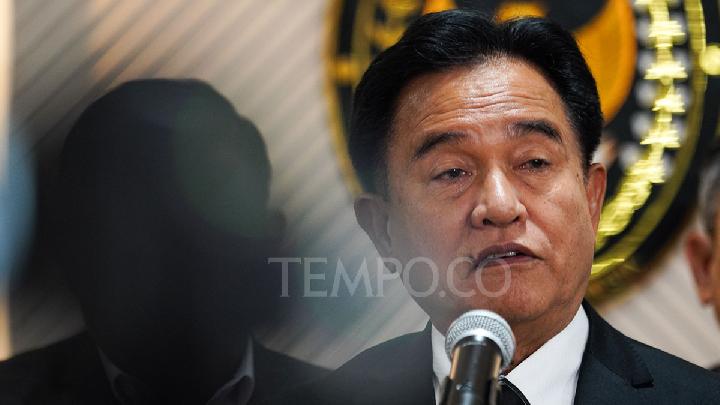
Coordinating Minister for Law, Human Rights, Immigration and Corrections Yusril Ihza Mahendra said the enforcement marks not an end but the start of a continuing evaluation. “This is not the final step, but the beginning of sustained assessment,” he said in a written statement on Friday, 2 January 2026.
Indonesia new criminal code: what changes and concerns
The new KUHP replaces provisions that trace their origins to the Dutch colonial Wetboek van Strafrecht voor Nederlandsch-Indie, which came into force in 1918. The older KUHAP, introduced under the New Order in 1981, will likewise continue to govern earlier matters. The new criminal code was enacted as Law No. 1 of 2023 on 2 January 2023, while the revised criminal procedure law was finalised more recently as Law No. 20 of 2025 on 19 November 2025.

Officials have allowed a lengthy socialisation period for the KUHP; lawmakers provided a three-year window to enable courts, law enforcement and civil society to adapt to the revised provisions. By contrast, the KUHAP new provisions had less than two months of socialisation, a period shortened by the Christmas and New Year holidays.
Civil society has been vocal in response to the KUHAP process. The Coalition for KUHAP Reform, an alliance of 34 organisations, said some articles remain problematic and criticised a lack of transparency and meaningful public participation during drafting. The coalition urged President Prabowo Subianto to issue a government regulation in lieu of law (Perppu) to postpone enforcement of the KUHAP so that implementing regulations and guidance can be properly prepared.
“We urge the president to issue a Perppu immediately,” said Muhamad Isnur, chair of the Indonesian Legal Aid Foundation (YLBHI), during a press conference broadcast on the foundation’s YouTube channel on 1 January 2026. The coalition argued that the short socialisation window risks gaps in implementation and uncertainty for law enforcement and defence counsel alike.
The government has defended the enactment as a major legal milestone. Yusril described the new laws as the formal end to a colonial-era criminal system and a move toward a more humane, modern and just system of criminal justice. Officials have also signalled that the new laws will be subject to ongoing review and refinement in response to practical challenges and public feedback.
Legal practitioners and observers say the coming months will test the readiness of courts and prosecutors to apply the new provisions while honouring the non-retroactivity principle. Key tasks include issuing implementing regulations, training judges and police, and ensuring defence counsel are equipped to advise clients whose cases straddle the old and new regimes.
For now, the legal transition emphasises certainty for past conduct while setting a timetable for the broader adoption of contemporary criminal justice standards. The balance between rapid reform and careful implementation will shape public confidence in the new KUHP and KUHAP as they take root.
Key Takeaways:
- Indonesia new criminal code and KUHAP take effect on 2 January 2026, with non-retroactivity for prior cases.
- Old KUHP and KUHAP remain applicable to offences committed before 2 January 2026.
- Civil society groups criticised the KUHAP drafting process and urged the president to issue a Perppu to delay implementation.
- The government said the change ends the colonial-era criminal code and begins a period of ongoing evaluation.








