











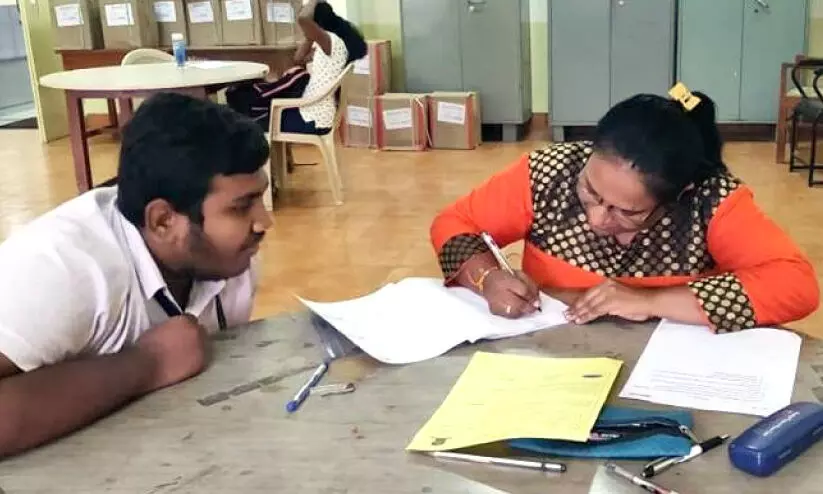
The Karnataka School Examination and Assessment Board (KSEAB) has announced that visually impaired students taking the SSLC and PUC second-year examinations will be allowed to use computers from this academic year. The decision, KSEAB director H.N. Gopalakrishna said, responds to long-standing requests to offer an alternative to the reader-cum-scribe arrangement.
Computer exams for visually impaired students: what the change means
Under the new arrangements, students must register in advance. Those who opt to take the exam on a computer will be permitted to bring their own laptops to the examination centre. Centre computer teachers are instructed to check each device and format it before the paper begins. Internet access will be disabled during the exam to preserve test security.
The board has specified acceptable software and technical requirements. Laptops should run Windows 10 or 11 and have MS Office installed. Assistive tools such as Multilingual Nudi 6.5 and Math software approved by the National Association for the Blind will be permitted. The KSEAB will also accept other assistive software that the association recognises. Permission to use computer-based assistance will be granted only after recommendation from the relevant medical authority.

In practice, the reader-cum-scribe model will continue to be available where appropriate. When questions are read aloud by a reader, the student will type their answers. If a technical fault occurs, the student may dictate answers to a scribe for transcription; the board has authorised additional time in such cases to compensate for delays.
At the end of each examination, candidates who typed their responses must submit a printed copy of their answer script. To facilitate this, the board has instructed centre superintendents to ensure printers are available at exam centres. The number of students registering for computer-based tests will determine the final logistical arrangements at each location.
Officials said the move aims to broaden access and dignity for visually impaired candidates, allowing greater independence in examinations while maintaining the integrity of the assessment process. By permitting recognised assistive software and requiring medical endorsement, the board seeks to balance accessibility with standardisation.
Disability advocates welcomed the announcement as a practical step towards inclusive education. Allowing students to interact directly with the exam — by typing rather than relying solely on a scribe — can reduce errors, protect confidentiality and reflect the candidates’ own work more accurately. Administrators emphasised that training for centre staff and clear procedural guidance will be essential to a smooth rollout.
The KSEAB’s change mirrors wider trends in education that use technology to remove barriers for learners with disabilities. For parents and candidates seeking further information the board has advised contacting local examination centres and monitoring official KSEAB notifications for registration procedures and technical specifications.
Key Takeaways:
- Karnataka’s KSEAB will permit computer exams for visually impaired students starting this academic year.
- Students must register and bring laptops; centre staff will format devices and internet access will be blocked.
- The policy allows recognised assistive software and provides safeguards such as printed submissions, extra time and medical-authority approval.
- This move aims to expand accessibility and inclusion for visually impaired learners.








