











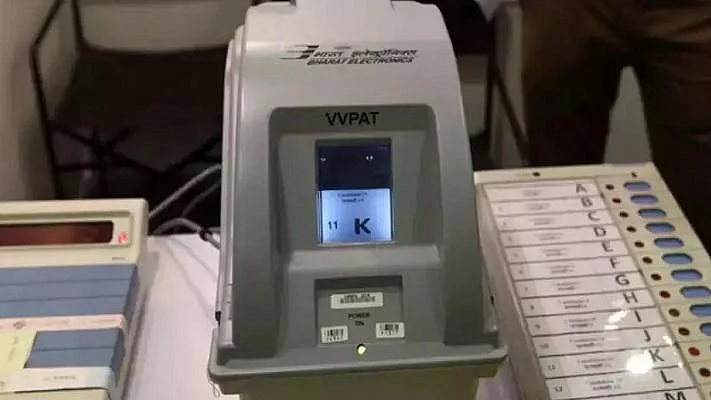
A state-backed survey has found that a substantial majority of voters in Karnataka trust electronic voting machines, a result that complicates claims of widespread polling fraud made by Congress leader Rahul Gandhi.
Karnataka EVM trust survey shows strong public confidence
The survey, conducted as part of an evaluation of the State Voter Education and Electoral Participation programme (SVEEP), reports that 83.61% of respondents consider electronic voting machines (EVMs) reliable. Of those surveyed, 69.39% said EVMs deliver accurate results, while 14.22% expressed strong confidence in their accuracy.
Commissioned to assess voter awareness, attitudes and practices ahead of the 2024 general elections, the final report dated August 2025 canvassed 5,100 people across 102 assembly constituencies covering 34 districts. The sample represented urban, rural and reserved constituencies across four regional divisions: Bengaluru, Belagavi, Kalaburagi and Mysuru.

The findings reveal regional variation in trust levels. Kalaburagi recorded the highest levels of confidence, with 83.24% deeming EVMs reliable and 11.24% expressing strong confidence. Mysuru respondents reported 70.67% general trust and 17.92% strong confidence. Belagavi and Bengaluru showed lower but still majority support, with Belagavi at 63.90% trust and 21.43% strong confidence, and Bengaluru at 63.67% and 9.28% respectively.
Alongside confidence in EVMs, the study flagged persistent concerns about the role of money in elections. Some 44.90% of respondents said the influence of money in polls is increasing, while 4.65% strongly agreed that it is a dominant factor.
Survey response to fraud allegations
The publication of the survey comes amid renewed controversy after Rahul Gandhi repeatedly alleged large-scale voter fraud in Karnataka, including claims of around 100,000 bogus voters in the Mahadevapura constituency and unusually high numbers of voters registered at single addresses — he cited an instance of 80 voters listed at one house.
Election authorities have disputed those allegations. The state election office and the Election Commission did not accept the fraud claims. The SVEEP-linked survey was run by the office of the Chief Electoral Officer rather than by the state government, a point Karnataka minister Priyank Kharge emphasised when addressing criticism that the study was government-sponsored.
The BJP has seized on the survey results to criticise Rahul Gandhi. Karnataka opposition leader R. Ashok said the findings undermined a narrative that EVMs are unreliable and suggested the research was a rebuttal to Congress claims that threaten public confidence in democratic institutions.
Implications ahead of national polls
While the survey does not settle all disputes, its scope and methodology — covering a broad geographic spread and a sample of more than 5,000 voters — make it a notable data point in debates about electoral integrity. The high levels of reported trust in EVMs could temper public concern over the mechanics of voting, even as worries about money and malpractice persist.
As national elections approach, political parties are likely to use these findings to bolster their arguments. For the Election Commission and state administrators, the survey offers evidence to support voter education efforts and to reinforce the technical credibility of electronic voting systems.
Overall, the Karnataka EVM trust survey provides a snapshot of voter attitudes that both challenges allegations of systemic fraud and highlights areas where public confidence in the electoral process could be strengthened.
Key Takeaways:
- Survey finds 83.61% of Karnataka respondents trust electronic voting machines (Karnataka EVM trust survey).
- Study covered 5,100 respondents across 102 assembly constituencies and four regions as part of SVEEP evaluation.
- Findings contrast with Rahul Gandhi’s allegations of large-scale voter fraud, prompting rebuttals from the Election Commission and BJP leaders.
- Regional variations noted; concerns persist over money in politics despite EVM confidence.








