











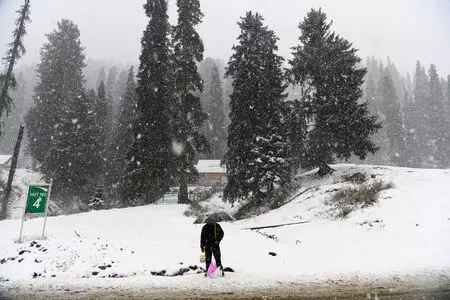
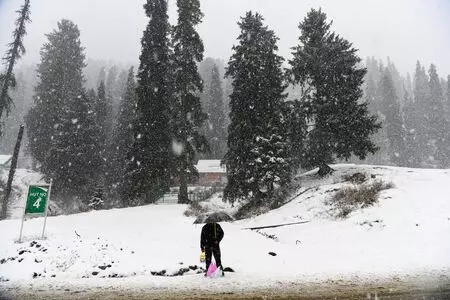
Snowfall in Kashmir’s mountain resorts drew crowds over New Year’s Eve as visitors flocked to witness white-coated slopes in Gulmarg, Sonamarg and Pahalgam. The showers covered higher reaches overnight, creating scenic conditions that helped fill hotels across Srinagar and Gulmarg and boosted tourist activity in the valley.
Kashmir snowfall brings a rush of visitors
Tourists from around the country arrived in the valley to celebrate the holiday after snow began falling in the last 12 hours. Hotels in central Srinagar and the Gulmarg resort reported full occupancy, while Sonamarg and Pahalgam saw steady footfall. Many visitors said they were witnessing snowfall for the first time, describing the scene as a perfect backdrop for New Year celebrations.
Weather stations recorded a rise in minimum temperatures above the freezing point across much of the valley, a result of persistent cloud cover overnight. Srinagar logged a minimum of 2.3 degrees Celsius and Pahalgam 1.8 degrees, while Gulmarg remained colder at minus 3 degrees Celsius. Other low temperatures for the night included Jammu at 10.4 degrees and Banihal at 5.9 degrees.

How the snowfall affects water and agriculture
While the visual impact of the snowfall pleased tourists, local scientists warned the amounts so far are unlikely to relieve longer-term water concerns. An earth scientist noted that only sustained accumulations — typically measured in feet — across plains and higher reaches can guarantee replenishment of perennial mountain reservoirs that feed rivers and irrigation systems in summer.
The valley entered its 40-day Chillai Kalan period of intense cold on 21 December. Historically, this period brings the heaviest winter snowfall and helps build the snowpack that melts gradually, sustaining water supplies and supporting horticulture. Officials and growers are watching conditions closely because a Chillai Kalan that passes without heavy accumulation can put fruit orchards, agriculture and drinking water availability under strain in the warmer months.
Residents of central Kashmir and Srinagar’s plains reported disappointment at the lack of snowfall at lower elevations so far. Authorities and meteorologists have advised communities and water managers to prepare for a range of scenarios and to monitor forecasts for further winter systems that might bring more substantial snow.
Local tourism operators said the snowfall — even if light at some sites — provided a welcome boost to the winter season, encouraging bookings and supporting livelihoods reliant on visitor spending. Transport and hospitality officials continue to monitor road conditions and services as the winter season progresses.
Forecasters said more variable weather is possible through January, but they cautioned that one event will not determine reservoir levels. Long-term water security will depend on cumulative snowfall over the winter and timely melt in spring and early summer.
Key Takeaways:
- Heavy snowfall in higher reaches, including Gulmarg, Sonamarg and Pahalgam, attracted large numbers of New Year visitors.
- Hotels across Srinagar and Gulmarg reported full occupancy as tourists sought winter experiences.
- Scientists warn current snowfall is insufficient to replenish mountain water reservoirs needed for the summer.
- The 40-day Chillai Kalan cold period has begun without significant accumulation, posing risks for horticulture and water supply.








