











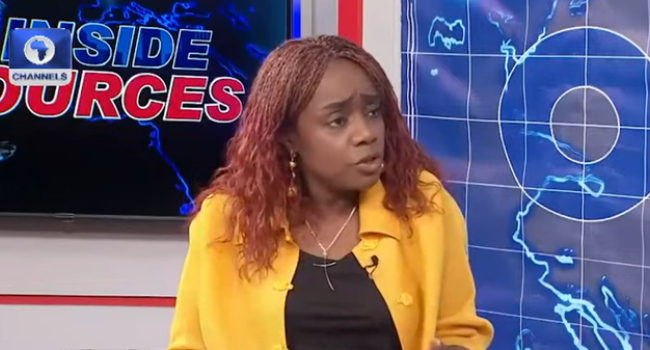
Former finance minister Kemi Adeosun has told Channels Television that ministers serving during her tenure were aware the fuel subsidy was harming Nigeria’s finances and that it was time to stop allocating public funds to the policy. Speaking on the programme Inside Sources, Adeosun said the federal government eventually discovered fuel was being smuggled to neighbouring countries, but lacked the political will to end the subsidy sooner.
Nigeria fuel subsidy findings
Adeosun recounted earlier attempts to curb subsidy abuse, saying the government put tracking measures in place after noticing inconsistencies in consumption figures. “We tried different things to stop fuel subsidy. Do you remember Sure-P? We knew that Nigeria has four international borders. And then you are subsidising, but your own fuel was 44 per cent lower than that sold in other countries,” she said.
She described calculations that revealed implausible domestic consumption — at times around 65 million litres per day despite an estimated 10 million vehicles — which pointed to diversion and smuggling across land borders. “What it meant was that the federal government was not subsidising just Nigeria, but the whole of West Africa,” she said, adding that such outflows left little funding for roads, education or health.

According to Adeosun, ministers recognised the policy’s failings but hesitated because removing the subsidy would have immediate effects on households. The response, she said, was to deploy tracking and monitoring systems that exposed the extent of the problem and strengthened the argument for policy change.
Since President Bola Tinubu removed the subsidy, Adeosun argued, the government must ensure the resulting savings are converted into structural amenities for the population rather than consumed elsewhere. She urged citizens to scrutinise budgets and ask targeted questions when governors publish spending plans, warning against emotional conclusions that officials are automatically stealing funds.
“Now that the policy is gone, of course, there are some overspills, but in the long run, Nigerians are going to be so much better off on that,” Adeosun said. She recommended replacing short-term palliatives with durable measures that help people adapt to the policy change and stressed the importance of transparency in converting subsidy savings into visible public goods.
The former minister also revisited the circumstances of her 2018 resignation. Faced with allegations that an NYSC certificate she submitted was forged, Adeosun said those opposed to her role saw an opportunity to force her exit. She told viewers she discussed the matter with President Muhammadu Buhari and chose to resign so she could pursue legal action without remaining in the Federal Executive Council.
“You can’t be suing the government and staying in the government. You have to go,” she said, explaining that she resigned to clear her name in court. Adeosun said she believed powerful enemies used the controversy as a pretext to remove her from office.
Her comments add to ongoing debate about the pace and management of subsidy reform in Nigeria. Policymakers and citizens will be watching how savings from subsidy removal are allocated and whether they lead to sustained improvements in public services and infrastructure.
Key Takeaways:
- Former finance minister Kemi Adeosun says ministers knew the fuel subsidy was unsustainable and was effectively subsidising West Africa.
- Trackers revealed large-scale smuggling and implausible domestic consumption, prompting the case for removal.
- Adeosun urges that savings from the fuel subsidy removal be channelled into infrastructure, education and health.
- She also reflected on her 2018 resignation over the NYSC certificate controversy and said she will clear her name in court.








