











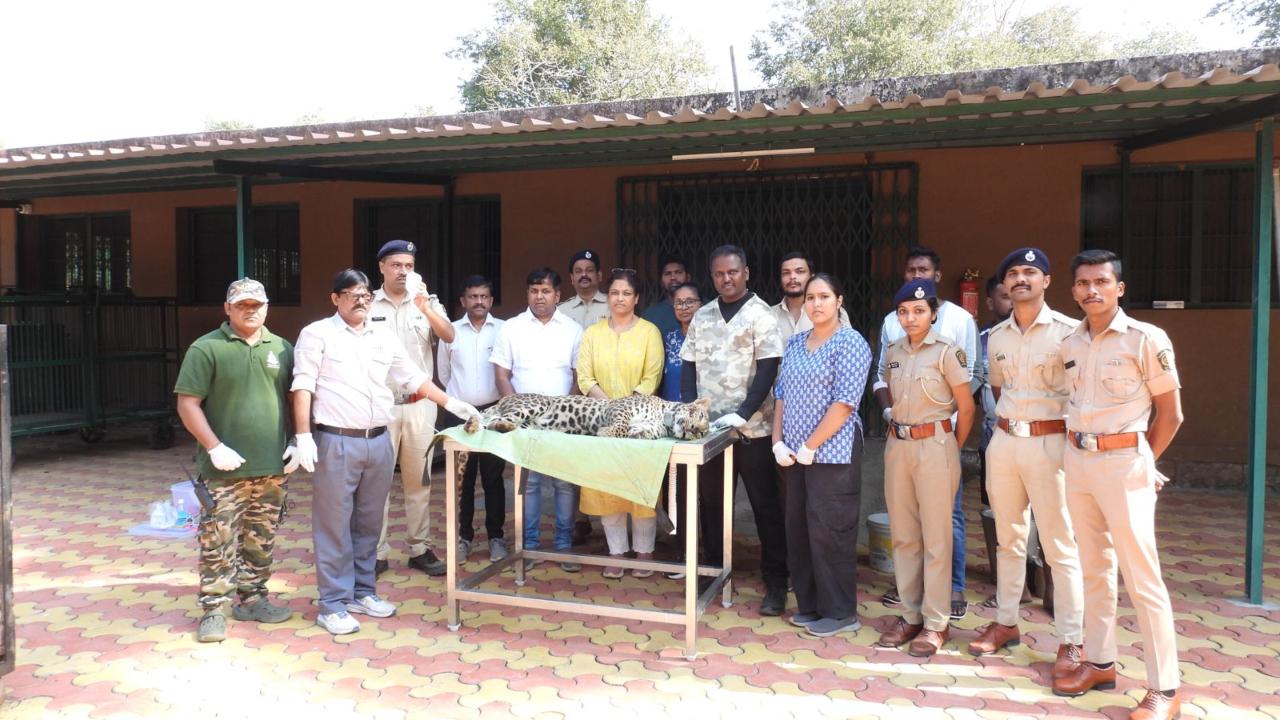
A leopard that entered Parijat Society in Bhayandar East, Thane district, has been safely released back into its natural habitat after veterinary checks and the fitting of a satellite GPS collar and microchip, officials said. The animal was captured by teams from Sanjay Gandhi National Park and the Thane Forest Division on 19 December 2025 following reports that it had attacked several people.
Veterinary officers at Sanjay Gandhi National Park conducted a thorough health assessment and confirmed the animal had not sustained injuries during the rescue operation. The leopard was held for observation while a committee of senior forest officials reviewed the case and recommended careful monitoring prior to release.
Leopard GPS tracking aids conflict reduction
The committee, convened by the Chief Wildlife Warden and the Principal Chief Conservator of Forests (Wildlife), decided to fit the animal with a Satellite GPS collar and a microchip. The collar will allow forest staff and a partnered research NGO to follow the leopard’s movements through GPS and radio signals, providing real-time data to inform management responses.

Forest Minister Ganesh Naik visited the area on 20 December 2025 to review the situation and met injured residents in hospital. Following his directions, officials finalised plans to monitor the animal closely before returning it to the forest. The leopard was fitted with the GPS collar at SGNP and released on 25 December 2025 under the supervision of Anitta Patil, Conservator of Forests and Director of SGNP, and Sachin Repal, Deputy Conservator of Forests, Thane.
Officials said the GPS collar and microchip will help them study movement patterns and territory use, identify causes of human–leopard encounters and deploy targeted measures to prevent future incidents. The initiative also provides hands-on training for forest personnel in modern wildlife monitoring techniques.
Since release, the department has reported that the leopard has remained within its forest range and is gradually stabilising. No further conflicts have been recorded so far. “This was a young leopard that likely lost its way and entered the city,” Ganesh Naik said. “By fitting a radio collar and monitoring its movements, we can better protect people and wildlife and respond quickly if needed.”
Officials emphasised that tracking after release enables data-driven decisions, from alerting communities when animals approach settlements to adjusting patrol routes and habitat management. The collaboration between SGNP, the Thane Forest Division and a research NGO aims to improve coexistence strategies across the region.
Forest teams will continue to monitor the fitted leopard through satellite and VHF signals, analyse the data collected and share findings with conservation partners. Authorities said they remain ready to act should the animal stray toward populated areas again, while also encouraging residents to follow safety guidance when living close to forested zones.
Key Takeaways:
- Leopard rescued from a Bhayandar housing society was medically cleared and released back into the wild.
- The animal was fitted with a satellite GPS collar and microchip to enable leopard GPS tracking.
- Ongoing monitoring shows the leopard is adapting and no further conflict has been reported.
- The initiative enhances field training and supports data-driven measures to reduce human–wildlife conflict.








