











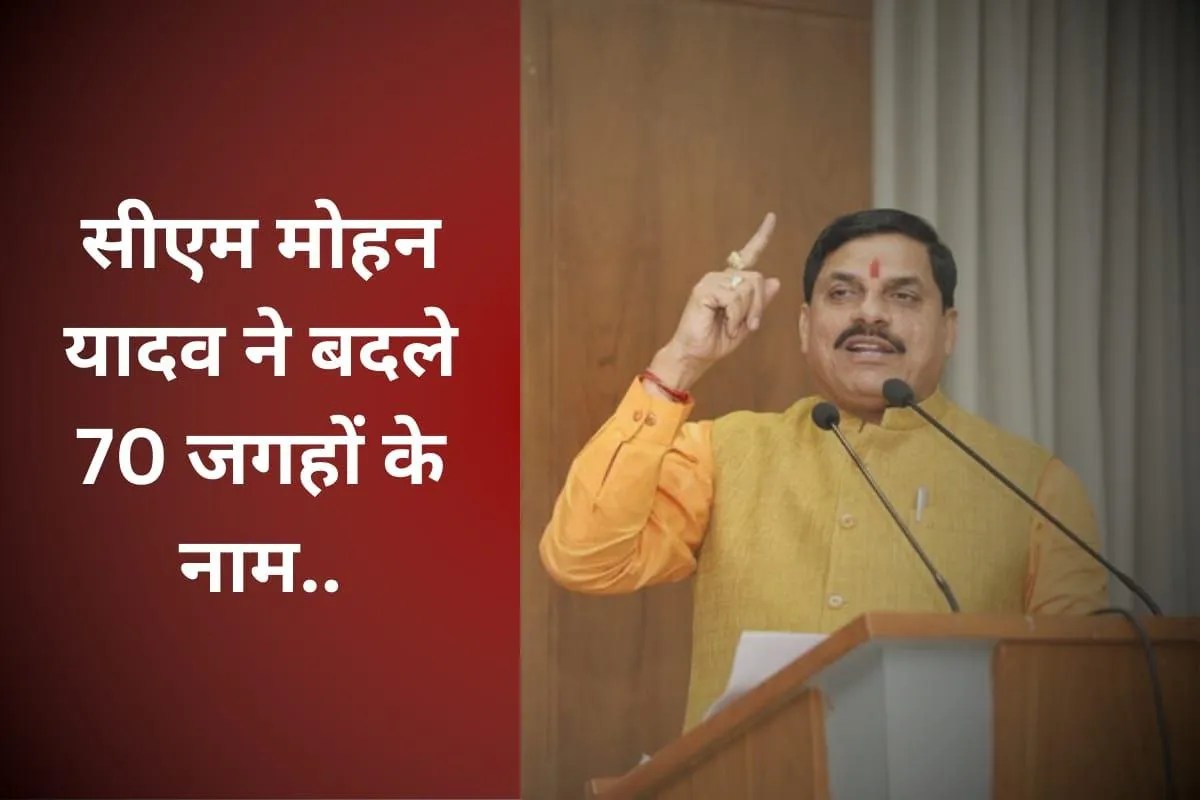
Chief Minister Dr Mohan Yadav’s announcement that 70 places in Madhya Pradesh would receive new names in 2025 has sparked widespread public discussion across the state. What began as an administrative exercise rapidly became a subject of political debate and civic interest, with some renaming decisions proceeding swiftly while others stalled amid public feedback and procedural checks.
Madhya Pradesh place name changes
The naming initiative, announced during 2025, encompassed towns, localities and a number of civic wards across several districts. Officials have handled the process through the standard administrative channels, but the high-profile nature of the announcements — attributed to the chief minister’s direct involvement — ensured sustained media attention and community reaction.
Supporters of the changes argue that renaming can correct historical oversights, honour local figures or restore traditional toponyms. Detractors, meanwhile, have raised concerns about the pace of change, the criteria used to select new names and the administrative costs of updating signage, records and maps. In several cases the process proceeded to formal gazette notifications; in others it was paused pending further consultation with local stakeholders and government departments.

Implementation of place name changes involves multiple steps. Proposals typically move from local municipal bodies to district administrations and then to state-level departments for approval and official notification. Once approved, practical tasks follow, including revising municipal signage, updating revenue and land records, and informing national mapping agencies and postal services. These operational steps can extend timelines and reveal points of friction between political intent and bureaucratic reality.
Public reaction has been mixed. In towns where residents expected a change for historical or cultural reasons, the announcements were welcomed. In others, citizens asked for more time and clearer explanations of the rationale behind specific renamings. Political opponents used some changes to question the government’s priorities, arguing that resources might be better spent on development projects rather than renaming campaigns. Proponents counter that place names form an important part of civic identity and that formal recognition can carry symbolic and practical value.
Legal and administrative safeguards have also come into play. In cases where objections emerged, authorities opted to pause actions to allow hearings, surveys or further administrative review. This reflects the complexity of altering place names in a federal system where municipal, district and state records must align, and where central agencies may need to be notified to reflect changes in national datasets.
As the year drew to a close, some renamings were completed and reflected across local signage and government documents, while others remained pending. Officials have indicated that the process will continue into the coming months as departments reconcile records and complete formal notifications. Observers say the episode illustrates how administrative reforms that touch on identity and history can quickly move beyond bureaucracy to become broader civic conversations.
For now, residents and civic groups across Madhya Pradesh are tracking which of the announced 70 changes will be finalised, which will be revised and which may be abandoned. The state government has signalled that further name-change proposals could be considered in future sessions, but that any decision will have to pass through the prescribed administrative and legal channels before becoming official.
Key Takeaways:
- Madhya Pradesh has announced 70 place name changes in 2025 led by Chief Minister Dr Mohan Yadav.
- The renaming drive has become a public debate, with some changes implemented quickly and others paused for review.
- Officials cite administrative processes for name changes while residents and political groups have expressed both support and concern.








