











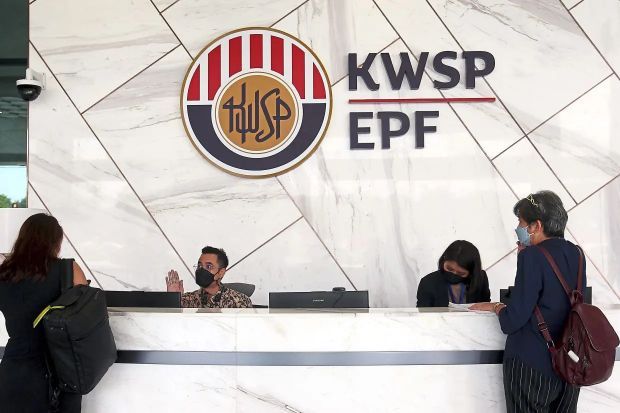
The Employees Provident Fund (EPF) has begun implementing a package of policy and product changes aimed at strengthening retirement adequacy, widening social protection coverage and improving member experience. The measures take effect today and are intended to give Malaysians more flexibility in planning for retirement and other lifecycle needs.
EPF policy changes Malaysia explained
The most immediately notable change is the increase in the haj withdrawal limit from RM3,000 to RM10,000 from Akaun Sejahtera. EPF will also remove the requirement to verify balances in members’ Tabung Haji savings accounts when assessing eligible withdrawal amounts, a move designed to simplify the application process for pilgrims and help them plan haj trips with greater certainty.
To broaden coverage among informal workers, EPF has introduced i-Saraan Plus, a voluntary contribution facility targeted at e-hailing and p-hailing drivers. The scheme includes a higher government matching incentive of up to RM600 per year, subject to a lifetime cap of RM6,000. This builds on existing voluntary routes and seeks to bring more gig economy workers into the formal retirement system.

Separately, EPF will extend the eligibility age for the i-Suri scheme from 55 to 60. The government matching contribution under i-Suri will continue at 50% of annual contributions, capped at RM300 per year and RM3,000 over a lifetime. These adjustments are intended to support homemakers and unpaid family workers who rely on voluntary contributions to accumulate retirement savings.
EPF has also introduced the Retirement Income Adequacy (RIA) Framework, which sets three reference savings tiers to guide members’ planning: Basic Savings (RM390,000), Adequate Savings (RM650,000) and Enhanced Savings (RM1.3 million). The RIA framework will provide members with clearer targets and help inform policy settings such as access to investment schemes and withdrawal rules.
In line with the Enhanced Savings tier, EPF will adjust its withdrawal policy for savings above RM1 million, allowing members aged below 55 greater flexibility to manage excess funds after meeting basic retirement needs. The amount of excess savings eligible for withdrawal will rise gradually by RM100,000 each year over three years, beginning with RM1.1 million in 2026.
The threshold for participation in the Members Investment Scheme (MIS) will be aligned with the Basic Savings level and will be increased in stages. This seeks to ensure that members retain sufficient funds for retirement before using surplus savings for higher-risk investments.
To encourage voluntary saving, EPF is also launching i-Simpan for self-contributions and i-Topup for voluntary excess contributions above the statutory rate. These options complement existing channels such as i-Saraan, i-Sayang and i-Suri, offering members a wider set of tools to boost retirement balances.
EPF said the changes aim to balance immediate financial needs with long-term retirement adequacy, expanding formal coverage while maintaining safeguards for basic retirement security. Full details and frequently asked questions are available on the EPF website at www.kwsp.gov.my.
Financial advisers and employers are likely to consider the implications for retirement planning and payroll management, while gig economy workers and homemakers stand to gain from the expanded matching incentives and eligibility changes. Policymakers will monitor take-up rates and the impact on retirement readiness as the new arrangements roll out.
Key Takeaways:
- EPF policy changes Malaysia introduce higher haj withdrawals, new voluntary schemes and a Retirement Income Adequacy framework.
- i-Saraan Plus offers higher matching for e-hailing drivers while i-Suri eligibility rises to 60 with continued government matching.
- Retirement thresholds set at RM390,000, RM650,000 and RM1.3m; withdrawal flexibility for savings above RM1m will be phased in.








