











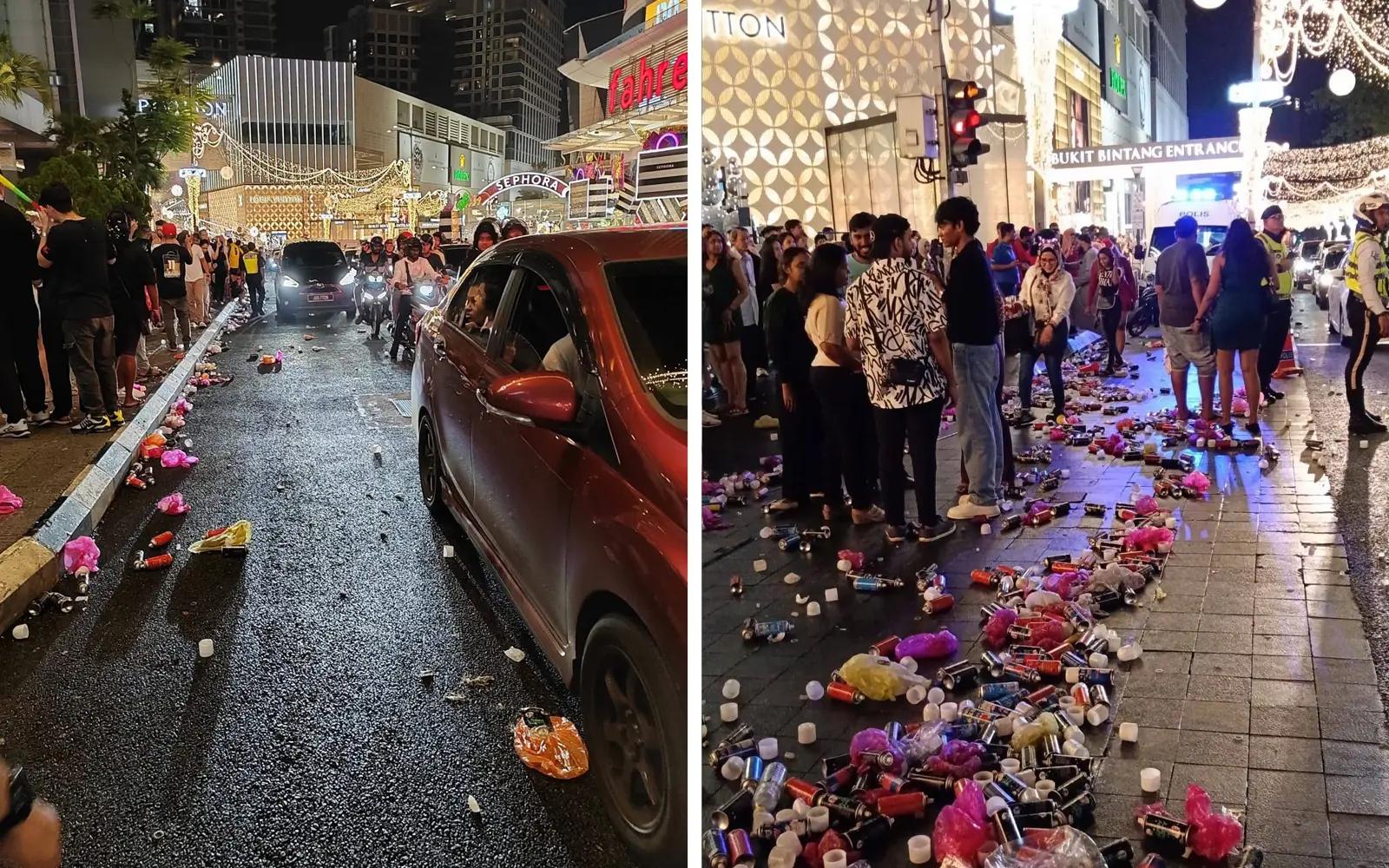
Malaysia has begun stricter enforcement of its anti-littering rules as a community service order under the Solid Waste and Public Cleansing Management Act 2007 (Act 672) took effect in several states. The move, announced by housing and local government minister Nga Kor Ming, aims to curb public littering and improve cleanliness in urban centres.
Nga said 330 personnel from the Solid Waste Management and Public Cleansing Corporation (SWCorp) were mobilised nationwide for New Year operations to ensure the order is enforced. He confirmed that 42 people had been arrested and issued fines in Bukit Bintang, Kuala Lumpur, with 18 identified as foreign nationals and two recorded as children.
Malaysia anti-littering law
The new measures permit courts to order offenders to perform up to 12 hours of community service such as cleaning public areas, collecting rubbish, washing public facilities, cutting grass or clearing cobwebs. Alternatively, upon conviction, offenders may face fines ranging from RM2,000 to RM10,000. Refusal or failure to comply with court-ordered community service will be treated as a separate offence and may attract similar fines.

“No one is protected from the law,” Nga told reporters in Ipoh. “Anyone caught throwing cigarette butts, spitting on the road, or littering will face action. Parents and guardians will be held fully responsible for errant children and will have to pay their compound fines.”
The community service order took effect in Johor, Melaka, Negeri Sembilan, Pahang, Perlis and Kedah, as well as in Kuala Lumpur and Putrajaya. Penang, Selangor, Kelantan and Terengganu are expected to follow once state approvals are completed. State governments that have yet to adopt Act 672 have up to six months to discuss and find suitable methods for implementation.
Local authorities say the combination of visible enforcement and the prospect of court-imposed penalties is designed to change public behaviour quickly. SWCorp teams will focus on hotspot areas where festive littering and improper disposal have been most acute, including popular nightlife and tourist precincts.
Civic groups and environmental advocates have generally welcomed the tougher stance but urged authorities to pair enforcement with education and improved waste infrastructure. Critics warn that enforcement alone may disproportionately affect low-income residents and foreign workers unless accompanied by clear guidance and accessible disposal points.
Nga acknowledged the need for public education alongside enforcement and said state and federal agencies would work together to raise awareness. He added that parents must supervise children in public spaces to avoid compounding the burden of fines on families.
The new measure represents a significant step in Malaysia’s effort to address urban cleanliness and public health concerns. By combining financial penalties with community service, authorities hope to deter littering while channeling offenders’ labour into visible improvements to communal areas.
As states begin implementation, officials will monitor outcomes and adjust enforcement strategies to balance deterrence with fairness and public engagement.
Key Takeaways:
- Malaysia anti-littering law comes into force in several states with tougher penalties and community service orders.
- 330 SWCorp personnel deployed for New Year enforcement; 42 people arrested in Bukit Bintang including 18 foreigners and two children.
- Offenders face 12 hours of community service or fines of RM2,000 to RM10,000; parents held responsible for children.
- Law applies in multiple states and territories while others have six months to adopt implementation measures.








