











Petaling Jaya — Malaysia’s largest teachers’ union has welcomed the Ministry of Education’s plan to standardise school uniforms next year but warned that the move should be the start of broader, substantive reforms rather than a cosmetic fix.
Malaysia education reform: priorities beyond uniforms
Fouzi Singon, secretary general of the National Union of Teaching Professionals (NUTP), said the union hopes the uniform standardisation will lead to meaningful policy changes that address long‑standing issues in the school system. “Standardising uniforms should be the start of more significant reforms,” he said, pointing to a list of immediate challenges that demand action.
Among the concerns Fouzi highlighted were outdated school grading that has not been revised, shortages of teachers in particular subject areas and a growing burden of non‑teaching duties that pull educators out of classrooms. The union receives frequent complaints from teachers who are required to oversee lengthy assemblies or multiple overlapping activities that do not contribute to academic outcomes.

“If the ministry truly wants to move beyond cosmetic changes, activities outside the classroom that have little academic impact should be reduced,” Fouzi said. He added that excessive time spent on administrative and extra‑curricular tasks has left some teachers unable to focus on lesson planning and instruction.
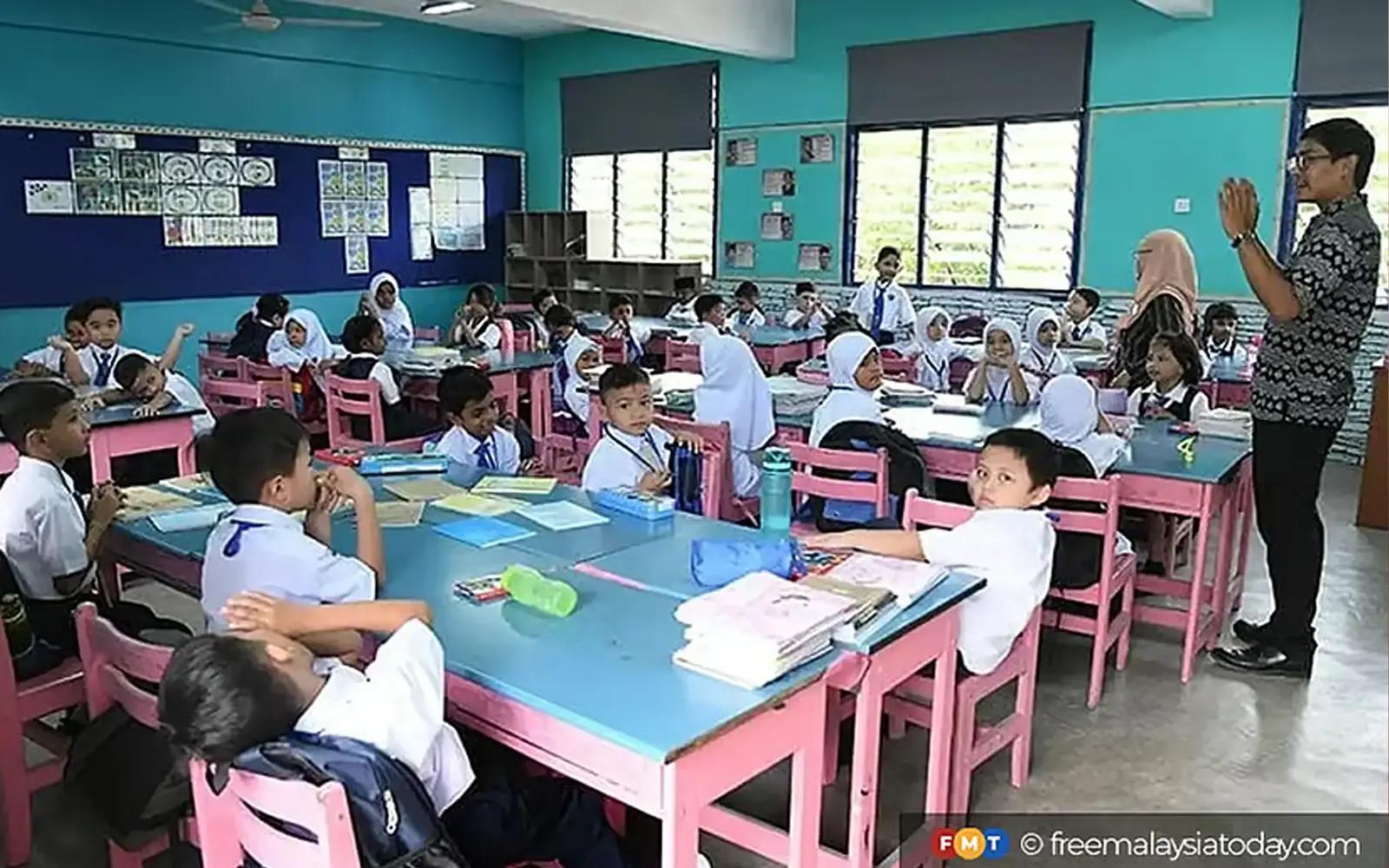
The Ministry of Education’s move follows comments by Director‑General Azam Ahmad, who last month urged schools to avoid measures that do not benefit pupils’ learning. He noted that some schools currently use up to seven different colours for uniforms and rely on multiple T‑shirts for varied activities, with additional items such as blazers and vests increasing parental costs.
Azam said the planned harmonisation of school uniforms aims to ease financial pressure on families and foster a sense of unity among pupils when it is introduced next year.
Local parent‑teacher association representatives echoed the union’s call for a wider reform agenda. Jalil Mastan, a PIBG representative at a national primary school in Penang, said changes to clothing alone would not produce meaningful improvements. “Uniform changes will not have a large impact if the real issues at schools are not addressed,” he said. “There are more pressing matters such as teaching quality, bullying and teacher workload.”
Fouzi urged the ministry to pair the uniform initiative with a focus on strengthening science, mathematics, engineering and technology (STEM) education, expanding responsible use of artificial intelligence and tackling pupils’ social problems. He argued that interest in STEM should be nurtured from primary school with engaging methods rather than high pressure, and that technology roll‑out must not increase the burden on teachers or students.
To make technology such as AI effective in classrooms, Fouzi said investment is needed in infrastructure and teacher training. He also called for targeted recruitment and retention measures for subjects experiencing shortages, along with a review of tasks that divert teachers from teaching.
Education observers say the ministry’s uniform standardisation could be a politically acceptable first step that addresses parental concerns about cost while providing a platform for deeper reform. Union leaders and parent representatives will be watching how the ministry follows up, and whether the next phase includes concrete commitments on staffing, curriculum support and classroom time for core subjects.
The Ministry of Education has not yet released full details of the uniform standardisation plan but has indicated the changes will roll out next year. For many in the education community, the coming months will be a test of whether the policy shift leads to measurable improvements in teaching and learning.
Key Takeaways:
- Malaysia education reform: Teachers’ union welcomes uniform standardisation but urges deeper policy changes.
- Union highlights urgent issues — teacher shortages in key subjects and heavy non‑teaching workloads.
- Calls to strengthen STEM teaching, expand AI infrastructure and reduce activities that remove teachers from classrooms.
- Parents and school representatives warn uniforms alone will not resolve core problems.








