











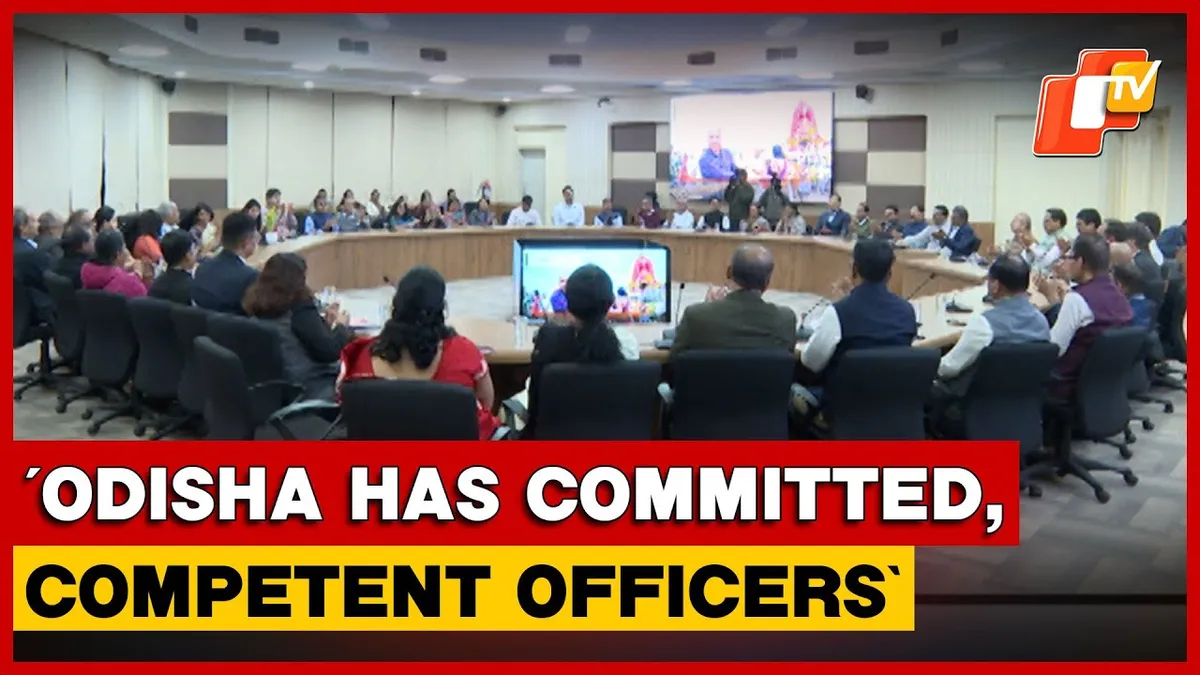
Outgoing Chief Secretary Manoj Ahuja used a recent felicitation event to commend the resilience and capability of Odisha’s civil administration, stressing that the state’s systems and personnel have put it in a strong position to handle governance challenges and public service delivery.
Speaking to a gathering of officials, civic leaders and well-wishers, Ahuja highlighted the strides made in disaster management, welfare implementation and digital outreach. He described the state machinery as having become more responsive and coordinated during his tenure, with an emphasis on pragmatic solutions and rapid execution of policy decisions.
/odishatv/media/youtube_thumbnails/vi/om1gocqvQ_g/maxresdefault.jpg)

Odisha administrative strength in focus
Ahuja pointed to recent crisis responses and routine service delivery as evidence of improved institutional capacity. He noted that investment in training, clearer delegation of responsibilities and strengthened inter-departmental communication had reduced delays and improved outcomes for citizens. These changes, he said, reflect both leadership and the dedication of officers on the ground.
The felicitation offered an opportunity to chart the next steps for the administration as leadership transitions. Several speakers underlined the need to preserve institutional memory and to ensure that reforms are codified so they endure beyond any single tenure. There was broad agreement that handovers should be managed to maintain policy momentum and administrative continuity.
Officials at the event acknowledged that Odisha’s governance record in areas such as disaster preparedness and social welfare had received national attention. Delegated authority, faster decision-making and data-driven monitoring were cited as practical measures that had contributed to timely relief distribution and better targeting of schemes. Ahuja encouraged colleagues to sustain these practices and to continue innovating where needed.
Attendees also discussed the importance of inclusive governance. Several local administrators highlighted efforts to make services more accessible in rural and remote areas through mobile outreach, e-governance initiatives and strengthened local bodies. These measures aim to reduce gaps in service delivery and to bring administration closer to citizens.
Looking ahead, the gathering emphasised capacity building for the next generation of officers. Proposals included more structured mentoring, specialised training programmes and knowledge-transfer mechanisms that preserve on-the-job learning. Such investments were framed as essential to maintain the momentum of reform and to adapt to emerging challenges.
In his closing remarks, Ahuja expressed gratitude for the support he received from colleagues across departments and from elected representatives. He urged continued collaboration between bureaucrats and policy-makers to sustain progress and to reinforce public trust in government institutions. The event concluded with calls for a steady hand during the transition and for a collective commitment to effective, citizen-centred administration.
Key Takeaways:
- Outgoing Chief Secretary Manoj Ahuja praised Odisha’s administrative capacity and preparedness at a felicitation event.
- Ahuja cited strong disaster response, sustained reforms and robust inter-departmental coordination as key strengths.
- The event emphasised continuity, institutional memory and investment in capacity building for future officers.







