











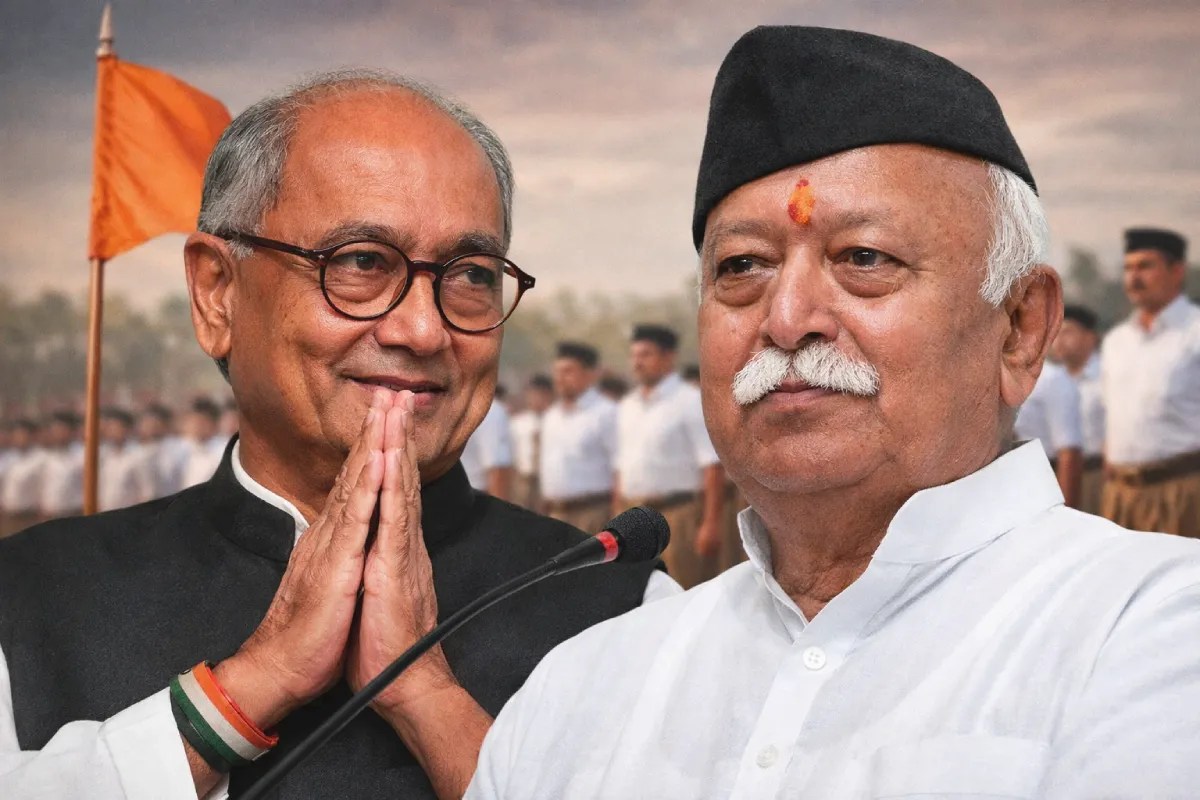
Rashtriya Swayamsevak Sangh (RSS) chief Dr Mohan Bhagwat arrived in Bhopal on Friday for a two-day programme that will see him hold four focused meetings with youth groups, community leaders and women’s collectives. Organisers described the sessions as direct dialogues intended to hear local concerns and reinforce the organisation’s grassroots reach.
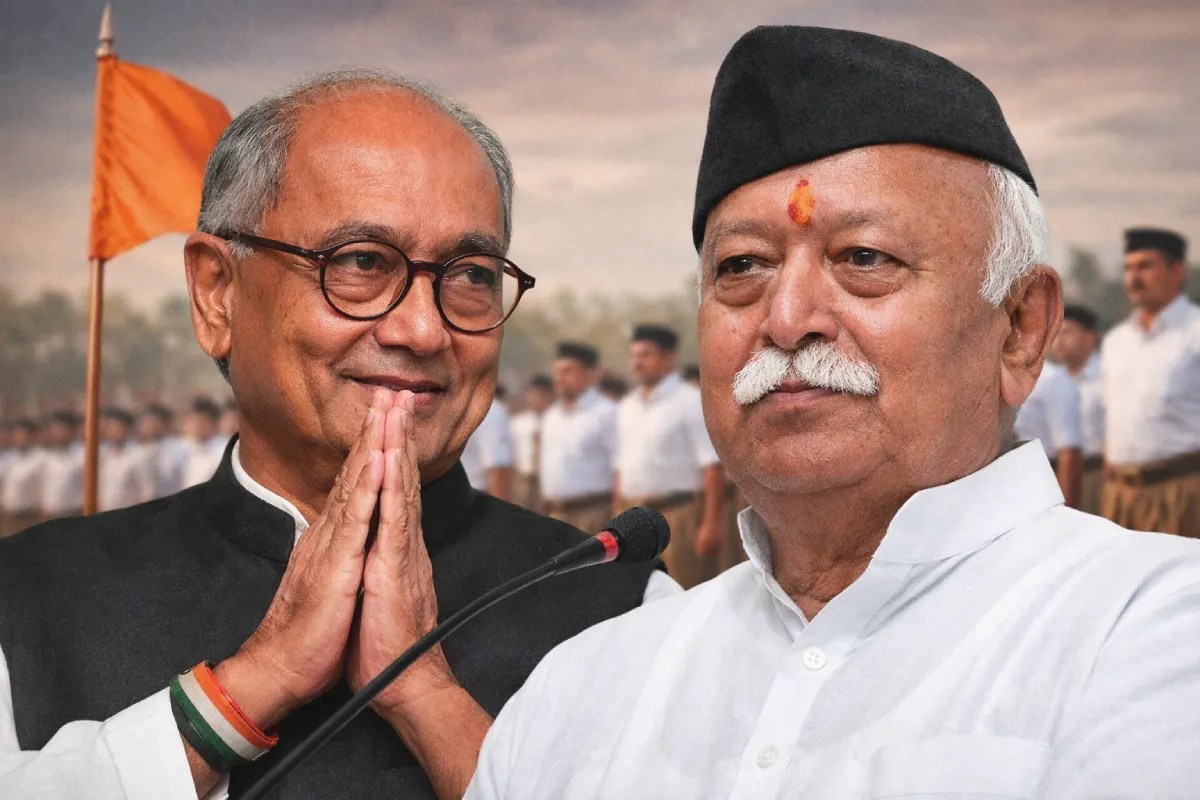
Mohan Bhagwat Bhopal visit and agenda
According to the schedule released by RSS volunteers, Bhagwat will meet separate groups over two days: youth representatives on the first day, followed by meetings with leading figures from civil society and women’s groups. The gatherings are expected to be structured conversations rather than mass public events, reflecting the organisation’s emphasis on internal engagement and local leadership development.

The visit has attracted attention beyond organisational circles because of recent comments by senior Congress leader Digvijay Singh. In a public post, Singh acknowledged the RSS’s organisational strength, a remark that has stirred debate within political circles and intensified media scrutiny of Bhagwat’s itinerary. Analysts say Singh’s acknowledgement has altered the political tone around the visit, prompting parties and commentators to read more into routine outreach.
Political analysts caution that such visits have multiple implications. On one level they are routine engagement by a long-established organisation with extensive local networks. On another, they can influence public discourse and party strategies, especially when senior opposition figures publicly comment on organisational capabilities. The Bhopal meetings therefore combine organisational priorities with a backdrop of heightened political interest.
Local volunteers and attendees quoted by reporters described the meetings as opportunities to raise local issues, ranging from youth employment and skills training to women’s safety and community welfare initiatives. Organisers emphasised that the sessions aim to gather feedback and strengthen local structures rather than serve as platforms for electoral campaigning.
Observers say the tone of the meetings and any public statements that follow will be watched closely by political parties and the media. In recent years the RSS has expanded its social and educational outreach, and visits by its top leadership often serve as moments to recalibrate local operations and strategy.
For the Congress party, Digvijay Singh’s remarks have prompted debate within party ranks about how to engage with the RSS’s organisational presence. Some commentators view his comments as an attempt to acknowledge political realities, while others see them as opening space for broader discussion about civil society and organisation-building in India.
As Bhagwat’s engagements proceed in Bhopal, both supporters and critics will monitor the outcomes closely. The two-day programme, though low on spectacle, may carry significance in shaping conversations at the local and state levels. For now, the visit stands as a reminder of the continuing role of organised social movements in Indian public life and the political attention they attract.
Key Takeaways:
- Mohan Bhagwat Bhopal visit will include four direct meetings with youth, community leaders and women’s groups over two days.
- The RSS chief’s programme in Bhopal gains political weight after Congress leader Digvijay Singh praised the organisation’s strength.
- The meetings are billed as direct dialogues rather than public rallies, signalling organisational outreach.
- Political observers say reactions to Digvijay Singh’s remarks have intensified scrutiny of the RSS visit.








