











Key Takeaways:
- Mostofi al-Mamalek House in Tehran is a registered national heritage building reflecting French and Qajar architectural influences.
- The 50,000 square metre estate has been reduced to about 1,700 square metres and remains largely unrestored.
- Mostofi al-Mamalek House has historical ties to Mirza Hasan Mostofi al-Mamalek, a prominent statesman and philanthropist.
- Current ownership by Iran’s national post has left the site closed to visitors despite its use as a filming location.

Mostofi al-Mamalek House Stands as Tehran’s Architectural Treasure
The Mostofi al-Mamalek House in Tehran is a rare surviving example of late Qajar residential architecture blended with European influences. Built for Mirza Hasan Mostofi al-Mamalek, a prominent statesman who served as prime minister and speaker of parliament during the constitutional era, the house now sits within the remnants of a once vast garden and is registered as a national heritage site.
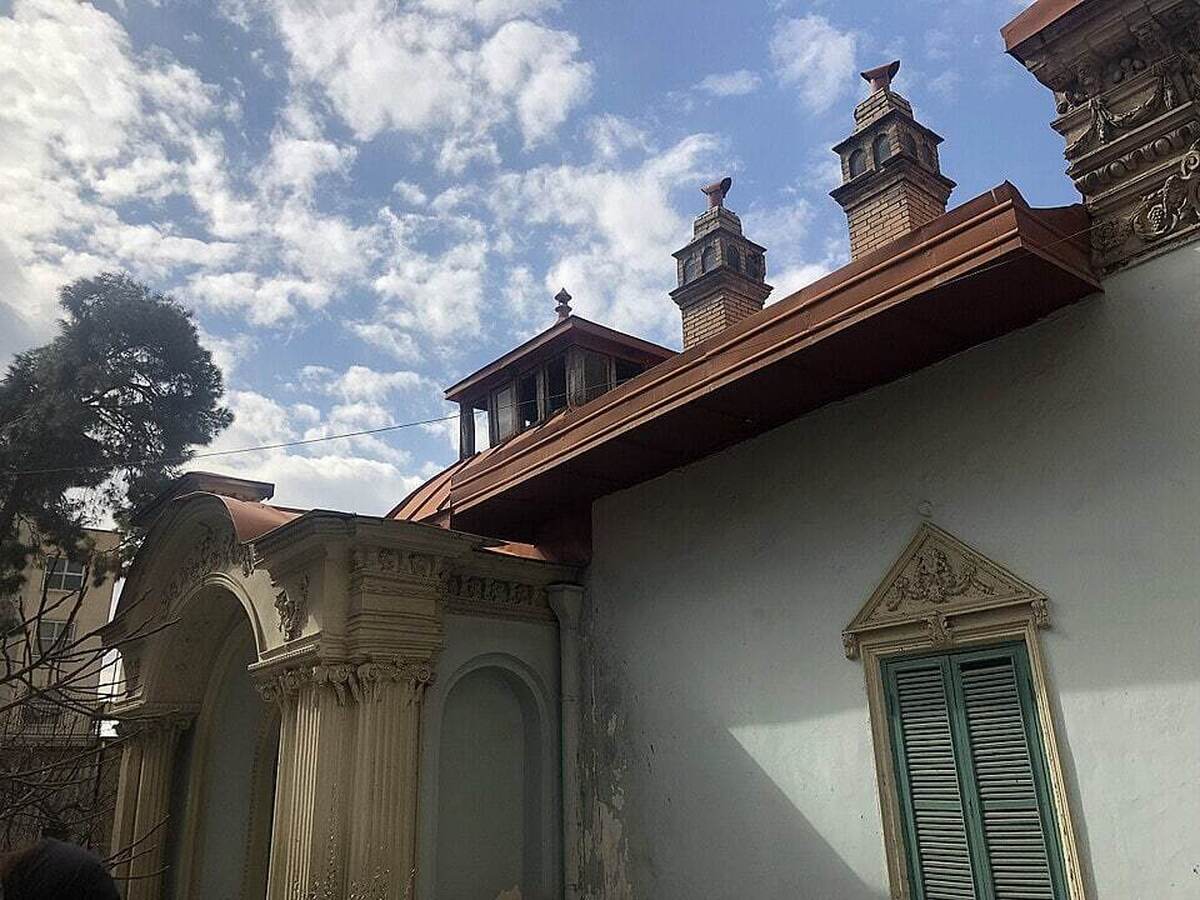
Mostofi al-Mamalek House showcases French and Qajar features
The building occupies what remains of an original estate that covered some 50,000 square metres, of which roughly 1,700 square metres survive today. Mature trees such as acacia, elm and bird cherry, alongside fruit trees including mulberry and greengage, still surround the house and provide a sense of the property’s former scale.
Architecturally, the house is notable for combining French stylistic elements with traditional Qajar layouts. A main eastern entrance leads via a few steps into a courtyard dominated by a long rectangular pool. The plan follows classical symmetry with a central reception hall flanked by smaller corner rooms, while the façades and interior detailing bear European influence introduced during the late 19th and early 20th centuries.
Historical significance and the man behind the house
Mirza Hasan Mostofi al-Mamalek was born into the influential Ashtiani family and inherited the finance ministry at a young age. His political career spanned the constitutional period until his death in 1932. Known for frugality and public service, he reportedly saved thousands of lives during the great famine of 1918 by selling his own properties to provide food. Many of his endowments remain in public use, including land that later became the site of a major educational institution for women.
Interior highlights and the celebrated Butterfly Room
One of the house’s most striking interior spaces is the so-called Butterfly Room in the main reception hall. The hall features a chessboard patterned ceiling in which painted butterfly motifs occupy each square. The butterflies vary in size and colour and resemble species found in tropical climates. The reception hall also opens onto an iwan via three large windows and is balanced by matching alcove rooms on either side.
Current condition and cultural use
After the 1979 revolution the property was purchased by the national postal company and remains under the ownership of the national post. Despite its registration as an Iranian national monument in 1977, the house has received little comprehensive restoration and is effectively closed to the public. Its architectural value has nonetheless made it a popular site for film and television productions, and it has featured in several well known Iranian series and films.
Heritage experts and conservationists argue that the Mostofi al-Mamalek House merits urgent restoration to safeguard its structural fabric and decorative features. Reopening the site with a sensitive conservation programme would allow Tehran’s residents and visitors to appreciate an important chapter in Iran’s architectural and social history.








