











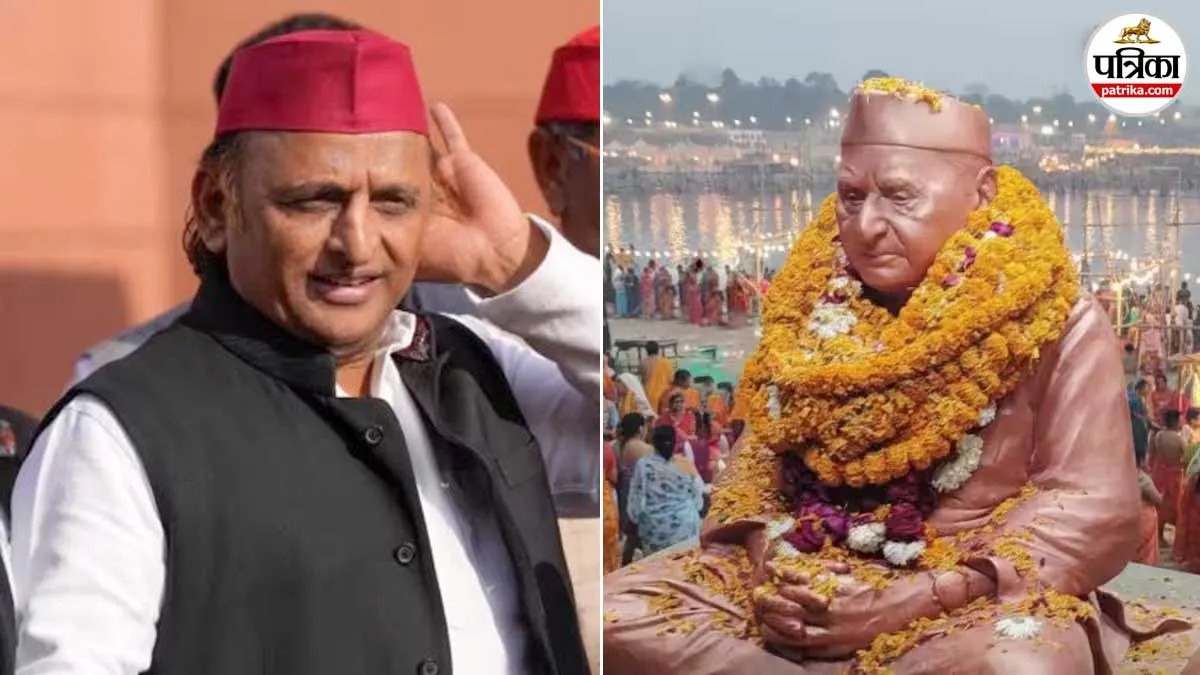
Organisers of the prestigious Magh Mela in Prayagraj have decided not to install a statue of Samajwadi Party founder and former Uttar Pradesh chief minister Mulayam Singh Yadav at the event, the party announced after receiving a notice from mela authorities.
Prayagraj Magh Mela Mulayam Singh statue decision explained
The Samajwadi Party said it will instead place an image of Lord Radha-Krishna at the mela. Party leader Akhilesh Yadav confirmed the decision, stating that the party will only install a deity’s image at the site.
The Magh Mela, held annually on the banks of the Ganges, is one of India’s largest religious gatherings and draws millions of pilgrims. Organisers and local authorities typically enforce strict rules on temporary structures, public displays and installations to ensure crowd safety and maintain the religious character of the event.

According to the notice issued by mela administrators, several types of temporary installations require prior approval. The party took the directive into account and informed mela officials that it would comply by substituting a religious image for a political statue.
The decision removes what could have been a politically sensitive element from the mela, and it appears designed to avoid controversy in a setting devoted to religious observance. While political parties often use public events to pay tribute to leaders, organisers of large faith gatherings frequently discourage prominent political symbolism to prevent tension among diverse groups of pilgrims.
Local observers noted that the move may reflect a pragmatic approach by the Samajwadi Party: placing an image of Radha and Krishna maintains a visible presence at the mela while aligning with the event’s devotional atmosphere. It also ensures compliance with mela regulations and reduces the risk of prompting protests or administrative objections.
Political reactions on social media and in local press focused on the symbolic nature of the change. Supporters of the party framed the decision as respectful of religious customs and the mela’s traditions. Critics argued that public figures and parties lose an opportunity to honour leaders in public spaces, but the administration’s notice ultimately governed the outcome.
Magh Mela officials did not provide a detailed public explanation beyond the standardised notice, but said their priority remained the safety and smooth management of the fair. In the past, mela authorities have restricted large statues and elaborate installations that might obstruct movement or require special security arrangements.
For the Samajwadi Party, the episode is likely a contained episode in a broader political calendar. The party retains other avenues to commemorate its founder and to engage with supporters across the state. The Magh Mela, meanwhile, will continue to centre on its religious observances and traditional rituals, with organisers emphasizing arrangements for pilgrims’ welfare.
As the fair proceeds, attention is expected to remain on practical matters such as crowd control, sanitation and the management of pilgrim services. The decision over the Mulayam Singh statue illustrates how event regulations, religious sensibilities and political symbolism can intersect at major public gatherings, with organisers and parties opting for solutions that minimise conflict while respecting local norms.
Key Takeaways:
- Prayagraj Magh Mela organisers will not install a statue of Samajwadi Party founder Mulayam Singh Yadav following a notice from mela administration.
- The Samajwadi Party has decided to place an image of Lord Radha-Krishna at the mela instead, with party leader Akhilesh Yadav endorsing the move.
- The decision follows directives from mela authorities and reflects sensitivities around public displays during large religious gatherings.








