











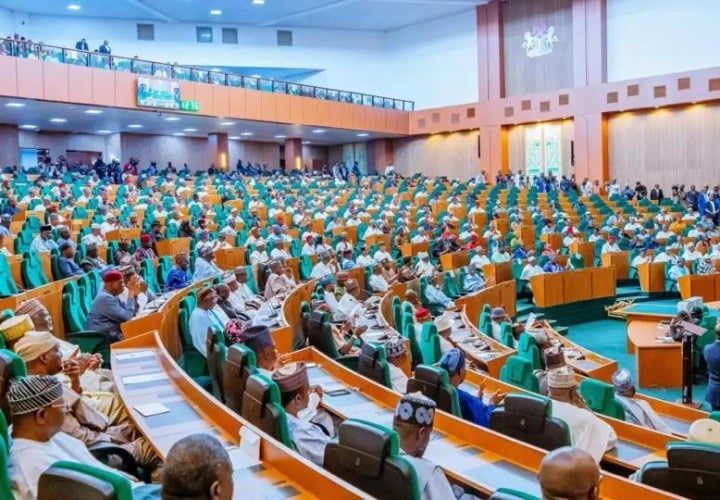
The minority caucus of the House of Representatives has constituted a seven-member fact-finding committee to investigate allegations that the tax reform laws assented to by the President were altered after being passed by the National Assembly.
The committee is chaired by Afam Ogene, the member representing Ogbaru Federal Constituency in Anambra State. It was formed after a lawmaker from Sokoto State, Abdussamad Dasuki, raised concerns on the House floor that the version of the tax laws published in the government gazette differed materially from the harmonised text approved by both the Senate and the House of Representatives.
Speaker Tajudeen Abbas had earlier appointed a seven-member panel to look into the claims. The House later directed the National Assembly Clerk to re-gazette the harmonised version and to issue a True Certified Copy in an effort to resolve the dispute. Nevertheless, the Federal Government proceeded with implementation of the new tax regime from 1 January 2026, following presidential direction.

Nigeria tax reform investigation – what the committee will examine
The minority caucus said the committee will obtain the actual copies of the tax laws passed by both chambers, secure the Federal Government gazette that contains the version alleged to be forged, and scrutinise each document to determine whether the laws signed by the President match those gazetted. If discrepancies are found, the committee is to recommend appropriate actions to the caucus.
In a statement signed by Minority Leader Kingsley Chinda and other caucus leaders, the minority bloc described the investigation as an independent and non-biased effort to establish facts for the national interest. “As the opposition bloc in the House of Representatives, we believe that we owe it to Nigerians to make an independent and non-biased investigation, to establish all the facts and arrive at the truth in the matter of the tax laws,” the statement read.
The panel includes Jonathan Gbefwi, Shehu Fagge, Aliyu Garu, Stanley Adedeji, Ibe Okwara and Marie Ibikake. The lawmakers have been given seven days to submit their report to the minority caucus. The caucus said it remains committed to protecting citizens, particularly poor and vulnerable groups, from any unlawful measures that could diminish their welfare.
The controversy has created political tension at a sensitive fiscal moment. Critics had urged a suspension of implementation pending a conclusive probe, arguing that uncertainty over the correct legal text could expose taxpayers and the government to legal challenge and administrative confusion. Proponents of immediate implementation say delaying the new regime could disrupt revenue plans and fiscal policy for 2026.
Legal experts and parliamentary advisers will likely be central to the committee’s work because the inquiry requires technical comparison of statutory text, gazette publication procedures and certification processes. If the committee uncovers evidence of unauthorised alteration or procedural lapses in gazetting, its recommendations could trigger further parliamentary action or legal proceedings.
For now, the minority caucus has signalled it will pursue the matter to its logical conclusion and urged transparency to restore public confidence in the legislative and executive processes that produced the tax reforms.
Key Takeaways:
- Minority caucus of Nigeria’s House of Representatives has formed a seven-member committee to probe alleged alterations to recently assented tax reform laws.
- The Nigeria tax reform investigation will compare harmonised versions passed by both chambers with the gazetted text and seek certified copies.
- The Federal Government began implementing the new tax regime from 1 January 2026 despite calls for suspension pending inquiry.
- The committee has seven days to report and will recommend actions if infractions are proven.








