











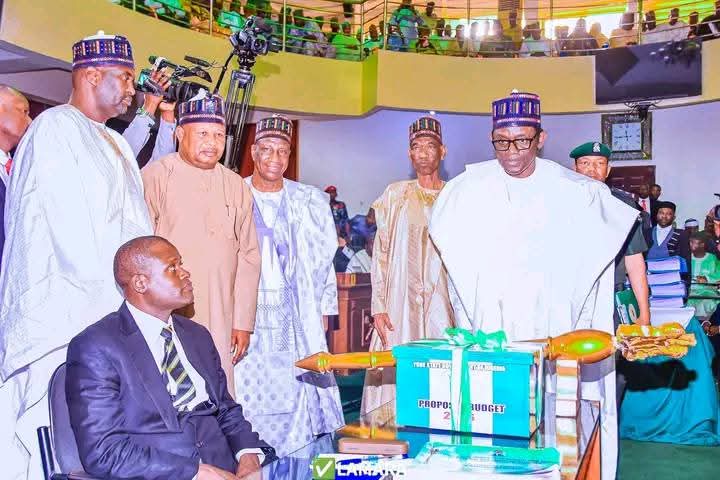
Yobe State Governor Mai Mala Buni has signed the 2026 appropriation and finance bills into law, formalising a N515.5 billion budget aimed at driving economic growth and sustaining infrastructural transformation across the state. The measure, presented as a continuation of ongoing reforms, prioritises investment in education, health, agriculture, infrastructure and job creation.
Yobe 2026 budget
The assembly made a marginal adjustment to the draft, revising the total from N515,583,000,000 to N515,532,000,000 before final approval. Under the approved plan, N291,903,650,000, or 62 per cent of the budget, is allocated to capital programmes. The remainder, N223,628,350,000 or 38 per cent, will meet recurrent expenditure.
Governor Buni commended members of the Yobe State House of Assembly for their commitment to the people and said the law now provides the government with a clear legal framework to execute policies and programmes for the public good. He pledged that the budget would be implemented with accountability, probity and transparency, with strict observance of due process.

“We shall strive to maintain our position as the leading state in Nigeria in fiscal transparency, accountability and sustainability,” the governor said, citing recognition from SIFTAS, a World Bank initiative, and BudgIT, an independent budget tracking organisation, which named the administration among the best in budget implementation and fiscal transparency in recent years.
The government said it will introduce further control measures to encourage financial prudence, minimise unnecessary expenditure and ensure scarce resources are channelled to vital socio-economic services. The office of the Secretary to the State Government, the State Ministry of Budget and Planning and the State Ministry of Finance will provide clear policy direction to ministries, departments and agencies for effective monitoring and assessment.
Officials stressed that the budget is designed to sustain existing projects while expanding access to basic services. Planned capital investments include roads and other infrastructure intended to improve market access for farmers, upgrades to health facilities and new programmes to widen educational opportunities and employment.
Speaker Ciroman Buba Mashio of the Yobe State House of Assembly expressed the legislature’s commitment to a harmonious working relationship with the executive to ensure effective service delivery. Both branches said they would work in concert to monitor implementation and report progress to citizens.
Analysts say the focus on capital projects and transparency could help attract further investment and support from multilateral partners, provided the state sustains budget discipline and delivers on planned projects. Observers will watch for early moves in the first quarter of 2026, when implementing agencies begin releasing funds and rolling out priority projects.
For residents, the central questions remain whether the increased capital allocation will translate into tangible improvements in roads, schools and health centres and whether the promised fiscal controls will reduce wastage and speed up service delivery. The administration has committed to regular monitoring and to reporting progress to the public as the year unfolds.
Key Takeaways:
- Governor Mai Mala Buni signs the Yobe 2026 budget of N515.5bn into law, prioritising education, health, agriculture and infrastructure.
- Capital spending set at N291,903,650,000 (62%) while recurrent services receive N223,628,350,000 (38%).
- The administration emphasizes fiscal transparency and discipline, citing SIFTAS and BudgIT recognitions and tighter financial controls.








