











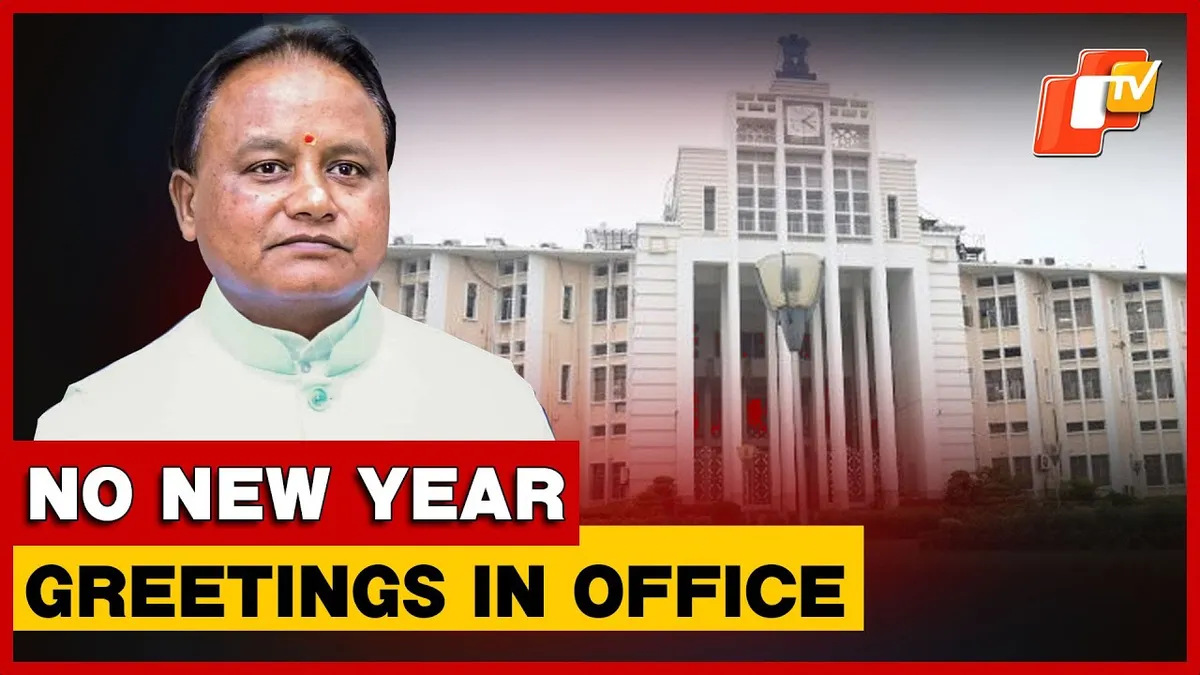
Odisha’s Chief Minister has instructed all state government offices to refrain from exchanging New Year greetings during official working hours, an administrative directive aimed at preserving office discipline and uninterrupted public service delivery. The guidance, circulated through government channels and amplified by local media, asks employees to save festivity for outside formal duty hours and to maintain the focus on essential tasks.
No New Year greetings in Odisha government offices and what the order says
The instruction applies across departments and prescribes that officials should not hold celebrations, distribute greetings or engage in prolonged social exchanges during the course of the working day. While the directive does not ban personal goodwill entirely, it specifies that such exchanges should take place outside office timings so that routine functions and citizen-facing services are not affected.
Government correspondences circulated to heads of departments highlight that the priority must remain delivery of services and adherence to scheduled duties. The advisory stresses that administrative hours are reserved for official work and that informal activities which hamper office productivity should be avoided.

Officials have been asked to communicate the instruction down the line to all staff and ensure compliance through standard supervisory arrangements. The message also encourages employees to observe festive goodwill responsibly, suggesting that small gestures outside work hours would allow colleagues to celebrate without disrupting government operations.
Rationale, context and likely impact
The directive reflects routine administrative efforts to maintain an efficient workplace, particularly during periods of celebration when social activity can reduce staff availability and affect public services. State administrations often issue similar advisories ahead of festivals and national observances to minimise disruption and to reassure citizens that government functions will continue uninterrupted.
From the perspective of public administration, limiting workplace festivities to non-working hours can help ensure that queues at public counters, processing of files and digital services remain timely. For citizens who rely on state services, the instruction is intended to sustain predictable access to offices and to reduce delays that can arise when many staff divert attention to celebrations.
Reactions and enforcement
Initial responses among employees and observers are likely to vary. Some public servants may view the guidance as a sensible measure to protect service delivery, while others might regard it as curtailing informal social customs within the workplace. Enforcement is expected to be administrative rather than punitive, relying on senior officers to monitor adherence and to remind teams of their professional responsibilities.
Local media coverage has noted the government channel and social platforms where the directive was shared, helping to clarify the limits of the guidance and to communicate that greetings are permitted outside official hours. The state has not announced any penalties; rather, it has emphasised the need for responsible celebration in places of work.
Looking ahead
As the new year approaches, the state government is balancing respect for cultural expressions with the imperative to maintain consistent public services. By asking staff to keep celebrations to non-working hours, Odisha’s administration aims to avoid service disruption and to set clear expectations for conduct in government offices. Citizens are encouraged to plan their visits to state offices with the assurance that officials will remain available during normal working hours.
Key Takeaways:
- No New Year greetings in Odisha government offices announced by the Chief Minister to ensure uninterrupted public service.
- The directive asks officials to restrict festive greetings to non-working hours and maintain workplace decorum.
- Departments have been urged to prioritise service delivery and avoid disruptions caused by celebrations.
- The move reflects a wider push for efficiency in state administration ahead of the new year.








