











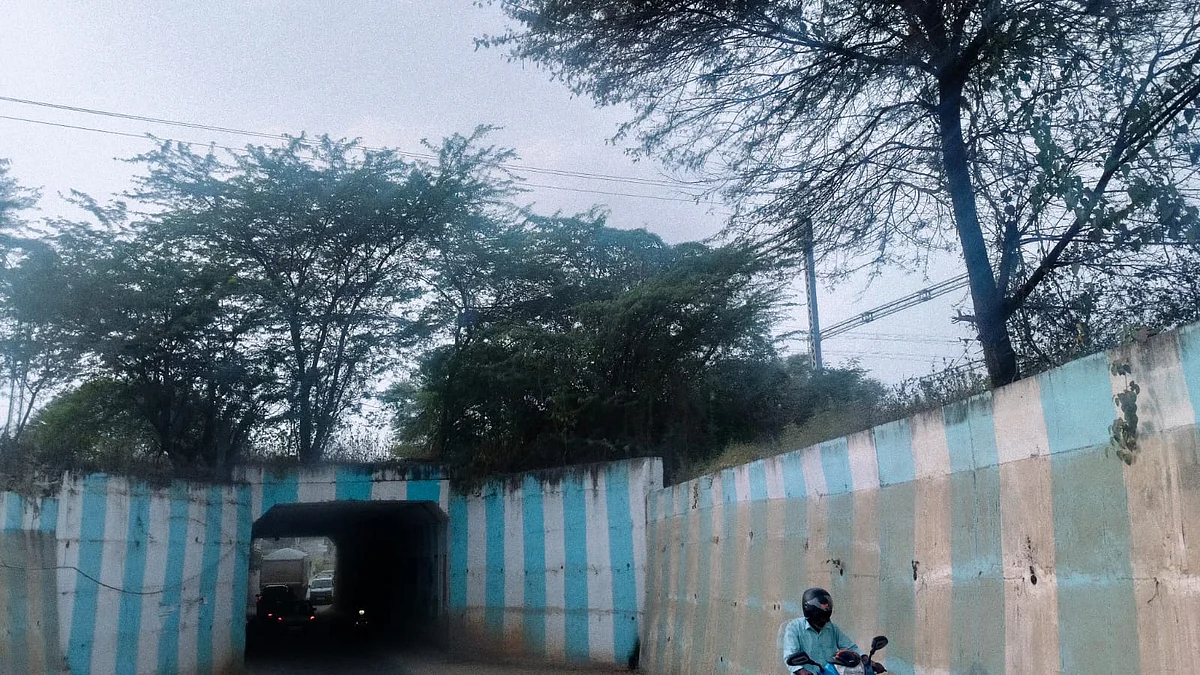
Thick thorny vegetation growing on the railway overbridge at the heart of Gauribidanur has become a growing hazard for pedestrians and motorists, residents say. The overgrowth has not been cleared for several weeks and is obstructing sight lines, spilling debris on to the road beneath, and attracting snakes and other pests.
Gauribidanur railway bridge
The bridge, which links the town to Tumakuru Road and the Karekallahalli route, is used daily by hundreds of vehicles and pedestrians, including many schoolchildren. Locals Jagadish and Satyanarayana told reporters that the thorny shrubs and climbing plants have reached considerable height, narrowing footpaths and forcing commuters closer to moving traffic.
Residents say the vegetation has also damaged the bridge structure and blocked basic maintenance work. When it rains, fallen leaves and thorns mix with mud and oil on the road, creating slippery conditions that make it difficult for pedestrians to walk safely. The lack of adequate lighting under the bridge compounds the risk at night.

“Children who walk to school here are afraid to pass under the bridge when it is dark,” a local resident said. “We have noticed snakes and other small animals coming onto the road. If the railway department does not act, someone may get seriously hurt.”
Road users report that the problem has been persistent. The tangled growth is not limited to a few isolated plants; it covers large stretches of the rail structure, making it harder for maintenance crews to inspect and repair the bridge. Locals fear that continued neglect could accelerate wear to the overbridge and increase repair costs.
Public safety advocates and daily commuters are calling on railway authorities to treat the issue as urgent. They request an immediate clearance of the vegetation, proper disposal of cuttings, improved lighting beneath the bridge, and regular maintenance to prevent regrowth. Such measures would reduce hazards, protect the bridge and ensure uninterrupted movement along this busy town thoroughfare.
Railway officials did not immediately respond to requests for comment. Standard practice in such cases would include trimming and removal of vegetation, assessment of any structural damage, and clearing of drainage channels to prevent water pooling during monsoon seasons.
Civic activists note that regular maintenance can be cost effective compared with delayed repairs. Clearing the vegetation now would restore full visibility for drivers and pedestrians and reduce the likelihood of accidents or pest encounters. It would also help preserve the integrity of the bridge and reduce longer term liabilities for the railway department.
In the meantime, residents have urged commuters to exercise extra caution when passing under the bridge and suggested temporary measures such as warning signs and reflective tape until permanent repairs and vegetation clearance are completed. The community is hopeful that action will be taken soon to make the route safe again for everyone who relies on it daily.
Key Takeaways:
- Overgrown thorny bushes on the Gauribidanur railway bridge are obstructing pedestrians and motorists and harbouring pests.
- Residents report poor lighting and drainage, increasing risks during rains and for schoolchildren who use the route daily.
- Local residents urge railway authorities to clear vegetation and repair the bridge to prevent damage and accidents.








