











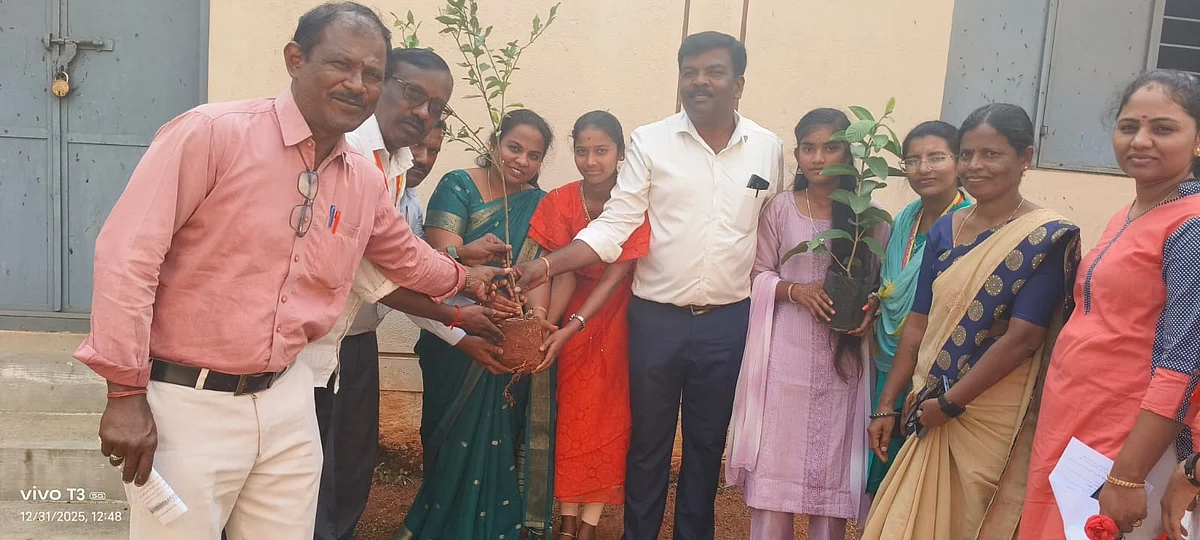
In Pavagada, Child Development Project Officer D.J. Sunitha used a government school event to highlight the urgent need to tackle prenatal sex determination and protect the rights of the girl child. Speaking at a Vanamahotsava programme held at the government pre-university college, she underlined that the primary purpose of the Pre-Conception and Pre-Natal Diagnostic Techniques (PCPNDT) Act is to restore and maintain a balanced sex ratio in India.
Sex ratio balance in India: local awareness and legal enforcement
Sunitha told attendees that conducting prenatal sex determination and committing violence against female foetuses are punishable offences under the PCPNDT Act. She warned that those who favour sons to the exclusion of daughters sometimes take the extreme step of female foeticide, a crime that attracts stringent penalties. The official said the sex ratio in some areas has reached dangerously skewed levels and called for immediate corrective action.
The Vanamahotsava gathering combined environmental activities with public education on child welfare laws. The awareness session explained how evolving medical and communication technologies can be misused to facilitate illicit sex selection, and urged citizens to be alert to any such malpractice. Sunitha emphasised that combating these crimes requires both strong legal enforcement and informed community participation.

Students from nearby government high schools were invited to attend, and the programme included an essay competition under the Bachaavo Beti Padavo initiative, which encourages protecting and educating the girl child. The competition aimed to engage young people in reflection and action on gender equality and the value of girls in society.
Present at the event were district resource centre coordinator Shashidhar; the principal of the government pre-university college, Ramakrishnappa; and local officials Raghuveerappa, Kariyanna, as well as Anita and Jayamma from the counselling centre. Their presence underlined the collaborative nature of the campaign, bringing together education, child welfare and community support services.
Speakers urged residents to report violations of the PCPNDT Act and to support efforts that promote the health and education of girls. They recommended regular monitoring of diagnostic clinics, public information campaigns and school-based activities to shift social attitudes that favour sons. The officials also called for parents, medical practitioners and educators to play an active role in preventing misuse of technology for sex selection.
The Pavagada event acted as a reminder that reversing the decline in the sex ratio is possible with concerted local action. By combining legal awareness, school engagement and community vigilance, organisers hope to reduce instances of prenatal sex determination and ensure better prospects for girls in the region.
Key Takeaways:
- Child Development Project Officer D.J. Sunitha stressed that the PCPNDT Act aims to prevent prenatal sex determination and restore sex ratio balance in India.
- The Vanamahotsava event at a government pre-university college combined environmental activities with awareness on female foeticide and legal penalties.
- Officials warned that advancing technology is being misused for sex selection and called for community vigilance and strict enforcement.
- Students participated in an essay contest under the Bachaavo Beti Padavo initiative to promote girl child education and protection.








