











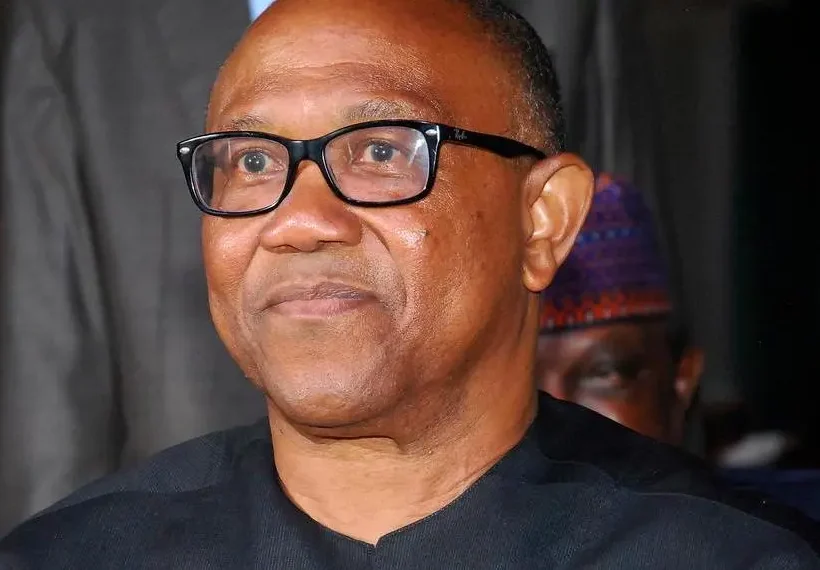
Peter Obi, the 2023 presidential candidate of the Labour Party (LP), has formally aligned himself with the African Democratic Congress (ADC), announcing the move at a rally in Enugu on Wednesday. The former Anambra State governor said the transfer of allegiance is part of a wider strategy to present a united opposition platform ahead of the 2027 general election.
Peter Obi joins ADC and the path to 2027
Speaking at Nike Lake Resort Hotel, Obi told supporters that the decision marks the start of a renewed effort to “rescue” Nigeria from what he described as poor leadership. “We are ending this year with the hope that in 2026 we will begin a journey of rescue of our country,” he said, warning those who plan to manipulate the 2027 polls that they would be resisted by “every means lawful and legitimate.”
The event saw a number of high-profile defections. Senators Enyinnaya Abaribe (Abia South), Victor Umeh (Anambra Central) and Tony Nwoye (Anambra North) publicly joined the ADC, alongside former Ebonyi governor Sam Egwu and ex-PDP chieftain Ben Obi. Gilbert Nnaji, who earlier left the PDP for the ADC, also attended.

Obi described his move as formalising existing commitments rather than a straightforward defection, saying he had participated in discussions that produced the National Opposition Coalition Group, which in July selected the ADC as its platform for the 2027 election. “So, we have all come together to ensure that we become full members of this coalition of ADC led by Senator David Mark,” he told the crowd.
ADC national chair David Mark, a former Senate president, welcomed the newcomers and said their arrival would “impact heavily” on national politics. Mark urged the defectors to help build party membership across the country, saying the ADC offers “a genuine sense of belonging and equal opportunity” for every geopolitical zone.
The rally also attracted prominent figures from across the political spectrum. Former Sokoto governor Aminu Tambuwal and former Imo governor Emeka Ihedioha were present, signalling wider interest in the coalition. Earlier in 2025 several politicians from different parties formed the National Opposition Coalition to challenge President Bola Tinubu at the polls.
Obi criticised the Tinubu administration’s policies, citing dissatisfaction with a proposed tax regime and broader governance concerns. His supporters said the ADC will be a “family of change” committed to creating a new Nigeria rather than engaging in patronage or exclusion.
Political analysts note the defections underline growing realignment within Nigeria’s opposition ahead of the next general election. The consolidation around the ADC could sharpen electoral competition and force major parties to recalibrate their strategies, particularly in the South-east where Obi retains strong support.
For now, the ADC faces the task of converting high-profile defections into sustained grassroots organisation and a coherent national platform. With 2027 on the horizon, the party and its new members will be tested on their ability to present a credible, unified alternative to the current administration.
Key Takeaways:
- Peter Obi joins ADC, formalising his role in a broad opposition coalition ahead of the 2027 election.
- Several senior politicians from the South-east and other parties defected to the ADC during the Enugu rally.
- ADC chair David Mark framed the move as the start of a nationwide coalition and urged mobilisation for 2027.
- The shift follows months of internal Labour Party disputes and the formation of a National Opposition Coalition earlier in 2025.








