











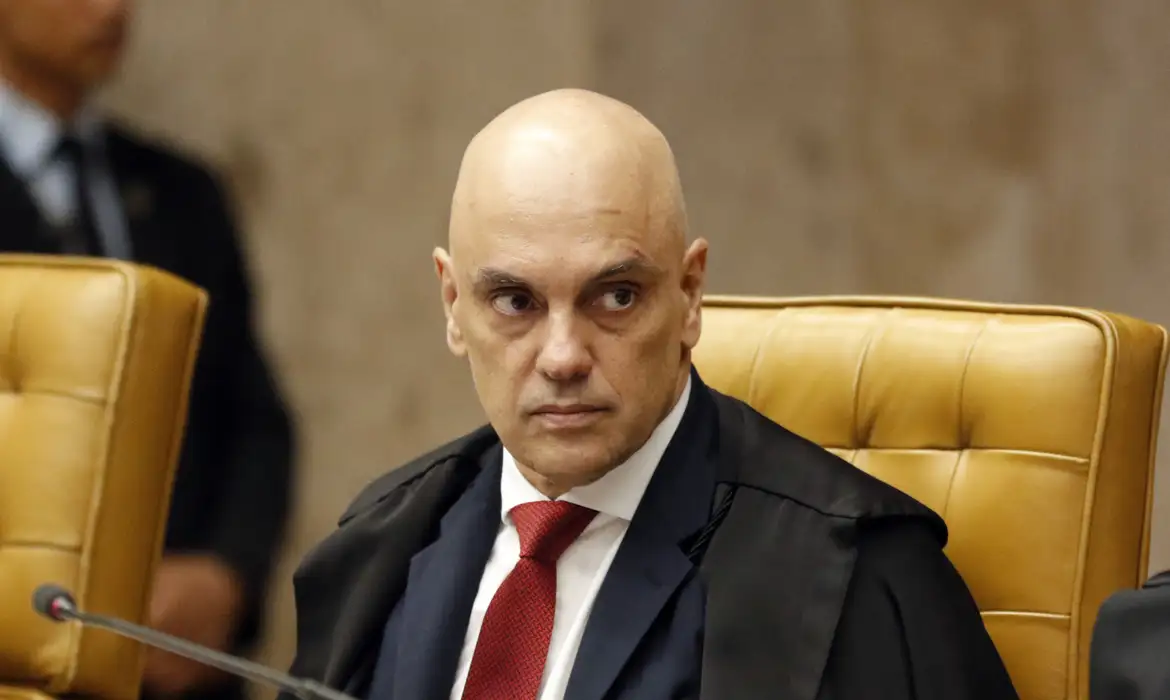
The Prosecutor‑General of the Republic, Paulo Gonet, has ordered the archiving of a request to investigate Supreme Court minister Alexandre de Moraes in connection with the Banco Master affair, citing an absence of concrete evidence to support the allegations.
Moraes Banco Master investigation archived by the Prosecutor‑General
The representation was lodged by lawyer Enio Martins Murad of Mato Grosso do Sul, who is not a party to any of the proceedings on the matter before the Supreme Federal Court. Murad alleged that Moraes had repeatedly contacted the president of the Central Bank, Gabriel Galípolo, to advance private interests tied to Banco Master and that he had referenced a service contract between the bank and the law firm of his wife, Viviane Barci de Moraes.
Those claims followed columns published by Malu Gaspar and Lauro Jardim in O Globo, which reported that Moraes had spoken with Galípolo on at least four occasions, both in person and by telephone. The press suggested the conversations concerned the attempted purchase of Banco Master by BRB, a deal later blocked by the Central Bank, and the existence of a legal services contract worth R$130 million that runs until 2027.

Murad asked for an inquiry into possible crimes of influence peddling and breaches of public administration principles. In a document signed on 27 December, however, Gonet emphasised the “absolute absence of minimal evidentiary basis” to sustain the accusations against either Galípolo or Moraes. He said the media coverage had not produced material indicia demonstrating intimidation or improper conduct, and that it relied on supposition rather than proof.
On the question of the contract between Viviane Barci de Moraes and Banco Master, the Prosecutor‑General wrote that no illegality was apparent at first glance. He observed that the Supreme Court’s jurisdiction does not extend to intervening in lawful agreements between private parties, particularly where the autonomy of legal practice is protected.
Moraes issued a public statement following the reports, denying any improper behaviour. He said that his communications with Galípolo did not involve pressure or efforts to benefit Banco Master, and that the matters he raised related to the Magnitsky Act, which has been applied by the United States. The minister also stated that his wife’s firm never represented Banco Master in the BRB‑Master acquisition before the Central Bank.
The decision to archive the request does not prevent future action should new, substantiated evidence surface. For now, the Prosecutor‑General’s ruling places the matter beyond the scope of criminal inquiry at the federal level, reinforcing the principle that media reports, however influential, require corroborating material evidence to trigger formal investigations.
Legal analysts say the episode highlights tensions between press scrutiny and legal standards of proof in high‑profile cases involving public figures. While the archiving will be welcomed by supporters of the minister as a vindication, critics may continue to press for transparency and for the publication of any documents that could either confirm or dispel lingering doubts.
Key Takeaways:
- PGR Paulo Gonet ordered the archiving of the request to open an inquiry into the Moraes Banco Master investigation due to lack of concrete evidence.
- The complaint alleged undue influence involving contacts between Minister Alexandre de Moraes and Central Bank president Gabriel Galípolo, and a contract between the bank and Moraes’s wife.
- Gonet concluded the media reports did not provide minimal probative support and said the private contract did not indicate illegality.
- Moraes denied wrongdoing, saying his contacts concerned the Magnitsky Act and that his wife’s firm did not act before the Central Bank on the BRB-Master deal.








