











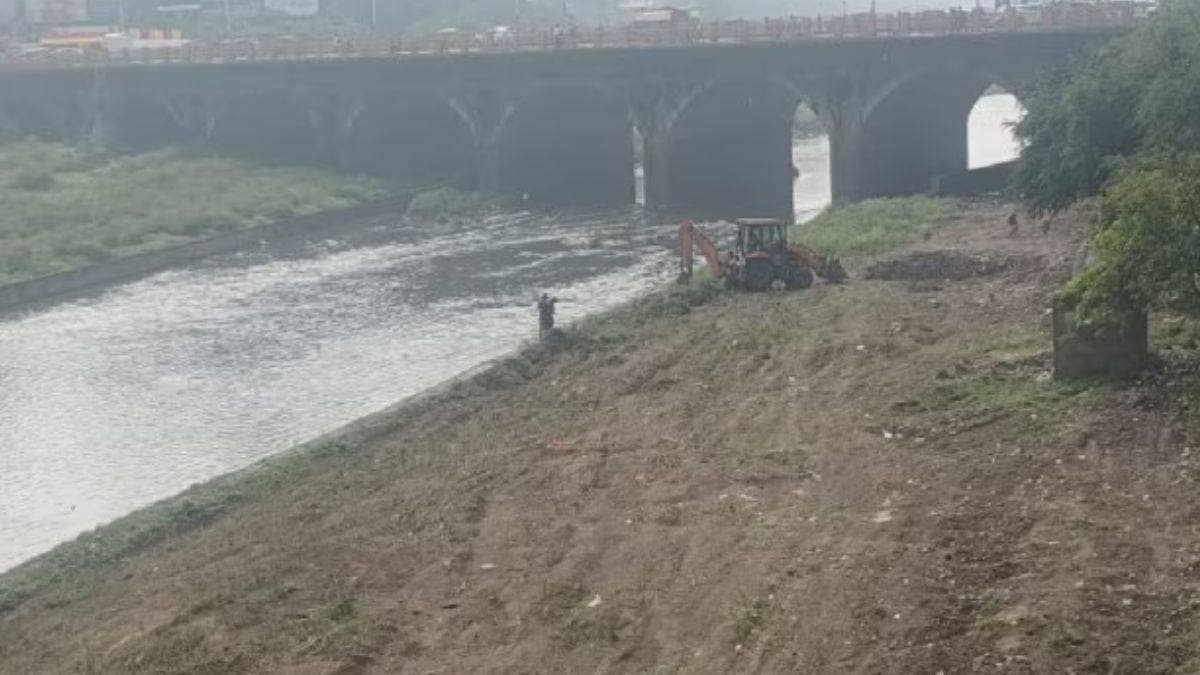
The Pimpri-Chinchwad Municipal Corporation has set out an ambitious programme to revive three polluted rivers that flow through the city — the Pavana, Indrayani and Mula. The plans, modelled on Ahmedabad’s Sabarmati restoration, propose bank-to-bank interventions, sewage treatment capacity and public works along a combined length that exceeds 59 kilometres.
Pimpri-Chinchwad river revival: funding and implementation status
Officials estimate the Pavana restoration will cost approximately ₹1,556 crore for works along both banks of its 24.40 km stretch through the city. The Indrayani project, covering roughly 20.6 km from Talwade to Charholi, carries an estimated price tag of ₹1,200 crore. One-sided restoration of the Mula, over 14.40 km, is expected to require about ₹750 crore. Taken together the schemes approach a total requirement of roughly ₹3,506 crore.
The civic body’s environment department has already floated tenders for the initial phase. A first-stage tender worth about ₹443.51 crore was published in November for early works. For the Mula project, a first-phase mobilisation of ₹200 crore has been arranged as loan reserves and parts of the Mula contract were awarded to B. G. Shirke Construction Technology in April 2023, with on-ground work beginning in 2024.

Despite detailed proposals and engineering drawings drawn up by an Ahmedabad-based organisation on the lines of the Sabarmati revival, funding shortfalls have slowed progress. The administration is exploring multiple financing routes including loans, municipal bonds, central and state grants, and public–private partnerships to bridge the gap.
Operational hurdles and environmental concerns
Officials and residents point to persistent pollution as the primary problem. Large-scale encroachment along riverbanks, direct discharge of untreated industrial and domestic effluent, and clogged, narrowed channels have left river water dark green and foul-smelling for much of the year. Floating mats of aquatic weeds intensify the odour outside the monsoon months.
Environmentalists have highlighted the urgent need for decentralised sewage treatment plants (STPs) in villages bordering the rivers. The administration has said two STPs of 40 MLD and 20 MLD capacity are planned near Chikhli to check Indrayani pollution, and activists demand similar facilities for all riverside settlements to prevent raw sewage from entering the channels.
Tree-cutting dispute and project delays
Work on the Mula has been particularly slow after authorities identified the need to fell around 450 mature trees along the alignment. Permission to remove the trees was not granted promptly, stalling progress and prompting concerns about balancing river restoration with urban greenery. Engineers say careful planning for compensatory planting and minimising ecological harm is part of the next stage.
On a positive note, the Indrayani scheme has received support under the AMRUT/Amrit initiative, with an allocation of ₹550 crore approved, to be shared 50:25:25 between the central government, state government and the municipal corporation respectively. The civic chief engineer, Sanjay Kulkarni, told reporters that once funding is secured the tender processes will be completed and on-site work will accelerate.
Residents and environmental groups welcome the comprehensive plans but stress that infrastructure alone will not restore the rivers. Long-term success will require strict enforcement against illegal discharges, regular operation of STPs, community engagement and transparent use of the funds earmarked for the Pimpri-Chinchwad river revival.
Key Takeaways:
- Pimpri-Chinchwad river revival plan outlines restoration of the Pavana, Indrayani and Mula rivers with a combined estimated cost of around ₹3,506 crore.
- Tenders for the first phase worth about ₹443.51 crore have been issued; funding options include loans, municipal bonds, grants and PPP models.
- The Indrayani project has AMRUT backing with ₹550 crore earmarked; Mula works face delays after tree-felling permissions stalled progress.
- Environmental measures including new STPs along riverfront villages are essential to stop raw sewage and chemical discharge.








