











Key Takeaways:
- DRDO’s Pinaka Long Range Guided Rocket (LRGR-120) achieved a direct hit in its maiden flight test, validating guidance and accuracy at 120 kilometres.
- The LRGR-120 extends the Pinaka MLRS range from under 75 kilometres to 120 kilometres while remaining compatible with existing launch platforms.
- Defence Minister Rajnath Singh praised the test as a boost to India’s defence preparedness and Atmanirbhar Bharat goals.
- The successful test advances indigenous long-range precision strike capability and paves the way for further trials and induction.

Pinaka Long Range Guided Rocket Scores Direct Hit in First Flight Test
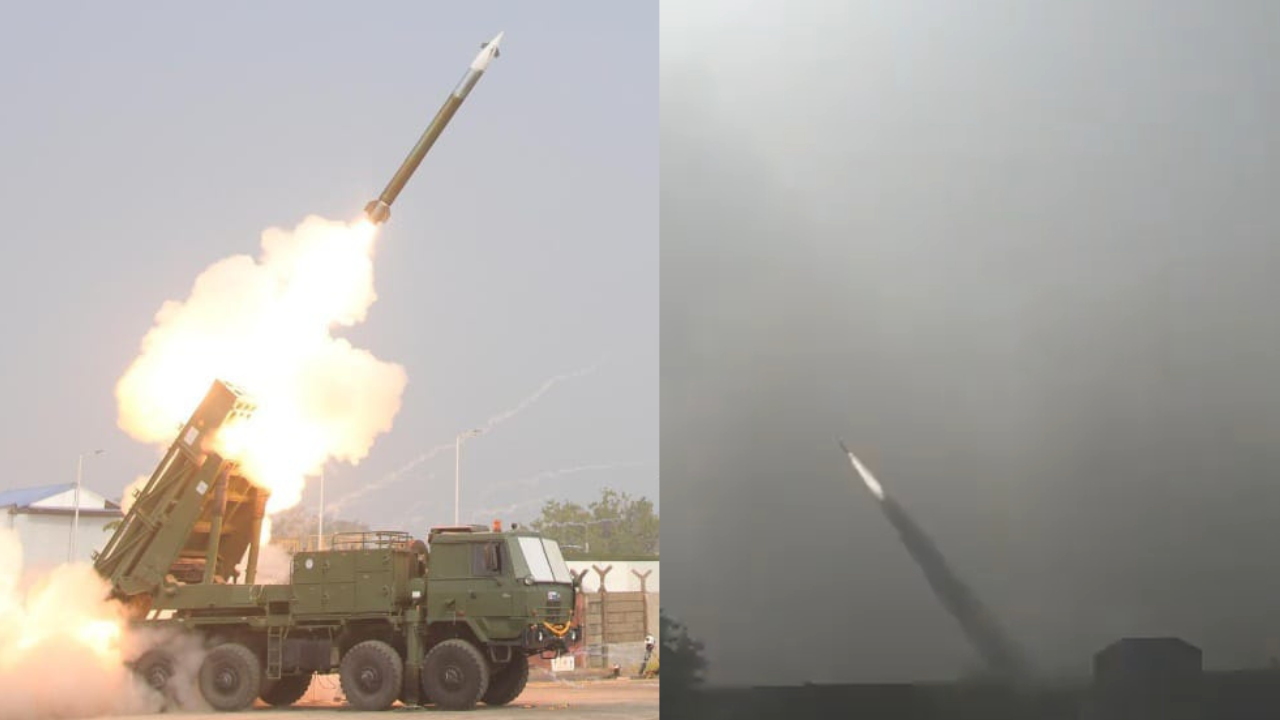
India has successfully conducted the first flight test of the Pinaka Long Range Guided Rocket (LRGR-120), with the Defence Research and Development Organisation (DRDO) reporting a direct hit during the maiden launch at the Integrated Test Range in Chandipur. The test, carried out on Monday, validated the rocket’s extended range, guidance systems and accuracy.
Pinaka Long Range Guided Rocket delivers pinpoint accuracy in first test
The LRGR-120 has been developed to give the Indian Armed Forces a long-range precision strike option that can be launched from the existing Pinaka multiple launch rocket system (MLRS) platforms. During the test, the rocket flew to its intended impact zone at a range of 120 kilometres and struck the target as planned, confirming the effectiveness of its navigation and control mechanisms.
DRDO engineers and technicians monitored telemetry and guidance data in real time. Officials said the flight trial assessed the rocket’s aerodynamic performance, propulsion, and onboard guidance suite under operational conditions. The test’s success signals a major step in enhancing artillery reach while preserving launcher interoperability, since the new rockets do not require modifications to existing Pinaka hardware.
Defence Minister Rajnath Singh congratulated the DRDO team and other stakeholders, describing the trial as a boost to India’s defence preparedness and to the Atmanirbhar Bharat initiative. The government has emphasised the need for indigenously developed systems to reduce dependence on foreign suppliers and to strengthen domestic defence manufacturing capabilities.
The Pinaka family of systems has already been deployed with the army in variants with ranges of around 40 kilometres and 75 kilometres. The LRGR-120 roughly doubles the maximum effective range available from current rockets, allowing forces to engage deeper targets while maintaining the rapid response and saturation fire capabilities that are characteristic of MLRS platforms.
Analysts say the LRGR-120’s combination of extended range and precision guidance enhances operational flexibility for land forces. The ability to fire long-range guided rockets from existing launchers reduces logistical complexity and lowers the cost of upgrading firepower across deployed units.
DRDO officials noted that further validation trials will follow to consolidate the system’s reliability and to support the transition to production. These tests will include repeated flight trials in different environmental conditions, integration with fire-control systems, and live-cargo handling assessments to prepare for induction into service.
Manufacturing partners and ordnance factories are expected to scale up production once the DRDO completes user trials and the defence acquisition authorities clear the system for procurement. Procurement timelines will depend on trial outcomes, production readiness and budgetary approvals.
The successful maiden flight of the Pinaka Long Range Guided Rocket marks a tangible advancement in indigenous artillery capability. By extending the strike envelope of an already fielded system without requiring launcher changes, the LRGR-120 offers a practical route to modernising artillery units and increasing stand-off options for commanders on the battlefield.








