











Key Takeaways:
- Two Brazilian patients with complete spinal cord injuries regained sensation and limited movement after polylaminin injections administered under court order.
- Researchers from UFRJ and surgeon teams report objective clinical signs, but national regulator Anvisa has not yet authorised clinical trials.
- Prior case studies, rehabilitation and controlled clinical trials will be essential to confirm safety and efficacy of polylaminin spinal cord regeneration.

Two patients in Brazil who suffered complete spinal cord injuries have shown early signs of sensory recovery and small voluntary movements after receiving injections of polylaminin, research teams reported. The treatments were carried out under judicial authorisation and were monitored by the group led by biologist Tatiana Coelho de Sampaio of the Federal University of Rio de Janeiro.
Polylaminin spinal cord regeneration shows early signs in recent cases
Both patients received the polylaminin injections within two weeks. One is a 37-year-old man who was treated in Cachoeiro do Itapemirim after a motocross accident in early December. Less than 48 hours after the procedure, clinicians recorded return of tactile sensation in his lower limbs and, on subsequent assessment, noted contraction of thigh muscles, improved perianal muscle activity and an expanded area of sensitivity.
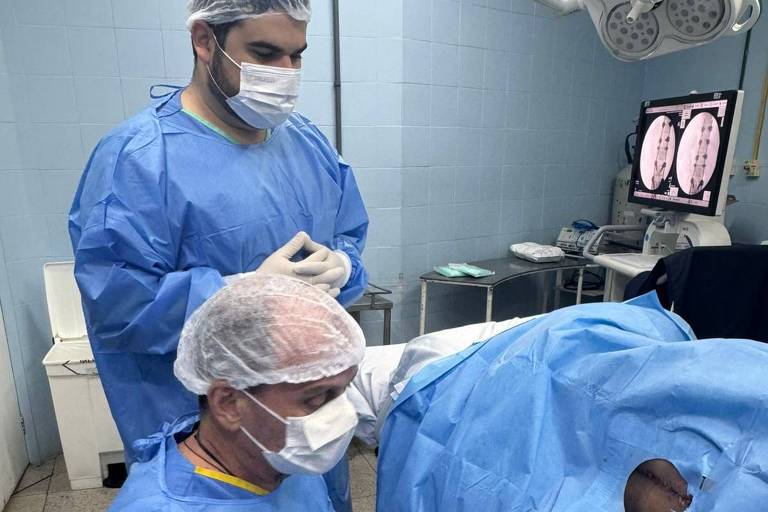
The second patient, a 35-year-old man treated in a Rio de Janeiro hospital, had been paraplegic following a motorcycle fall. Surgeons reported that he produced a slight foot movement and regained some sensation in parts of his legs. The neurosurgeon who performed both procedures, Bruno Alexandre Côrtes of Hospital Municipal Souza Aguiar, said pre-operative imaging showed a complete transection of the spinal cord, and that the observed changes are unlikely under normal circumstances without intervention.
Polylaminin is a substance derived from human placenta that has shown promising results in preclinical studies and in a limited number of volunteer cases. One widely cited early case involved Bruno Drummond de Freitas, who received polylaminin within 24 hours of a traumatic injury and, after five months of rehabilitation, recovered significant motor function and was able to walk.
Despite these encouraging accounts, Brazil’s National Health Surveillance Agency, Anvisa, has not authorised the transition to full clinical trials. The regulator has said it is treating the laboratory Cristália’s clinical development proposal as a priority and is evaluating additional safety data submitted on 19 December. Anvisa has also noted that judicial decisions authorising individual applications must be complied with while the agency continues its assessment.
Researchers and independent clinicians stress the need for controlled clinical trials to establish causation, safety and long-term outcomes. Marcelo Ares, medical coordinator at AACD, cautioned that recovery after a severe spinal injury may reflect a combination of acute care, natural regeneration and other factors. He said restoration of movement after a lesion considered complete is rare and must be carefully documented.
So far there have been four court orders for polylaminin use and three applications completed; a fourth patient, a 35-year-old woman treated less than a week ago, remains stable with no detectable recovery yet. The research team emphasises that patients will require intensive, specialised rehabilitation to achieve the full potential benefits of the treatment.
Funding for the procedures to date has been shared among volunteers, public bodies and Cristália, which holds the patent jointly with UFRJ. Investigators argue that structured clinical trials are necessary not only to protect patients but also to generate robust evidence that could inform regulatory decisions and potential future adoption across the region.








