











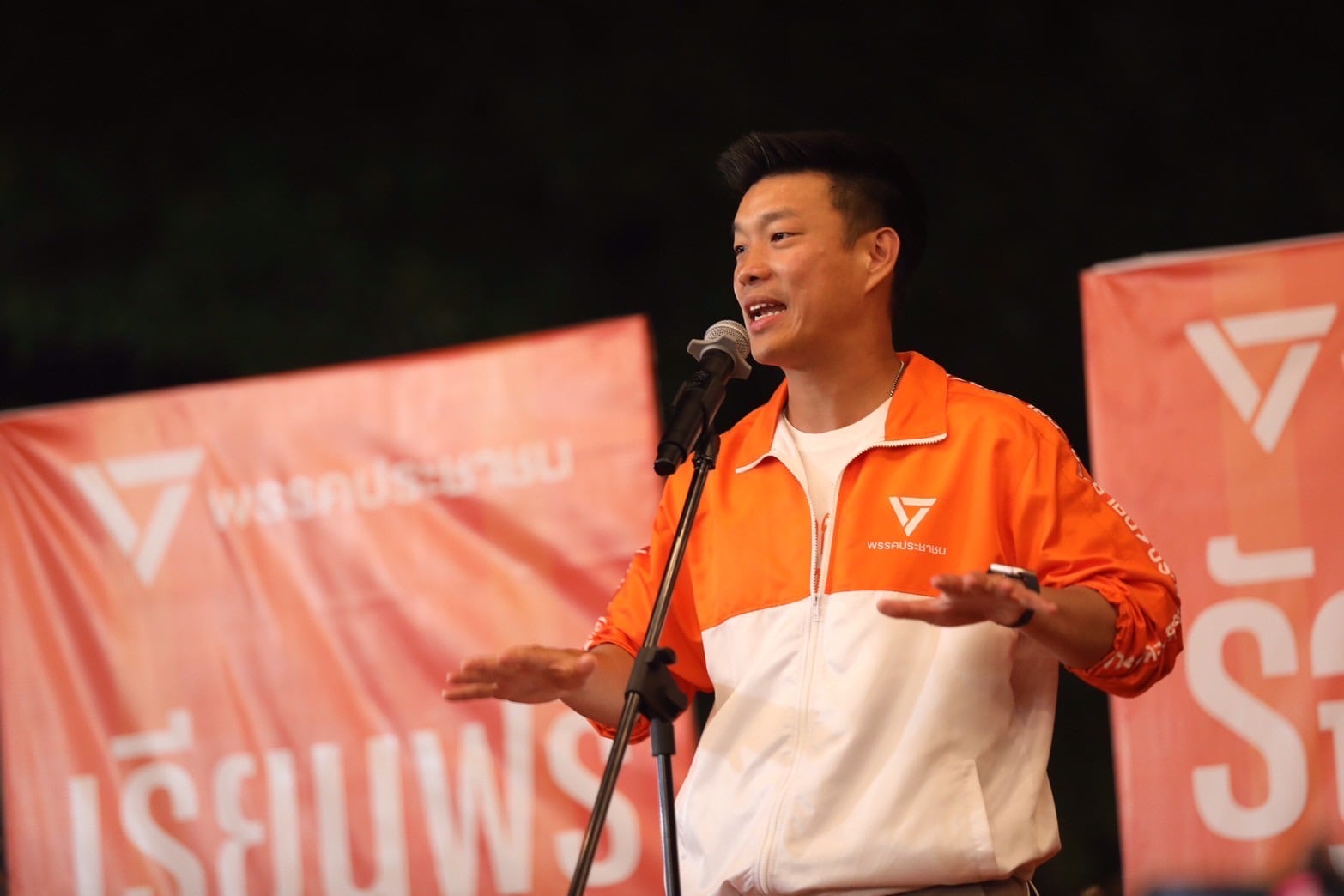
On 3 January at Bird Garden Cafe in Khon Kaen, the Prachachon Party held a campaign rally under the slogan “One Election to Change Khon Kaen’s Future.” The event featured speeches from former Move Forward secretary-general Apichat Sirisuunthorn, constituency candidate Weeranan Huadsri and party leader and prime ministerial candidate Nattapong Rueangpanyawut.
Nattapong told supporters that this election represents a rare chance in recent memory for voters to make their voices count. He said it would be the first election in 15 years where the electorate’s choice matters without a senate vote deciding the prime minister, and urged citizens to cast two ballots: party-list number 46 for the Prachachon Party and a district vote for its local candidates.
Prachachon Party Thailand outlines policy package
Presenting the party as the best choice for Khon Kaen, Nattapong set out four reasons for his claim: a firm democratic stance that places sovereignty with the people, representation drawn from ordinary citizens, well-developed policy proposals and a professional management team. He accused some rivals of operating in a political “grey” zone and said that certain parties had even acknowledged ties to an individual named Ben Smith, whom he alleged had links to transnational money-laundering networks.

The campaign emphasised practical measures aimed at household budgets and local commerce. One flagship proposal is a receipt lottery to stimulate spending in small shops: consumers would receive lottery entries on the 16th and 30th of each month when purchases meet a threshold, encouraging money to circulate in the domestic economy. The party also pledged automatic annual wage adjustments linked to the cost of living, and measures to reduce electricity bills by 0.25 baht per unit within the first year if agreements with energy investors can be reached, with further reductions targeted over a decade.
On social protection, Prachachon said it would deliver realistic welfare that matches the country’s fiscal capacity. Rather than restoring a previously touted 3,000 baht monthly payment, the party proposed an immediate and deliverable payment of 1,500 baht per month while committing to expand benefits as the economy improves. Proposals also include strengthening care for the elderly by upgrading community health volunteers into trained home-care workers with a proposed monthly allowance of 15,000 baht.
Economic arguments at the rally focused on preventing money outflows that undermine domestic production. Nattapong warned that cheap, low-quality imports that evade proper regulation undercut Thai producers. He argued for fair enforcement of rules so local firms that meet standards can compete on an even footing.
The party framed national security as defence, not governance, and said it supports modernising the armed forces so they protect the country rather than administer it. Nattapong also stressed that his party’s platform is backed by a four-part executive team covering the economy, quality of life, new security and disaster management, and public administration reform — a structure he presented as evidence that effective government requires capable teams rather than a single strong prime minister.
Closing the rally, the leader appealed to grassroots organisers and volunteers to mobilise natural vote-getters and urged supporters to spread the party’s platform ahead of the 8 February election, calling on voters to bring the Prachachon Party to the government house after the vote.
Key Takeaways:
- Prachachon Party called on Khon Kaen voters to give the party a decisive victory, urging supporters to vote party-list number 46 and for district candidates from Prachachon Party Thailand.
- The party framed the election as a once-in-15-years opportunity for voters to choose a government without a Senate deciding the prime minister, and warned against ‘grey’ politics and alleged links to transnational money-laundering.
- Prachachon Party highlighted economic and social policies including a receipt lottery to boost local spending, automatic annual wage adjustments tied to cost of living, lower electricity costs and targeted welfare of 1,500 baht per month.
- Leaders emphasised democracy, accountability and a professional management team organised across economy, quality of life, security and public administration reform.








