











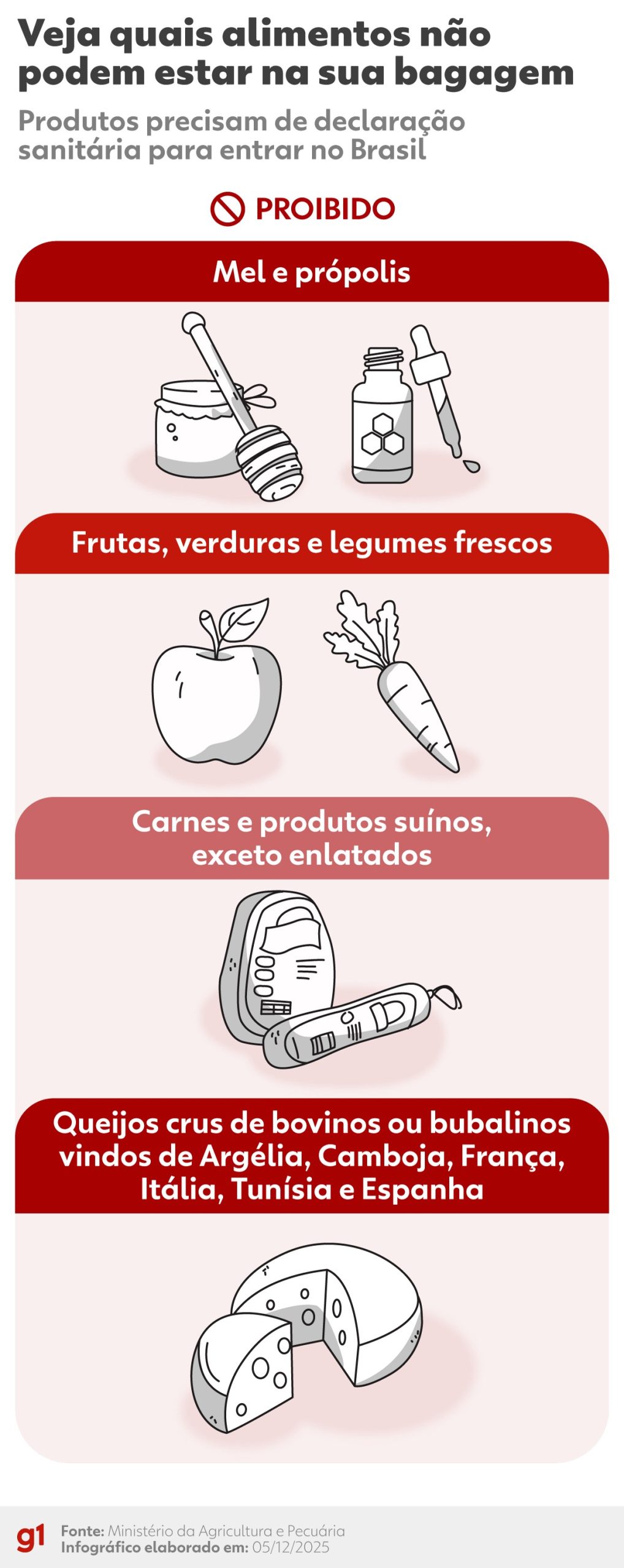
Travellers returning to Brazil with gastronomic souvenirs should be aware that several food items are subject to strict sanitary controls. Brazilian authorities routinely inspect baggage at entry points and may seize or destroy products that lack the required documentation. The most commonly affected items include honey, certain imported cheeses, fresh fruit and derivatives of pork, although commercially canned pork products are usually exempt from a blanket ban.
Guidance on bringing food into Brazil
Customs and health agencies in Brazil enforce rules to protect public health and the agricultural sector. Honey and dairy products from some countries need a sanitary authorisation. Fresh fruit and other plant products can introduce pests or diseases and therefore require a phytosanitary certificate. Pork products are particularly controlled because of the risk of swine diseases. Travellers who fail to declare these items may find them removed and destroyed on arrival.
The first step before travelling is to check the specific requirements with Brazil’s Ministry of Agriculture, Livestock and Supply, known by its Portuguese acronym MAPA, and the National Health Surveillance Agency, Anvisa. Both bodies publish lists of products that require prior authorisation and the countries whose exports are accepted for entry. Requirements vary by product and by origin, so a product permitted from one country may be forbidden when sourced from another.

When in doubt, declare. Passengers should use the red channel at customs to declare agricultural or animal products. Declaring items and presenting original packaging, purchase receipts and any sanitary or phytosanitary certificates increases the likelihood that authorised items will be released. Authorities may inspect the products, verify documentation and either permit entry or order destruction when certificates are absent or insufficient.
Some general practical tips reduce the risk of problems on arrival. Buy commercially sealed and labelled items when possible. Obtain official certificates from the exporting country’s competent authority before travel if you plan to transport regulated goods. Keep quantities reasonable and clearly for personal use. Photocopies or digital copies of certificates and receipts are helpful, but original documents remain preferable.
The consequences of non-compliance go beyond losing the product. Customs agents may impose fines where travellers deliberately conceal prohibited goods. More importantly, introducing pests or animal diseases could damage Brazil’s sizeable agricultural sector. For this reason authorities take a precautionary approach and often prefer destruction rather than the risk of contamination.
For visitors and Brazilian residents alike, advance planning is the best safeguard. Consult MAPA and Anvisa websites for the most up to date lists and contact details for competence in issuing sanitary permits. Airport customs information desks can also advise on arrival. If you cannot obtain the required paperwork, leave the item behind or purchase local versions once in Brazil.
Good practice ensures that culinary souvenirs remain pleasant memories rather than sources of inconvenience. By checking rules in advance, declaring products on arrival and carrying documentation, travellers can enjoy international flavours while protecting Brazil’s public health and agricultural resources.
Key Takeaways:
- Bringing food into Brazil requires attention to sanitary rules; honey, some cheeses, fresh fruit and most pork derivatives need official authorisation.
- Undeclared or prohibited items may be destroyed and travellers can face fines; canned and commercially sealed products are generally treated differently.
- To bring food legally, obtain a sanitary or phytosanitary certificate, keep original packaging and receipts, and declare items at customs.








