











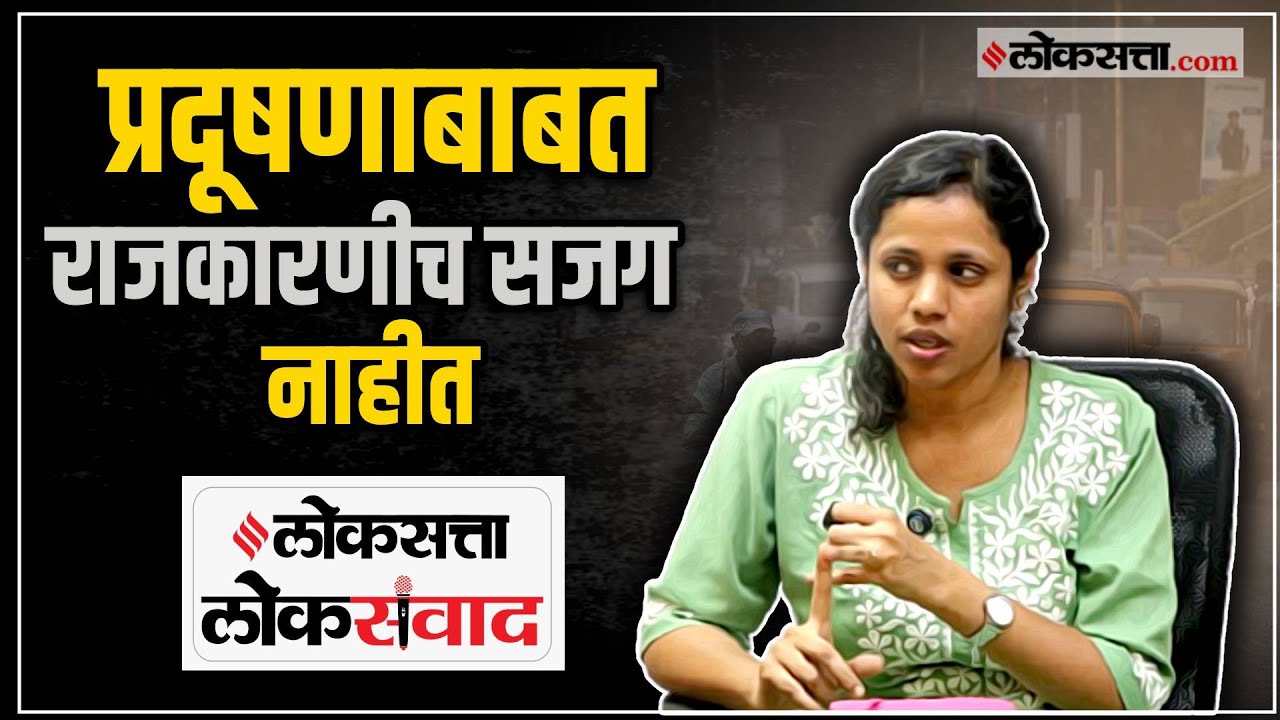
Air quality in Pune has deteriorated markedly in recent months, raising fresh concerns among environmentalists and residents about public health and government preparedness. Speaking on Loksatta’s LokSamvad programme, Shweta Vernekar, senior programme co‑ordinator at the environmental group Parisar, warned that the city is experiencing fewer days of good air and a growing number of days with hazardous conditions.
Pune air pollution: causes, trends and health impacts
Vernekar said that despite mounting evidence of worsening air pollution, state and municipal authorities have yet to take decisive action. “There is a lack of urgency among policymakers and the administration,” she said. “We are seeing an increase in poor air-quality days and the people most vulnerable are being overlooked.” Her remarks reflect concerns expressed by doctors and civic groups about rising respiratory complaints, particularly among children and older people.
Local data and field observations point to a mix of causes. Vehicle emissions remain a major contributor, with increasing traffic volumes and a growing number of diesel vehicles on the roads. Construction activities and road dust add to particulate matter levels. Seasonal agricultural burning in surrounding districts can further spike pollution, particularly when meteorological conditions trap pollutants over the city.

Urban planners and environmental experts argue that the problem is not merely one of temporary spikes but of structural weakness in pollution management. Monitoring stations are sparse in many neighbourhoods and real-time data is limited. Without a comprehensive and transparent monitoring network, officials cannot reliably target interventions or inform the public when risks are highest.
Vernekar urged the administration to strengthen regulations and enforcement. She recommended immediate measures such as expanding the number of air-quality monitoring stations, enforcing stricter controls on construction dust, and introducing low-emission zones in congested areas. Longer-term steps should include investing in reliable public transport, promoting cleaner vehicle fuels and encouraging non-motorised transport networks.
Health professionals have called for better public communication about pollution risks. Simple measures, such as advising vulnerable groups to limit outdoor activity on high-pollution days and distributing masks where necessary, can reduce immediate harm. However, experts stress that behavioural guidance is only a stopgap without coordinated policy action to reduce emissions at source.
Citizens’ groups are also pressing for accountability. They want clearer timelines for policy measures and independent audits of air-quality interventions. Activists say community involvement in monitoring and reporting can pressure authorities to act and help tailor local solutions, such as roadside tree planting and dust suppression on construction sites.
Pune’s situation is not unique among fast-growing Indian cities, but the stakes are high. Poor air quality affects school attendance, workforce productivity and long-term health outcomes. Vernekar’s comments at the LokSamvad programme highlight a widening gap between civic expectations and administrative response. For many residents, the immediate question is whether policymakers will move from rhetoric to measurable action to protect public health.
Until stronger steps are taken, the city is likely to see more days of unhealthy air. Activists and health experts say the clock is ticking for interventions that can reverse the trend and safeguard residents’ well being.
Key Takeaways:
- Pune has seen a steady rise in poor air-quality days, with activists warning of increasing health risks.
- Shweta Vernekar of environmental group Parisar criticised state and municipal inaction at Loksatta’s LokSamvad programme.
- Main drivers include vehicle emissions, construction dust and seasonal burning; experts call for stronger regulation and monitoring.
- Calls for immediate steps include better public transport, stricter construction controls and expanded air-quality monitoring.








