











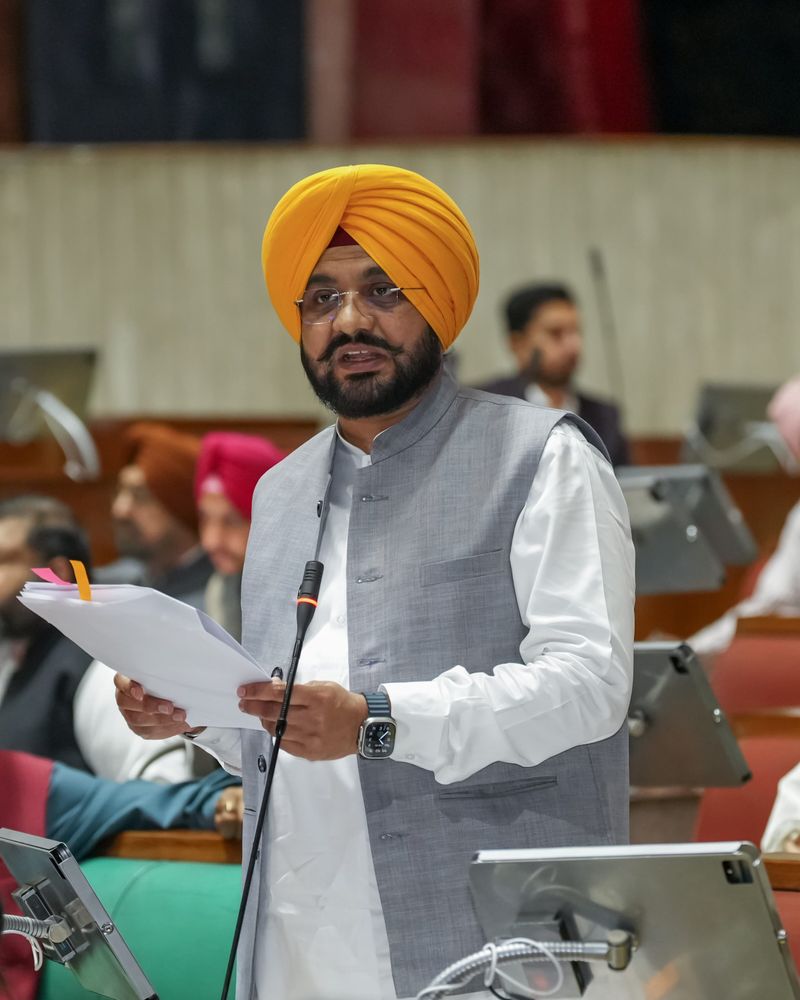
The Punjab government will launch the second phase of its anti-narcotic drive, Yudh Nashian Virudh, on 5 January in a renewed effort to curb substance abuse across the state. Announcing the move at a state-level training session, Rural Development and Panchayat Minister Tarunpreet Singh Sond said the next phase will build on the results of the initial operation and place greater emphasis on rehabilitation and community participation.
Punjab anti-drug drive to involve rehabilitated youths
Under the new phase, rehabilitated individuals will be actively engaged to encourage others to quit addictive substances. The government plans a door-to-door awareness campaign across villages and urban neighbourhoods, mobilising local leaders and volunteers to inform residents about the health and social harms associated with drug use. Sond said the strategy is meant to foster collective responsibility and bring communities into the centre of prevention efforts.
“Following the successful completion of phase one, Chief Minister Bhagwant Mann has directed the commencement of phase two to intensify efforts and make Punjab a drug-free state,” Sond said. He described the drive as a comprehensive approach that balances enforcement with measures to support recovery and prevent relapse.

The Yudh Nashian Virudh campaign was launched last year with a three-pronged strategy: enforcement, de-addiction and prevention. Phase one focused on identifying and arresting key smugglers and peddlers. According to the minister, thousands of suspects were detained during the initial operation, and those remaining involved in trafficking will be pursued rigorously under the second phase.
Officials say the renewed push will include expanded training for frontline personnel and enhanced coordination between law enforcement, health services and local governance bodies. Emphasis will be placed on early detection of substance misuse, timely referrals to treatment services and community-based support for recovered users.
Rehabilitation programmes are to be scaled up so that those who have completed treatment can return to their communities as advocates. The government expects that testimony from former users will deliver a powerful message in local outreach, particularly among youths who are most at risk. Local panchayats and urban civic bodies will be encouraged to support reintegration and to monitor hotspots for renewed activity.
Public awareness will be driven through door-to-door visits, meetings in village councils and urban neighbourhoods, and targeted educational efforts in schools and colleges. Sond said community participation is central to preventing the spread of drug use and ensuring that families and neighbours are equipped to recognise signs of dependence and seek help.
While enforcement remains a key pillar, authorities stress that punitive measures alone cannot solve the problem. The state’s approach combines arrests of traffickers with expanded access to counselling, medical treatment and vocational training for recovering addicts. Officials hope this mix will reduce demand as well as supply.
As phase two prepares to roll out, the state faces the twin challenges of sustaining momentum and ensuring sustained support for long-term rehabilitation. Observers say success will depend on continued political will, inter-agency cooperation and genuine community engagement to create safer environments and offer viable pathways away from addiction.
Key Takeaways:
- Punjab will launch phase two of the anti-drug drive on 5 January, focusing on enforcement, de-addiction and prevention with local participation.
- Rehabilitated youths will lead outreach efforts alongside door-to-door awareness campaigns to reduce addiction.
- The state government maintains a zero-tolerance stance against smugglers and peddlers, with thousands arrested in phase one.








