











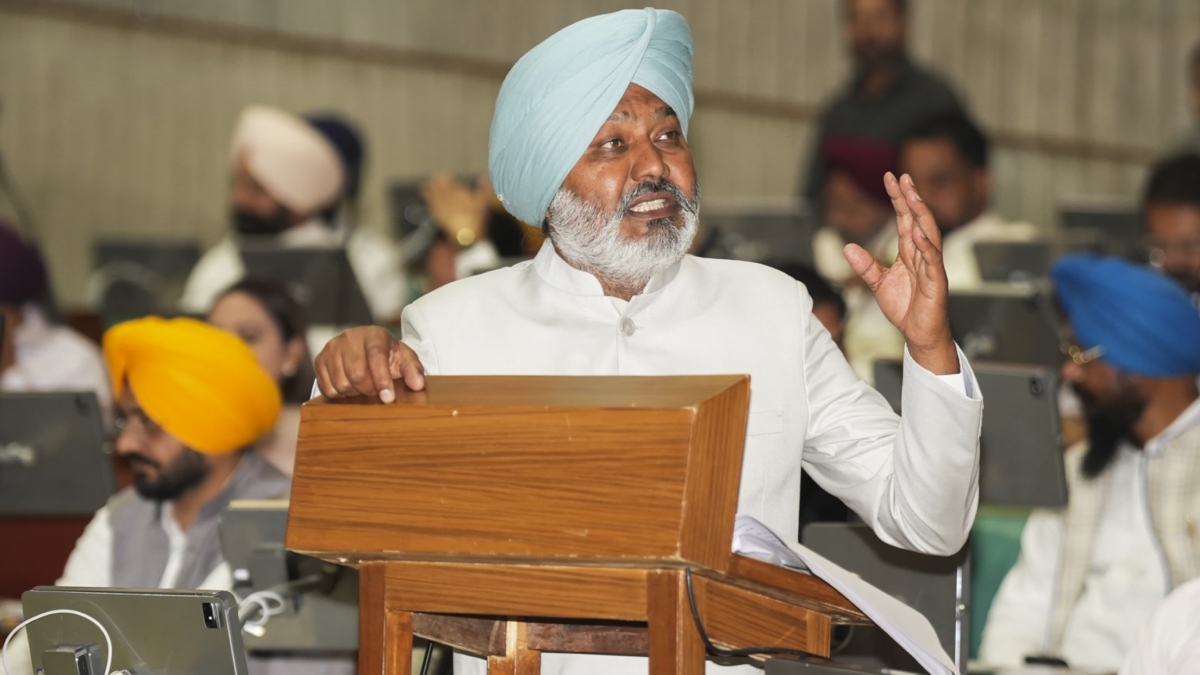
Punjab’s finance minister Harpal Singh Cheema launched a sustained attack on the central government on Wednesday, accusing the BJP‑led administration of pursuing “poor‑unfriendly” reforms to the Mahatma Gandhi National Rural Employment Guarantee Act, commonly known as MGNREGA. Cheema described the new legislation, styled as VB‑G RAM JI, as a calculated attempt to curtail the livelihood rights of the poorest.
MGNREGA reforms and Punjab’s funding concerns
Cheema highlighted that more than Rs 23,000 crore remained due under MGNREGA, a figure he said exposed the gulf between the centre’s rhetoric on reform and its financial commitment. He accused the centre of shifting roughly 40 per cent of the programme’s fiscal burden onto states, a move he said hollowed out the guarantee and placed additional pressure on state budgets.
The Punjab Assembly on Tuesday passed a unanimous resolution opposing the VB‑G RAM JI law. Cheema argued that the measure not only threatens employment security for rural workers but also weakens India’s federal balance by delegating costs to state governments. He contrasted Punjab’s public stance with silence from several Congress‑led states, suggesting a mixed political response to the proposed changes.

On the question of the parliamentary committee’s recommendations, Cheema rejected the government’s repeated citation of the rural development and panchayati raj standing committee report for 2024‑25. He claimed the committee, chaired by Saptagiri Shankar Ulaka, never recommended renaming the scheme on religious grounds or introducing restrictive amendments. According to Cheema, the committee urged prompt release of pending funds rather than structural cuts.
Experts and opposition leaders have focused on two immediate risks. First, delayed payments and reduced central financing could undermine household incomes in rural areas where MGNREGA provides a vital safety net. Second, by shifting costs to states, the centre may force local governments to divert resources from health, education or infrastructure to meet wage obligations. Such trade‑offs could increase political tensions between the centre and several states ahead of wider national debates on welfare reform.
The government has argued that changes are necessary to improve efficiency and fiscal sustainability, but detailed explanations of the new VB‑G RAM JI provisions remain a point of contention. Union ministers have defended the policy as reform rather than retrenchment, while critics cite the outstanding dues and the funding shift as evidence of a weakening guarantee.
For now, the dispute moves beyond policy detail to wider questions of accountability and federal cooperation. The Punjab resolution signals that state assemblies may become important sites of opposition to the centre’s approach, and the debate over MGNREGA reforms is likely to intensify as stakeholders press for clarity on funding, implementation and the rights of rural workers.
Key Takeaways:
- Punjab finance minister Harpal Singh Cheema accused the central government of pursuing “poor‑unfriendly” changes to MGNREGA, raising alarm over the new VB‑G RAM JI law.
- Cheema said over Rs 23,000 crore is overdue under MGNREGA and alleged the centre shifted 40% of the scheme’s financial burden onto states, weakening the employment guarantee.
- The Punjab Assembly passed a unanimous resolution against the VB‑G RAM JI law; Cheema questioned claims about committee recommendations and said the committee urged immediate release of pending funds.
- Critics warn the changes could undermine livelihoods, strain federal relations, and force states to choose between social spending and other priorities, keeping MGNREGA reforms at the centre of political debate.








