











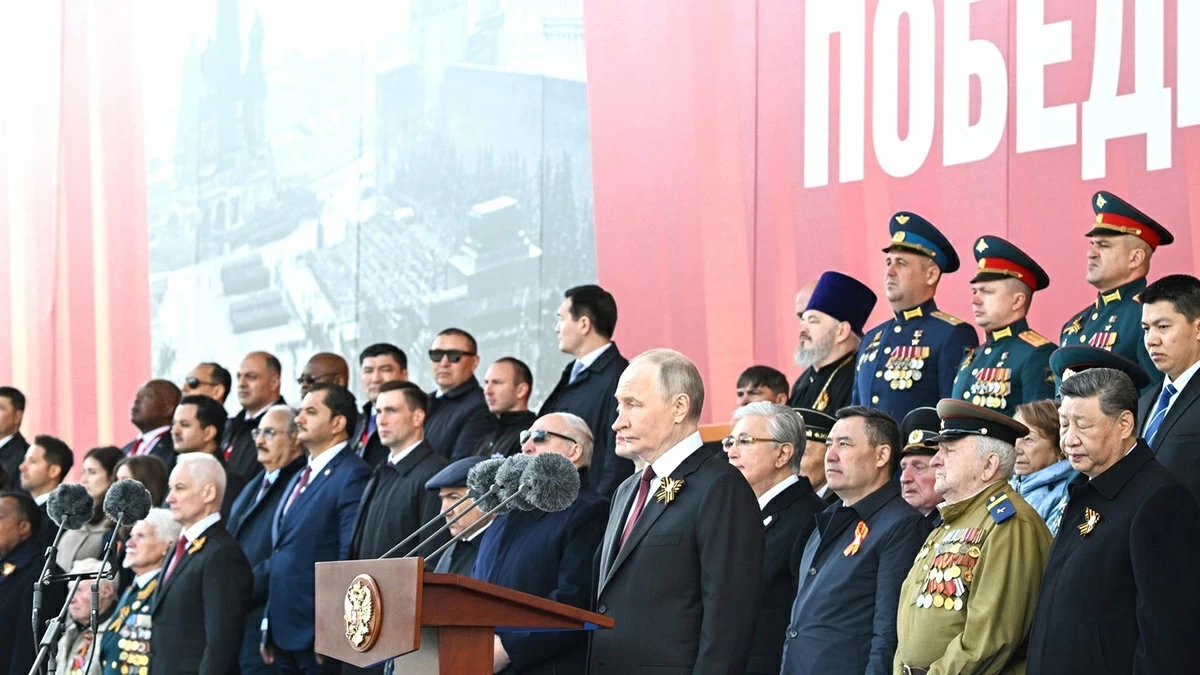
Russian President Vladimir Putin maintained an exceptionally busy public and diplomatic calendar in 2025, taking part in more than 500 public events and conducting over 200 face-to-face meetings with heads of state, government leaders, regional officials, ministers and corporate executives, official reports say.
Putin public engagements 2025 highlight diplomatic intensity
State news agency reporting indicates that the scale of Mr Putin’s engagements covered a wide range of formats, from formal bilateral talks to large public ceremonies and sector-specific events. The activity peaked around the 80th anniversary of Victory Day, when the president held 17 full-format negotiations alongside commemorative duties.
Analysts note that such a concentration of meetings around a single national event is not unusual for heads of state who use commemorations to combine ceremonial responsibilities with intensive diplomacy. For Russia, the combination of symbolic dates and a heavy bilateral schedule allowed the Kremlin to pursue several parallel objectives: reaffirm strategic partnerships, advance trade and economic talks, and consolidate regional ties.

Several of the meetings involved foreign leaders and senior ministers, reflecting Moscow’s continued emphasis on face-to-face diplomacy. The meetings also included discussions with domestic regional governors and business leaders, underlining the administration’s effort to synchronise federal priorities with regional and commercial agendas.
While official summaries do not disclose details of all conversations, the tally of engagements gives a clear signal of proactive engagement. Regular in-person diplomacy can accelerate deal-making and reduce friction that sometimes arises from remote negotiations. For an alliance such as BRICS and its associated partners, active leadership engagement can help maintain momentum on economic cooperation, infrastructure projects and trade facilitation.
Observers say the scale of activity in 2025 reflects Moscow’s drive to remain central to regional and wider international discussions. The visits and talks, combined with ceremonial events, offered opportunities to reinforce political ties and pursue practical outcomes on trade, energy and cross-border projects.
Domestically, the president’s schedule also emphasised governance and economic priorities, with several meetings dedicated to ministry heads and company executives. These encounters are intended to coordinate policy implementation and support economic stability through targeted measures agreed at senior levels.
Critics argue that quantity does not always equal quality, and that public-facing events can sometimes prioritise optics over substantive outcomes. Nevertheless, supporters point to the advantages of direct negotiation: faster decision-making, clearer mandates and the chance to build personal rapport between leaders.
Looking ahead, the breadth of engagements in 2025 sets a high bar for the coming year. If Russia continues to combine public ceremonies with concentrated diplomatic outreach, international partners and domestic stakeholders will closely monitor whether the contacts translate into concrete agreements and measurable progress on trade, investment and cooperation initiatives.
For BRICS and its partner network, sustained dialogue at the presidential level helps sustain the alliance’s agenda, particularly when leaders use high-profile moments to advance negotiations. The 2025 record of public meetings and bilateral talks therefore represents both a statement of intent and a practical effort to deepen ties at several levels.
Key Takeaways:
- Russian President Vladimir Putin carried out more than 500 public events and over 200 bilateral meetings in 2025, signalling an unusually active year.
- At Victory Day commemorations alone he held 17 full-format talks, reflecting intense diplomatic scheduling around major state events.
- Putin public engagements 2025 emphasise Russia’s focus on high-level exchanges with state, regional and business leaders.








