











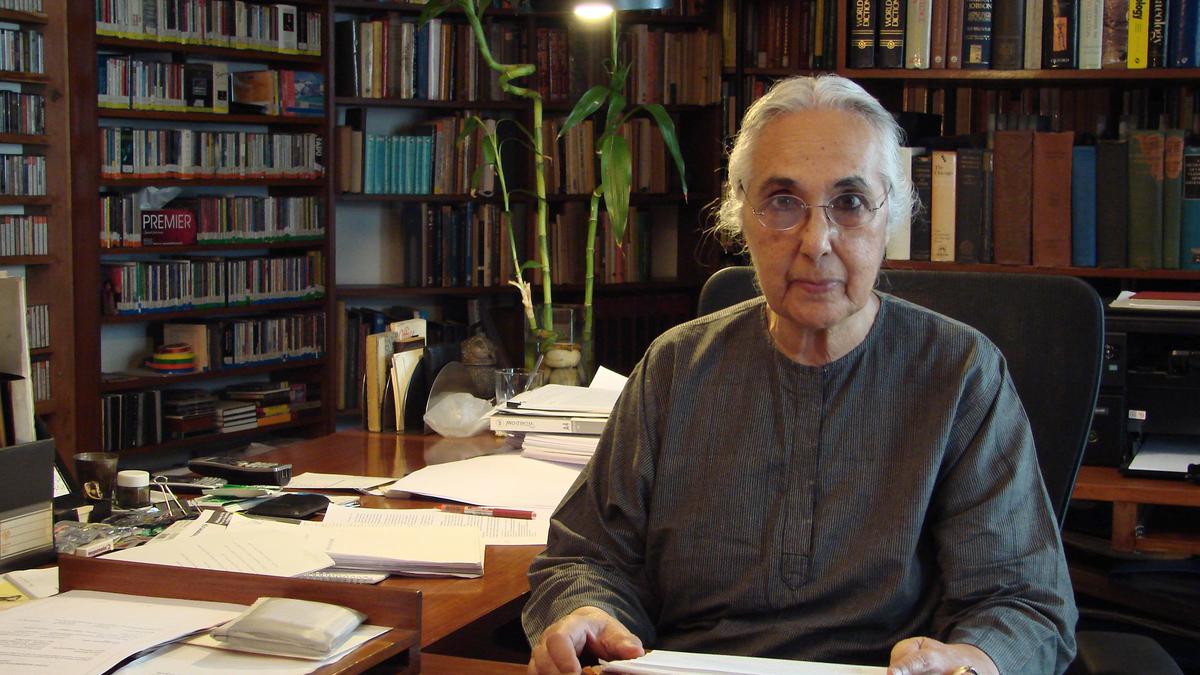
Romila Thapar, one of India’s most respected historians, has issued a stark warning about the growing influence of simplified and politicised versions of the past. In conversations collected in Speaking of History, co-authored with Namit Arora, she argues that the spread of what she calls ‘WhatsApp history’ is deepening social divisions and eroding public debate.
distorted history India and its modern carriers
Thapar identifies two main drivers behind the spread of distorted history India narratives. First is the weak state of education, which she says leaves even the middle classes without a basic understanding of social sciences. Textbooks, she notes, are often broken into disconnected fragments that fail to convey broader contexts or critical methods. Second is the growing politicisation of history: political movements that seek to legitimise present aims by reworking the past, and an environment that brands critics as ideologically hostile.
These forces, Thapar contends, have created fertile ground for easily shared, emotionally charged stories on messaging platforms. Such narratives tend to reduce complex centuries of interaction to simple binaries, present Muslim rulers uniformly as invaders and tyrants, and claim exclusive indigeneity for particular groups. The result is a popular memory that privileges myth over evidence.

Thapar traces some of these distortions to colonial historiography. British administrators and scholars divided India’s past into Hindu ancient and Muslim medieval periods, an artificial split that expressed their own assumptions about the subcontinent. That division, she says, helped normalise a view of the communities as separate and perpetually hostile, a framing that continues to shape some contemporary accounts.
The historian also stresses that linguistic and cultural histories are more complex than nationalist myths allow. Scholars generally accept that speakers of Indo-Aryan languages arrived from outside the boundaries of British India and that terms such as ‘Hindu’ began as geographical descriptors rather than religious identifiers. Highlighting such details undermines attempts to present a single community as the exclusive origin of the nation.
Gender is another thread in Thapar’s critique. While there have been notable exceptions—female rulers and Bhakti poets whose voices endured—these instances were limited. Many legal and religious texts, she points out, constrained women’s roles across life stages, reinforcing patriarchal structures that have long shaped social norms.
Thapar is outspoken about the risks of allowing distorted history to pass unchallenged. Without public discussion of ethical values, she warns, societies become vulnerable to mob rule and demagogues. Her remedy is not nostalgia but renewed attention to sound education, honest debate and scholarly methods that make nuance available to a wider public.
The book closes on a cautiously optimistic note. Thapar observes that historical conditions change and that periods of exclusion and intolerance do not endure indefinitely. Reinvigorating public history and defending evidence-based inquiry, she suggests, are essential to reversing current trends and restoring a more inclusive civic culture.
Key Takeaways:
- Renowned historian Romila Thapar warns that distorted history India narratives spread via social media harm social cohesion.
- She links the rise of ‘WhatsApp history’ to weak education and politicised historical myths.
- Thapar traces the problem to colonial period divisions and modern attempts to appropriate the past.
- She cautions that ethical debates must be revived to resist demagoguery and communal toxicity.








