











Key Takeaways:
- Russia fish catch 2025 totals 4.64 million tonnes, down from 4.9 million tonnes in 2024.
- Absence of sardine ivasi in Russia’s EEZ was the main factor reducing overall catch.
- Far Eastern basin saw strong pollock and Pacific herring hauls, while Azov-Black Sea catches rose by a third.
- Catches in foreign EEZs and high seas increased slightly, cushioning the national total.

Russia fish catch 2025 falls to 4.64 million tonnes as sardine absence bites
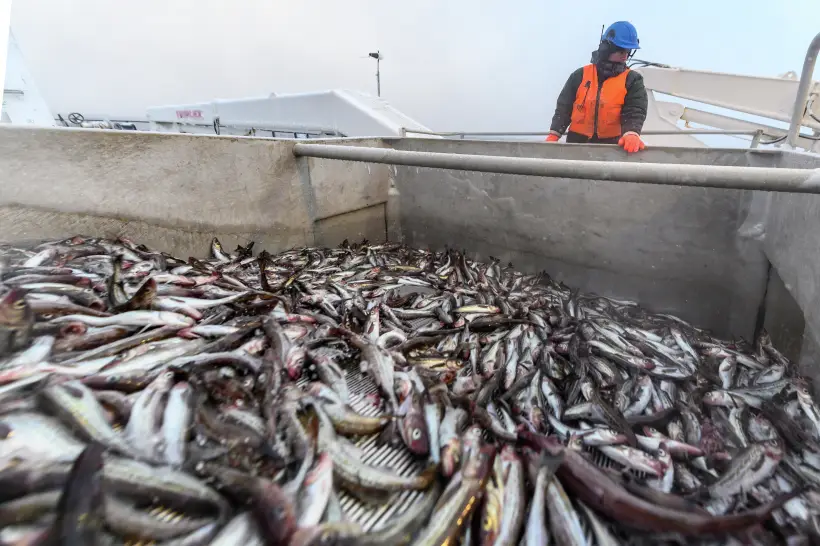
Russia’s total fish catch in 2025 amounted to 4,638,700 tonnes, the Federal Agency for Fishery (Rosrybolovstvo) reported on Tuesday. The figure marks a decline from roughly 4.9 million tonnes landed in 2024 and reflects a notable absence of sardine ivasi in the country’s exclusive economic zone.
Russia fish catch 2025 regional trends and species shifts
The Far Eastern basin remained the dominant production area, delivering 3.57 million tonnes. Within that total, pollock accounted for 2.15 million tonnes, an increase of 171,900 tonnes year on year. Cod catches in the basin rose to 114,500 tonnes, up by 8,000 tonnes, while Pacific herring landings reached 575,400 tonnes, an increase of 131,400 tonnes.
Other domestic basins reported smaller contributions. Fishers in the Northern basin landed 312,800 tonnes, the Volga–Caspian basin produced 80,100 tonnes, and the Western basin recorded 77,100 tonnes. The Azov–Black Sea basin showed the largest percentage growth, with catch rising by one third to 47,000 tonnes.
Rosrybolovstvo and industry observers pointed to the failure of sardine ivasi to enter Russia’s exclusive economic zone as the primary driver of the overall decline. Data from the Russian Fishery Union indicate that ivasi catches fell tenfold, eroding volumes that would otherwise have supported the national total.
How foreign waters affected the national total
Outside Russia’s EEZ, vessels operating in foreign exclusive economic zones, convention areas and the open ocean landed 502,700 tonnes of aquatic biological resources. That represented a marginal increase of 1 percent compared with the previous year and provided a modest buffer against the domestic shortfall.
Industry analysts say the mixed results underline both the resilience and vulnerability of Russia’s fishing sector. Gains in key commercial species such as pollock and Pacific herring helped offset declines in sardine, but uneven distribution of stocks and changing migratory patterns are complicating planning for fleet operators and processors.
Economic and market implications
While the reduction in overall landings is not a systemic collapse, it may have short term impacts on supply chains, exports and processing throughput, especially for firms reliant on ivasi. Processors and traders will likely adjust sourcing and inventories in response, and some shift towards species with stronger landings could influence market prices.
For regional economies dependent on fishing, the rise in catches in the Far East and the Azov–Black Sea basin offers some relief. Meanwhile, the modest increase in catches from operations in foreign waters suggests that Russia’s distant‑water fleet continues to play a stabilising role.
Outlook for 2026
Marine scientists and industry stakeholders will be closely watching stock assessments and migration reports for the coming year. Should ivasi stocks return to previous patterns, total landings could recover. In the meantime, operators are likely to focus on maximising yields of pollock, Pacific herring and other species showing positive trends.
Rosrybolovstvo will continue to publish monitoring data through its sector system as the industry adapts to shifting stock dynamics and market conditions.








