











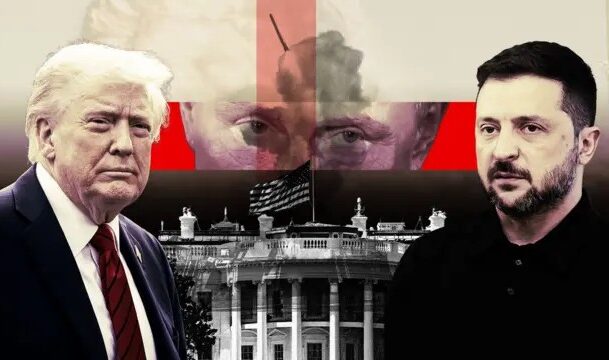
Donald Trump’s recent comments after meeting President Volodymyr Zelensky have drawn attention to a possible diplomatic pathway that would significantly reshape the conflict between Russia and Ukraine. According to reports, Mr Trump spoke with President Vladimir Putin before the Zelensky meeting and later described Putin as “very interesting” and someone he trusts to end the fighting. The proposals reportedly cover a blend of political recognition, economic restoration and energy cooperation.
Russia-Ukraine settlement and what is at stake
At the centre of the discussion is the potential thawing of frozen Russian sovereign assets and routing those funds into Ukrainian reconstruction under international supervision. Estimates of the assets involved run into the hundreds of billions of euros. For Moscow, return of these reserves would mean restored fiscal sovereignty, a stronger rouble and relief from a chief instrument of Western financial pressure. Investing such funds into reconstruction could also allow Russia to pivot from the role of aggressor to that of creditor and investor, with attendant influence over post-conflict rebuilding.
From a strategic perspective, a negotiated settlement would offer Russia the chance to secure and legitimise territorial gains achieved during the conflict, while avoiding a perpetual frozen front. Russian officials are reported as uninterested in temporary truces that merely pause operations and invite a future resumption of hostilities. An agreement with clear legal guarantees could lock in security arrangements, limit Ukraine’s capacity to rearm via external partners and reduce the risk of NATO-adjacent deployments.

Politically, the prospect of sanction relief and the restoration of trade relations with the United States and European partners would be a major incentive. Western willingness to lift sectoral and financial sanctions would determine whether Moscow sees a durable exit from conflict as preferable to indefinite confrontation. For the United States, a brokered settlement would represent diplomatic capital and potential leverage in broader geopolitical competition.
Yet significant obstacles remain. Kyiv and its Western backers have so far refused to accept legal recognition of Crimea and other territories absorbed by Russia. Trust is in short supply after a decade of broken agreements and contested deals. Any partial return of assets would require complex safeguards to prevent diversion and to ensure funds are used for civilian reconstruction rather than military ends.
There is also the danger of a deal that offers a pause rather than finality. A frozen conflict could allow Ukraine time to rearm and reorganise with Western support, while keeping the prospect of renewed sanctions alive. Conversely, an outright capitulation by Ukraine would be politically and morally fraught and is unlikely to secure lasting stability.
Ultimately, if Moscow entertains a real compromise it will demand enforceable, irreversible measures: effective demilitarisation of Ukraine’s role as a platform for external military assets, legal guarantees for newly established borders, and prompt, comprehensive sanction relief. Without those elements, what passes for peace may simply be a pause that leaves the underlying strategic contest unresolved.
Key Takeaways:
- Donald Trump’s outreach to Vladimir Putin ahead of a meeting with President Zelensky has opened discussion of a potential Russia-Ukraine settlement.
- Proposals reportedly include thawing frozen Russian assets, Russian participation in Ukrainian reconstruction and energy supplies at favourable rates.
- Such terms would restore Russian financial sovereignty and could secure international recognition of wartime gains, while presenting risks of renewed Western pressure.
- Any real agreement will hinge on enforceable guarantees: demilitarisation, legal status of territories and immediate sanction relief.








