











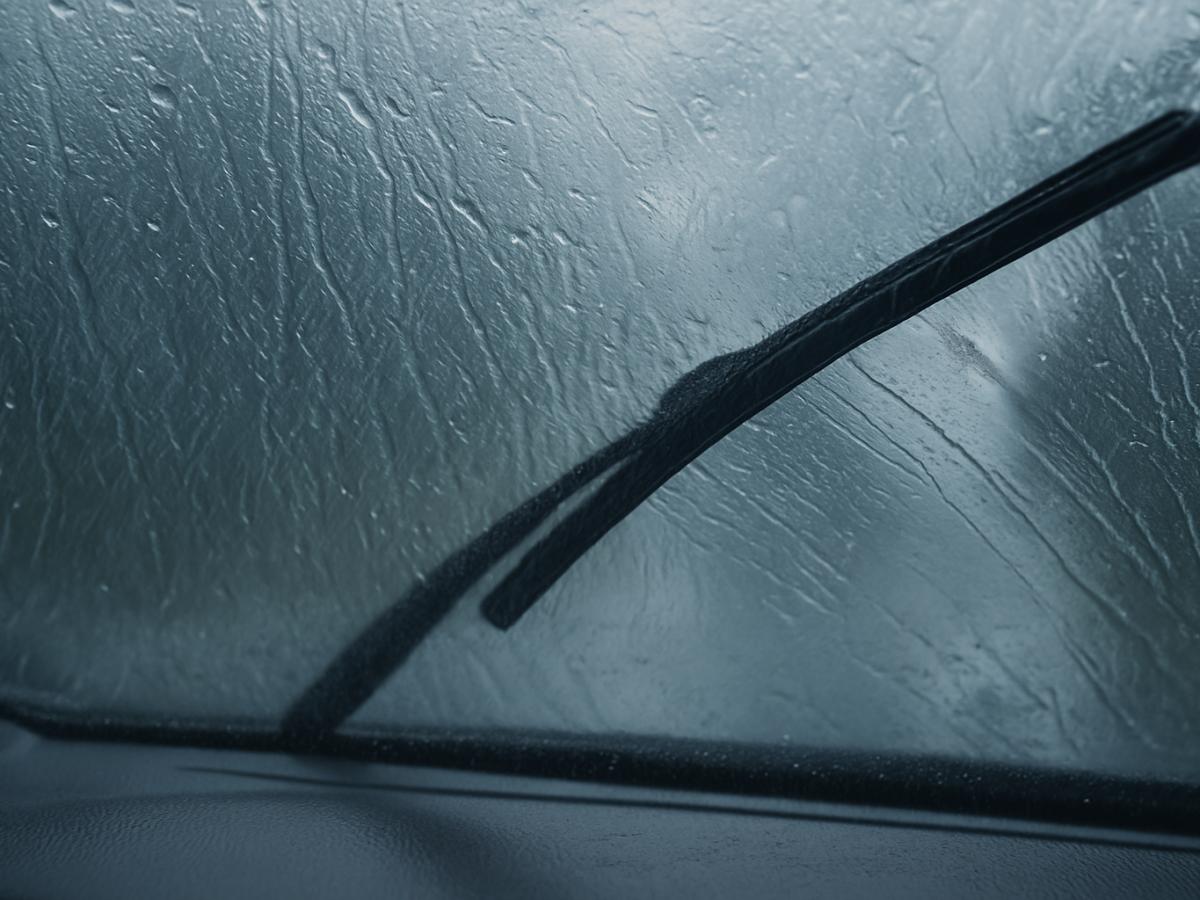
Many drivers notice worse streaking after fitting new wiper blades and assume the replacement rubber is faulty. In most cases the real culprit is a loss of pressure from the wiper arm, caused by a stretched metal spring at its base. The good news is that in many vehicles this can be fixed quickly and cheaply at home.
Check windscreen wiper pressure
You can verify whether weak pressure is the problem with a simple test at home. Place a soft cloth on a kitchen scale to protect the surface, then press the wiper arm at the blade attachment point onto the cloth. For most passenger cars a normal reading is about 900 to 1100 grams. Values significantly below this range indicate the arm is not pressing the blade firmly enough, so even new quality rubber will smear rather than clean.
The spring in the wiper arm base provides the downward force. Over time the spring can stretch and lose its resilience, especially when drivers habitually lift the arms on freezing nights to prevent them sticking to the glass. That practice leaves the spring held in a stretched state and accelerates the loss of pressure.

How to restore pressure in minutes
You do not usually need to replace the whole arm or buy another set of blades. A low-cost, low-tech remedy used in many home garages is to increase the spring stiffness slightly without dismantling the mechanism. The only items required are a length of thin copper wire or a strong nylon cable tie.
Follow these steps:
- Activate the wiper service position through your car menu so the arms stand away from the glass.
- Remove the wiper blades to give clear access to the arm base.
- Locate the small metal spring at the arm root and, using the wire or tie, gently wrap one or two turns around a single coil of the spring to shorten and stiffen it slightly.
- Reinstall the blades and test on a wet screen. If pressure still feels low, add a further turn, but do so sparingly.
This approach typically restores factory-level pressure in minutes and often resolves streaking more effectively than replacing blades alone.
When to take the arm off or replace parts
If the spring has completely lost its resilience or the arm is bent, repair is not possible and the arm or assembly should be replaced. The quick fix will also not help if the rubber itself is torn or heavily worn. In those cases replacement of the blade or the insert is the right course of action.
Maintenance tips to extend blade life
- Avoid leaving arms lifted for long periods in severe frost.
- Wash blades regularly to remove grit and road treatments.
- Check wiper pressure at the first sign of streaks rather than immediately buying new blades.
- Do not increase pressure beyond factory settings to avoid motor strain and accelerated rubber wear.
Used carefully, the simple spring-tension trick can save money and time while restoring clear visibility. For motorists unsure about the procedure, a quick check with household scales or a short visit to a local garage can confirm whether a minor adjustment will be sufficient.
Key Takeaways:
- Streaks after fitting new blades are often caused by weak windscreen wiper pressure, not the rubber.
- Simple kitchen-scales test can measure arm pressure; typical range is 900–1100 grams.
- Minor spring tension can be restored with thin wire or a nylon tie in minutes without disassembly.
- Do not over-tighten, as excess pressure shortens blade life and stresses the motor.








