











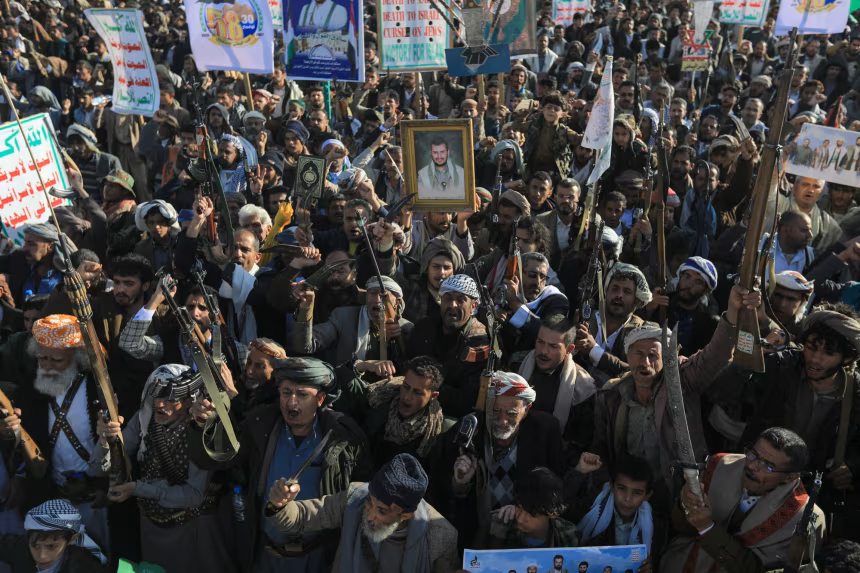
Yemen’s warring parties have agreed to the largest prisoner exchange of the conflict so far, a move seen by international mediators as a meaningful humanitarian step and a rare channel of cooperation between the Huthi movement and the Saudi-backed government.
Yemen prisoner exchange brings 1,700 Huthi detainees home
Officials said the deal, announced after a 12-day meeting in Muscat, Oman, will see about 1,700 Huthi detainees released in return for roughly 1,200 prisoners held by the opposing side. Among the latter are seven Saudi nationals and 23 Sudanese, officials said. The exchange was signed under the supervision of the United Nations special envoy for Yemen and the International Committee of the Red Cross.
Abdulqader Hasan Yahya al-Murtadha, head of the Huthi National Committee for Prisoners’ Affairs, confirmed the numbers and described the agreement as the largest of its kind between the parties. Saudi Ambassador to Yemen Mohamed Al-Jabir wrote on social media that the deal was an important confidence-building measure and praised the UN and ICRC for their roles.

UN special envoy Hans Grundberg said the agreement was a “positive and meaningful step” that he hoped would ease the suffering of detainees and their families across Yemen. The swap follows earlier UN-backed releases, including more than 1,000 prisoners freed after talks in Switzerland in October 2020 and an ICRC-facilitated release of 973 detainees in April 2023.
The Muscat talks, which brought together representatives from both sides over nearly two weeks, focused on the logistics and verification mechanisms needed to implement the exchange. International monitors will help with identification, medical assessments and secure transfer to reduce the risk of renewed violence during handovers.
Humanitarian groups welcomed the announcement. The ICRC, which has frequently acted as intermediary in past swaps, said prisoner releases can provide immediate relief to families and help build trust between adversaries, even if broader political talks remain stalled.
Despite the swap, analysts warned that prisoner exchanges do not resolve the core causes of Yemen’s conflict. The war began in 2014 when Huthi forces seized Sanaa, ousting the internationally recognised government, and expanded after a Saudi-led coalition intervened in 2015. The Huthis continue to control large areas of the country and a UN-brokered ceasefire signed in 2022 later expired.
Yemen’s conflict has inflicted a deep humanitarian toll. A 2021 United Nations Development Programme report estimated around 377,000 conflict-associated deaths, with more than half attributed to indirect causes such as shortages of food, clean water and healthcare. Observers said that while the prisoner exchange will not halt the fighting, it could help preserve lines of communication that are essential for delivering aid and preventing a return to full-scale war.
Implementation will be the crucial test. If both sides follow through on the logistics and timing agreed in Muscat, the swap may create momentum for further confidence-building measures. For detainees and their families, immediate freedom and reunification are the most tangible results. For mediators, the challenge will be to turn humanitarian progress into wider, sustainable political dialogue.
Key Takeaways:
- Agreement reached in Muscat will free roughly 1,700 Huthi detainees in exchange for 1,200 prisoners.
- The UN and ICRC supervised the deal, described as a confidence-building humanitarian step.
- Previous major swaps include October 2020 and April 2023; this is the largest to date.
- Yemen prisoner exchange aims to ease detainee suffering and sustain dialogue amid prolonged conflict.








