











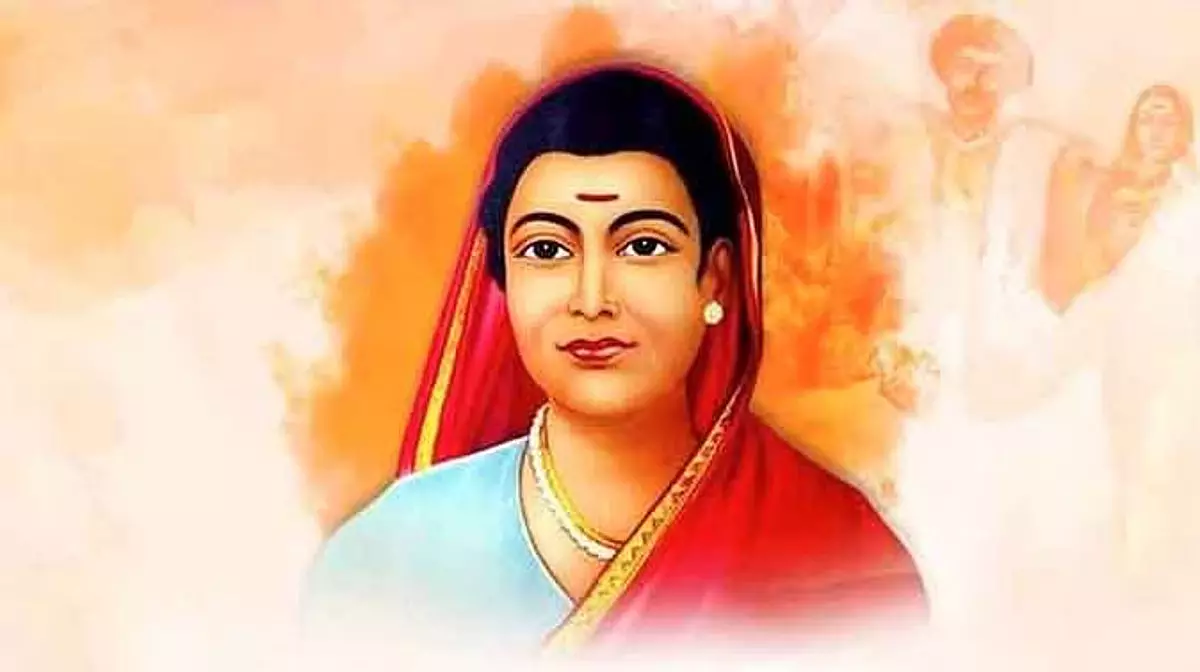
Savitribai Phule stands among the most influential social reformers in nineteenth-century India. Born on 3 January 1831 in Naigaon, Maharashtra, she rose from a childhood without formal schooling to become one of the first Indian women to train as a teacher and to lead a nationwide push for education among women and marginalised communities.
Savitribai Phule India and her early life
Belonging to the Mali community, now classified as OBC, Phule was married at the age of ten to Jyotiba Phule. Her husband encouraged her education, teaching her at home before helping her access formal teacher training. Empowered by learning, the couple opened what is widely regarded as the first Indian-run girls’ school in Pune at Bhide Wada in 1848, joined by reformer Sagunabai.
The Phules did not confine their efforts to a single school. By 1851 they had established three girls’ schools with roughly 150 pupils and later expanded their work to establish 18 schools. Their curriculum was progressive for its time, and they made a point of admitting children from oppressed and so-called “untouchable” communities.

Their work drew fierce opposition. Savitribai was subject to abuse and physical attacks on her way to teach. The couple faced ostracism and were disowned by sections of their own family. Undeterred, they continued their mission with allies such as Usman Sheikh and his sister Fatima Begum Sheikh, who became one of India’s first Muslim women teachers and helped extend education across religious lines.
Phule’s reforming activities went beyond the classroom. She campaigned against child marriage and supported widow remarriage at a time when such positions attracted social hostility. She also ran a shelter that provided care for pregnant widows and survivors of sexual violence, offering practical relief alongside advocacy. As a poet and author, Savitribai used her writing to urge the oppressed to seek education and dignity.
Her commitment to service cost her life. In 1897 she contracted the plague while caring for a child and died that year, leaving behind a clear record of courage and compassion. The institutions she helped establish, and the principles she championed, continued to influence later generations of reformers and educators.
Today, Savitribai Phule is commemorated across India with statues, schools and annual observances that honour her contribution to social justice. Her story is a reminder that access to education has long been central to struggles for equality, and that determined individuals can reshape social norms even in the face of sustained opposition.
Her legacy remains particularly relevant in contemporary debates about inclusive schooling and gender equality. Policymakers and educators frequently invoke her example when arguing for greater outreach to marginalised groups, community-based education initiatives and measures to protect girls’ right to learn. For many, Savitribai Phule embodies the transformative power of education combined with grassroots activism.
More than a century after her death, her life continues to inspire campaigns for universal education and women’s rights across India. Her work established a template for reform that connected classroom teaching with broader efforts to dismantle caste-based exclusion and gender discrimination.
Key Takeaways:
- Savitribai Phule India pioneered girls’ education and opened the first Indian-run school for girls in Pune in 1848.
- She and Jyotiba Phule established 18 schools for girls and marginalised children despite fierce social opposition.
- Phule campaigned against child marriage, supported widow remarriage and ran a shelter for vulnerable women and survivors.
- Her life and writings left a lasting legacy for education and social reform in India.








