











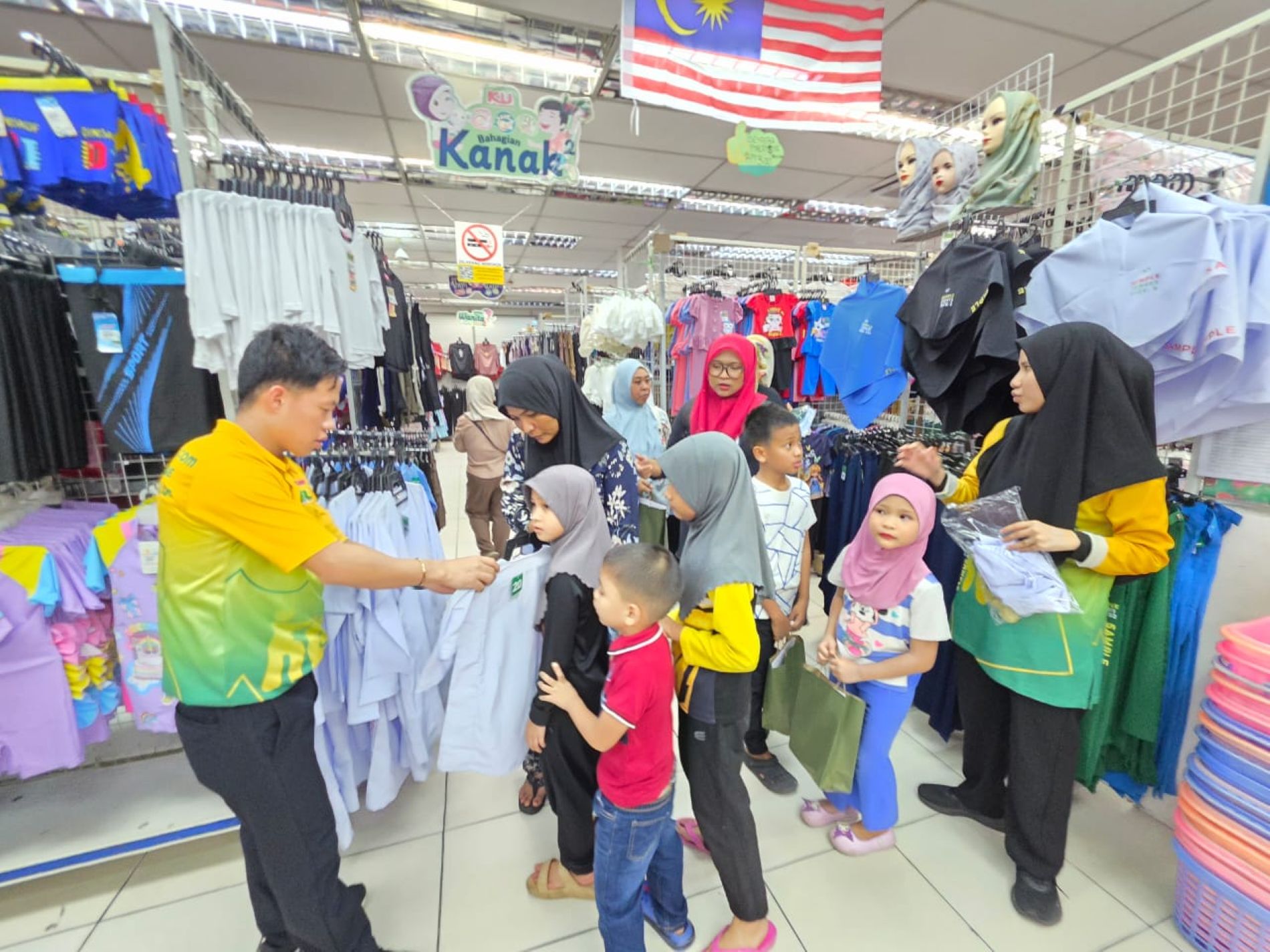
Residents of Pangkor island welcomed a targeted social assistance drive when 112 orphaned and needy children received new school uniforms and footwear courtesy of their state assembly representative. The donations were distributed on site at a local supermarket, allowing each child to choose clothing that fits and supports their return to the classroom with dignity.
school uniform donations Malaysia deliver practical support
The initiative was led by Norhaslinda Zakaria, the Member of the Perak State Legislative Assembly for Pangkor. She accompanied the beneficiaries to the supermarket and oversaw the selection process, ensuring that every child received a full set of school clothing and a pair of shoes. Local officials and volunteers assisted with sizing and purchases.
The recipients were drawn from families identified as asnaf, a term used in Malaysia for those eligible for zakat or charitable aid, and included children who have lost one or both parents. Norlinda Basri, a 43-year-old beneficiary, said the support came at a crucial time. Her husband has been unable to work due to ill health, and the donation eased immediate financial pressure as the new school term begins.

Organisers explained that allowing the children to choose their own uniforms and footwear ensured a proper fit and helped preserve the dignity of recipients. Such an approach also reduces waste by avoiding unsuitable or unwanted items. The shopping outing created a visible sense of relief among families and provided a practical reminder of community solidarity.
Norhaslinda said the programme formed part of ongoing constituency work aimed at addressing basic needs and improving access to education. Officials emphasised that investing in school essentials is a cost-effective way to support learning outcomes. Removing barriers such as inadequate clothing reduces the risk of absenteeism and helps children concentrate on their studies.
Community leaders praised the personalised delivery model. One local volunteer noted that the face-to-face interaction offered an opportunity to identify further needs, including school supplies and medical assistance, which could be addressed in subsequent initiatives. The event also encouraged civic participation, with residents donating time and support to help distribute items and assist families on the day.
Charitable interventions of this kind serve multiple purposes. They provide immediate relief to households that are struggling, promote social inclusion by ensuring children attend school in appropriate attire, and reinforce the role of elected representatives in responding to constituency needs. In Pangkor, the combination of targeted aid and direct engagement with families brought swift, tangible benefits.
Organisers said they plan to monitor the impact of the donations through follow-up visits and feedback from parents and schools. By tracking attendance and students’ preparedness for class, they hope to evaluate how material support translates into educational progress. Future efforts may extend to providing stationery and other school essentials where gaps remain.
The supermarket shopping event highlights a simple but effective model for social assistance. By empowering recipients to select what suits them and by delivering support close to the start of term, the programme reduced logistical friction and maximised the value of charitable funds. For the families involved, the assistance offered immediate relief and a small measure of hope as the new school year begins.
Key Takeaways:
- School uniform donations Malaysia provided 112 orphaned and needy children with uniforms and shoes chosen personally at a local supermarket.
- The initiative was organised by Norhaslinda Zakaria, ADUN Pangkor, to ease financial strain on vulnerable families.
- Recipients praised the support, noting the relief it brought amid health and employment challenges within families.








