











Key Takeaways:
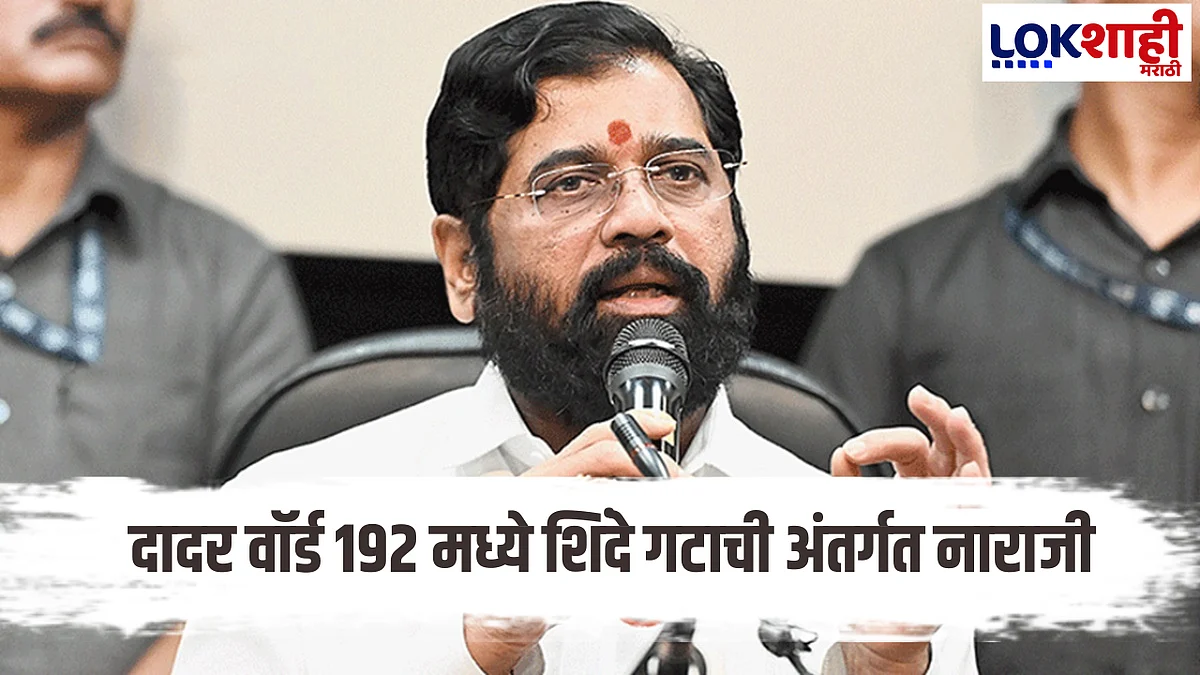
- Shinde group faces internal dissent in Dadar after candidate selection for Ward 192.
- Veteran workers such as Kunal Wadekar and local office-bearers express anger and may resign.
- Eknath Shinde Ward 192 decision risks weakening local mobilisation ahead of Mumbai municipal polls.
- Statewide municipal preparations mean similar factional tensions could affect other wards.

Mumbai — The Shinde faction of Shiv Sena is confronting fresh internal friction in Dadar’s Ward 192 following a controversial candidate selection, raising concerns about party unity ahead of the Mumbai municipal elections. The dispute centres on the decision to field Preeti Patankar, who joined the Shinde group alongside her husband, former division chief Prakash Patankar, after the Maharashtra Navnirman Sena announced Yashwant Killedar as its candidate for the ward.
Eknath Shinde Ward 192 fallout
Local workers and long-standing party activists have reacted angrily to the ticket allocation, arguing that grassroots workers who have spent years building the party were overlooked in favour of a newcomer. Kunal Wadekar, widely regarded as a leading claimant for the nomination and a supporter of former MLA Sada Sarvankar, together with other local office-bearers, have voiced strong objections.
Several functionaries, including sub-division head Niket Patil and branch chief Abhijit Rane, reportedly failed to secure tickets and have registered their displeasure with senior leaders. Party members in the ward have asked why activists who work on the ground are being sidelined, and sources indicate that a number of ward-level office-bearers are preparing to tender collective resignations.
The dispute has the potential to dent the Shinde group’s mobilisation at the grassroots. With municipal elections imminent across the state, robust local organisation is vital to convert support into votes. Analysts warn that internal fractures, if left unaddressed, can erode campaign discipline and voter outreach in tightly contested wards such as Ward 192.
Party insiders say the decision to award the ticket to Preeti Patankar followed the entry of the Patankar couple into the Shinde fold, a move that senior leaders may have calculated would broaden the faction’s appeal. However, the local backlash highlights the risks of prioritising new entrants over established cadres, especially in a city where door-to-door campaigning and long-standing local ties matter.
For voters in Dadar, the contest now includes not only inter-party competition but visible intra-party tension within the Shinde group. Such dynamics could provide opposition parties with openings to capitalise on dissatisfaction among volunteers and small local units whose work is critical during municipal polls.
Senior Shinde faction leaders are reported to have been approached by disgruntled members seeking redress. How the leadership responds — whether by reconciling with local activists, reconsidering ticket choices, or deploying additional resources to the ward — will determine whether the unrest becomes a manageable issue or a campaign liability.
The incident is part of a wider pattern of strategic manoeuvring across Maharashtra as parties finalise ward structures and candidates. Municipal election preparations are accelerating statewide, and similar tensions over candidate selection and ticket distribution have surfaced in other areas. Observers note that municipal contests often act as a barometer of organisational strength and can influence political narratives at the state level.
At present, the immediate questions for the Shinde group are clear: can it resolve grievances swiftly to preserve local unity, and will it be able to retain the support of grass-roots workers whose efforts are essential in a city as electorally complex as Mumbai? The coming weeks will show whether Ward 192 remains an isolated episode or a sign of deeper challenges for the faction.








