











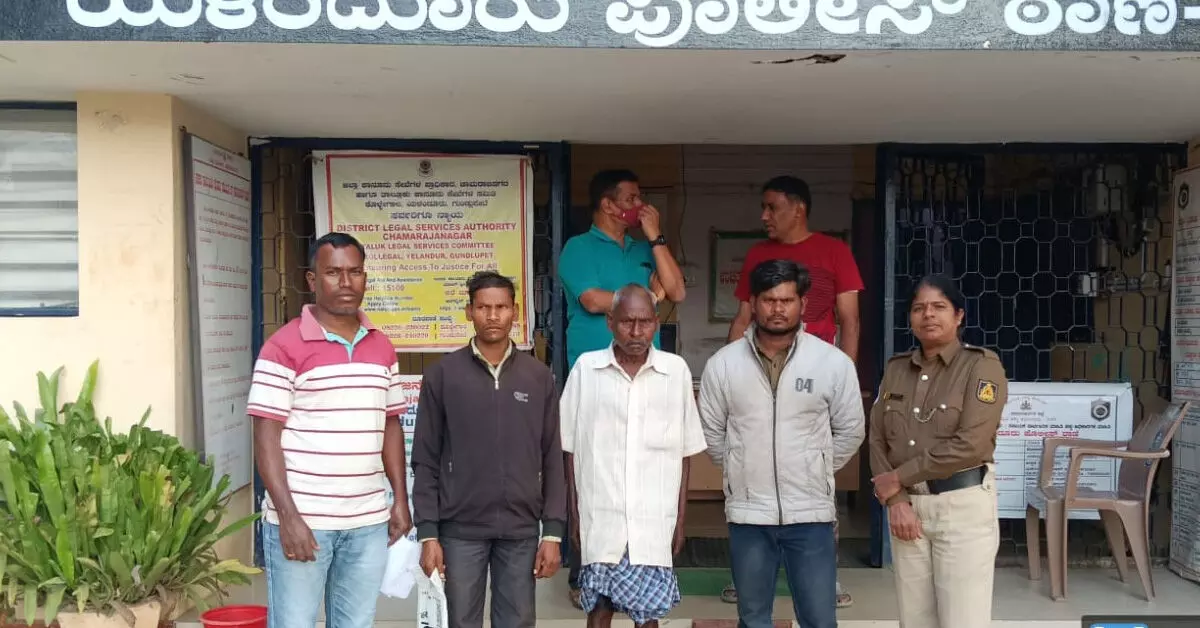
A rare cross-state reunion took place after social media helped locate the family of a 60-year-old man found living on the streets near Yelandur bus stand in Chamarajanagar district, Karnataka. The man, identified as Pritam Singh from Dhanvasi village in Amarpur taluk of Dindori district, Madhya Pradesh, had been separated from his family while working as a daily labourer in Yelandur.
With no money, limited language skills — he spoke only Hindi — and no contact numbers for his relatives, Pritam Singh spent days sleeping on the roadside and wandering around the bus stand. Local police found him and on 11 November took him to Jnana Sindhu old age home in Santemarahalli. Staff there, including superintendent M. Mahadevaswamy and social worker H. B. Prakash, hoped to help reunite him with his family but had limited leads.
During a health-awareness visit to the home by the Saty Educare Competency Trust, volunteer Mahesh shot a short video of Pritam Singh explaining his village and the fact that he had been separated from his family. Mahesh shared the clip on Instagram, posting it to a Dindori district group in the hope that someone might recognise the man.

Social media reunites elderly in India
The post produced the break the old age home and police needed. An administrator of the Dindori Instagram group recognised details and contacted Pritam Singh’s family, supplying Mahesh with a phone number. Acting on the information, Pritam Singh’s son, Rajesh Singh Dhurvi, travelled from Madhya Pradesh and arrived at Yelandur on 30 December 2025.
Following standard legal procedures, the Yelandur police verified the identity and handed Pritam Singh over to his son. The reunion brought relief to care-home staff and police officers who had been attempting to trace the man’s relatives while also providing him with daily care at the shelter.
Those involved described the case as a reminder of the practical role social media can play in reconnecting families separated by distance and circumstance. Mahadevaswamy said staff at the old age home had been concerned about the man’s inability to communicate details beyond a few Hindi phrases and about his lack of funds to return home. Prakash praised volunteers and the online group for their swift response.
The episode also highlighted gaps in support for migrants and daily-wage workers who travel long distances in search of work. Without a mobile contact list, money for travel or knowledge of the local language, vulnerable workers can quickly become isolated if they lose touch with their families.
Legal formalities by the local police ensured that the transfer to the son complied with regulations governing custodial handovers from care institutions. Community volunteers and the old age home staff organised the immediate logistics and provided medical checks before the man left with his family.
Local officials said the successful reunion underlines the value of low-cost, community-centred solutions when formal tracking systems are absent. The combination of an on-the-ground charity, attentive care-home staff, vigilant police and a responsive online community produced a humane result for a family separated by circumstance.
Authorities and social workers said they will continue to encourage care homes to record more detailed identity information and to use online networks when formal channels produce no leads. For Pritam Singh and his family, a difficult period has ended with him returning to his son — a reunion made possible by a short video and a responsive online community.
Key Takeaways:
- Social media reunites elderly in India after an Instagram video led to a family contact.
- A 60-year-old man from Dindori, Madhya Pradesh, was found at a Chamarajanagar old age centre in Karnataka.
- Local police and an NGO coordinated with an Instagram group to locate the man’s son, who arrived on 30 December 2025.
- The case highlights how community groups can help cross-state reunifications when language and financial barriers exist.








