











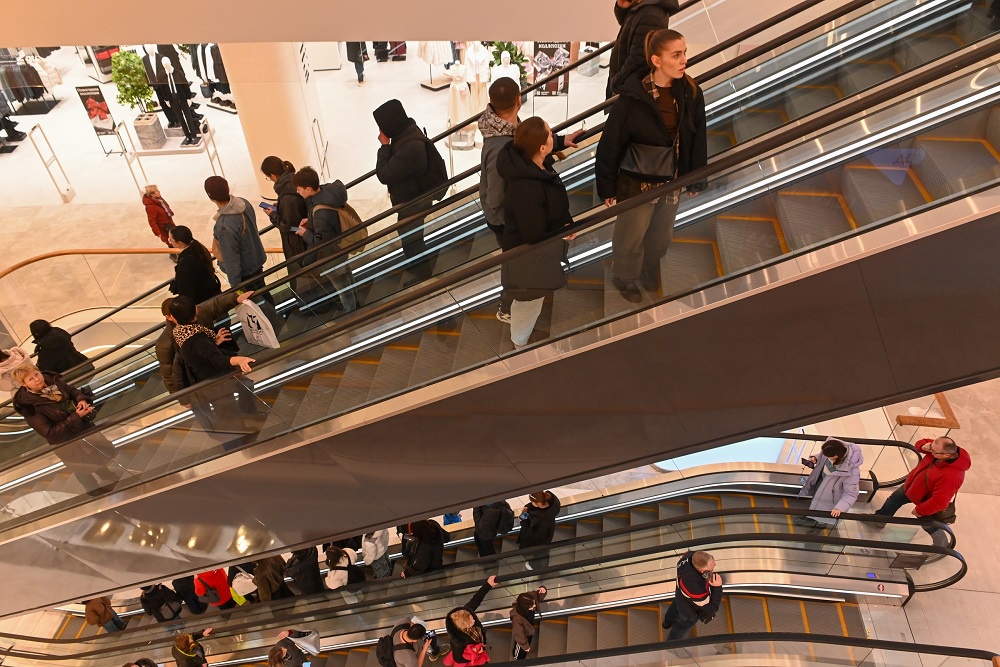
A surge of visitors to a new shopping and entertainment complex in St Petersburg in early December has prompted fresh discussion about the future of Russian retail property. On opening day, thousands queued outside the new TRK “Hollywood” at Pionerskaya metro station, while local roads and parking areas were overwhelmed. The new complex, at about 60,000 square metres, joined Park Mall on Prosveshcheniya Avenue, and together they helped make 2025 the busiest year for new retail openings in St Petersburg since 2016.
Russian shopping centre transformation reshapes urban retail
The surge will not by itself reverse a long-term decline in footfall across shopping centres. The sector has been hit first by the pandemic, which emptied food courts and cinemas for months. Then many international retail chains exited Russia, removing some variety that used to draw shoppers. Most recently the rapid growth of online marketplaces has shifted consumer habits, with many shoppers prioritising price and convenience.
Market analysts do not expect an immediate recovery in occupancy. Investment firm CORE.XP forecasts that the vacancy rate in Russian shopping centres could rise from 6.2 per cent to 8.3 per cent in 2026, partly because planned increases to value added tax and its wider application will raise operating costs for smaller and medium businesses. Evgenia Prilutskaya, director at the firm, warns that a combination of rising expenses and narrower margins will hit tenants hard, especially in centres with outdated concepts.

At the same time, property managers and developers are adjusting. Ksenia Kasyanova of communications firm KROS says the sector faces an “ideal storm” of negative trends, forcing a rethink of business models. Many centres are shifting away from a pure rental model towards a service and entertainment approach that blends online and offline experiences and encourages longer visitor dwell times.
Industry executives point to a broader reinvention. Arkady Teplitsky of the Adamant holding says modern centres are evolving into public spaces that host events, services and community functions in addition to retail. Elena Skripkina of DOMO Spacerunners argues that to attract visitors an offline visit must deliver emotion, social interaction and convenience. This means stronger leisure and family offerings, curated tenant mixes and integration with surrounding neighbourhoods.
Urban planners and academics see a long-term role for concentrated hubs of goods and services, but in new formats. Olga Borisova of the Financial University believes the fundamental benefit of a single location offering a wide range of services remains relevant. Kirill Strakhov of the 1870 Foundation forecasts that malls will increasingly host education, municipal services, theatres and virtual experiences, taking on roles previously filled by fairs and cinemas in earlier eras.
Geographical trends are uneven. Moscow saw a 2.3-fold increase in new retail space in 2025 compared with the previous year, while regions excluding the two capitals recorded an 18 per cent decline. For St Petersburg the arrival of large new complexes is notable, but there are no major plans yet announced for further comparable openings.
Owners who can reconfigure space into flexible, mixed-use formats and curate tenant mixes to reflect local demand may give their centres a better chance of long-term viability. For those that cannot adapt, the coming months could bring higher vacancy and pressure to repurpose space into community-focused hubs.
Key Takeaways:
- December openings of large malls in St Petersburg mark a rare expansion of physical retail after years of decline.
- Analysts warn of higher vacancy rates in 2026 due to tax changes and online competition, but owners are shifting strategy.
- Russian shopping centre transformation focuses on multifunctional public spaces, entertainment and mixed‑use integration to attract visitors.








