











Key Takeaways:
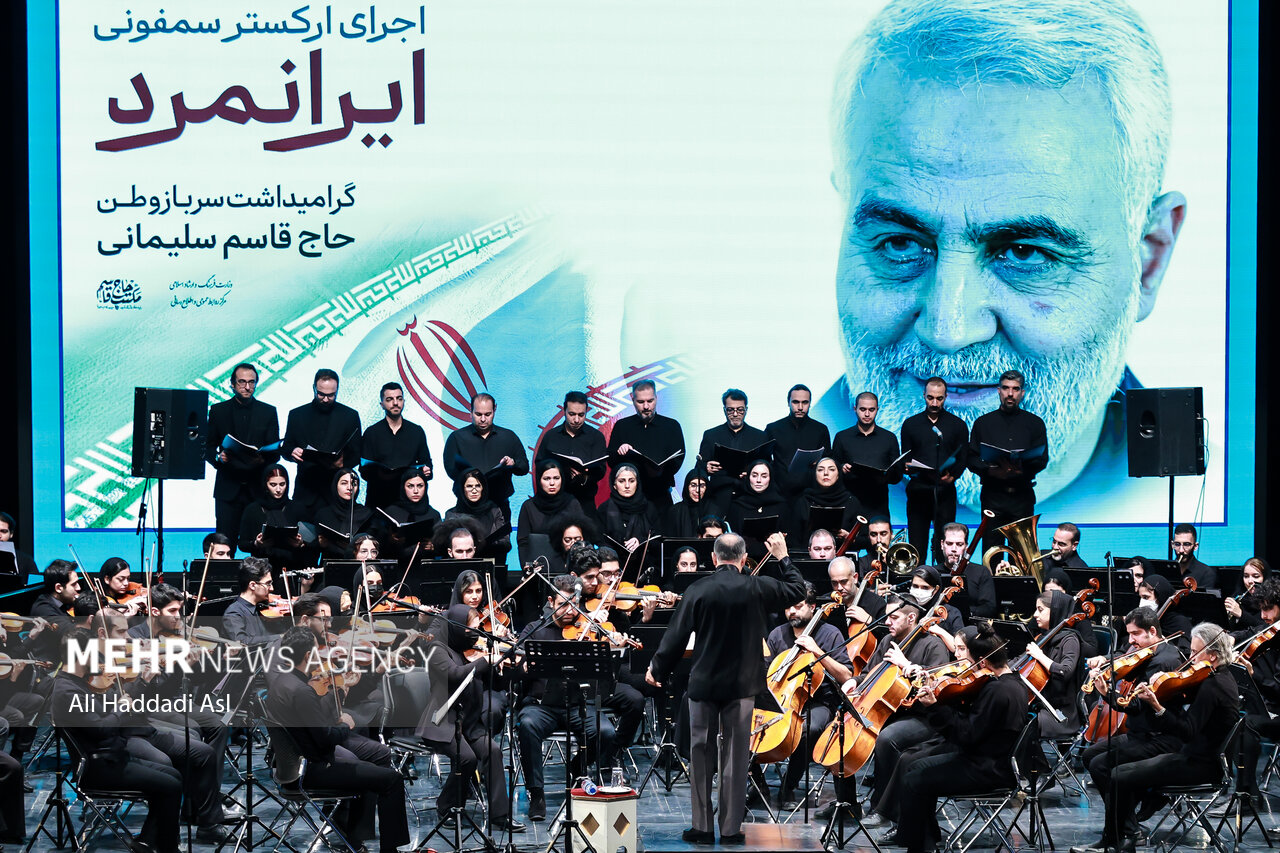
- Tehran Symphony Orchestra performed the ‘Iranmard’ symphony at Vahdat Hall on 30 December 2025 to mark the anniversary of General Qasem Soleimani.
- Senior cultural and military figures, including Minister Seyed Abbas Salehi and Sardar Iraj Masjedi, attended alongside Zainab Soleimani.
- The performance sought to blend state commemoration with cultural expression, drawing a large audience and official recognition.

The Tehran Symphony Orchestra performed the ‘Iranmard’ symphony at Vahdat Hall on Tuesday morning, 30 December 2025, in a concert held to mark the anniversary of the death of General Qasem Soleimani. The event attracted senior officials and family members of the late commander, underlining the role of state-sponsored cultural events in national remembrance.
Iranmard symphony honours a national figure
The concert opened in the presence of Seyed Abbas Salehi, Iran’s Minister of Culture and Islamic Guidance, Sardar Iraj Masjedi, deputy coordinator of the Quds Force, and Zainab Soleimani, daughter of the late General Qasem Soleimani. The programme presented the work known as ‘Iranmard’, performed by the full orchestra to a large audience in the capital’s principal concert venue.
Organisers said the performance was arranged to coincide with the anniversary and to provide a formal space for public commemoration through music. The Tehran Symphony Orchestra, one of the country’s oldest and most prominent ensembles, delivered a programme intended to reflect the solemnity of the occasion while offering artistic expression within a public setting.
Public response and official significance
Attendees included cultural officials and military representatives, signalling the event’s dual status as both cultural and state remembrance. Members of the public filled the hall, and reports from the venue described a respectful atmosphere. The presence of senior officials underscored the government’s support for events that mark national moments through cultural forms.
While the concert did not centre on political speeches, the choice of repertoire and the invited guests made clear the context of remembrance. Music offered a means to commemorate a figure who remains central to recent Iranian history, and the ‘Iranmard’ symphony functioned as a focal point for collective reflection.
Artistic and cultural context
The Tehran Symphony Orchestra has a long history of staging high-profile concerts that intersect with national events. The performance of the ‘Iranmard’ work continues a practice in which cultural institutions participate in commemorations with artistic programmes. For many in attendance, the concert provided a space to observe the anniversary outside the framework of political ceremony.
Observers noted that cultural presentations such as this can shape public memory by offering a shared experience that emphasises emotion and remembrance. At the same time, these events reflect official priorities about which moments are marked publicly and how the arts are mobilised in service of national narratives.
As the final movements concluded and the audience applauded, the concert served its immediate purpose: a public act of commemoration that brought together state representatives, family members and citizens. The Tehran Symphony Orchestra’s performance of the ‘Iranmard’ piece thus stands as a notable example of contemporary Iran’s blending of cultural life and national remembrance.








