











Key Takeaways:
- Telangana outlines a 2026 roadmap to raise service and hospitality standards and attract longer stay visitors.
- Officials propose a two-way cultural exchange to connect rural and urban communities and showcase tribal traditions.
- Telangana global tourism hub strategy focuses on 48-hour minimum stays, multilingual guides and targeted promotions in IT corridors.

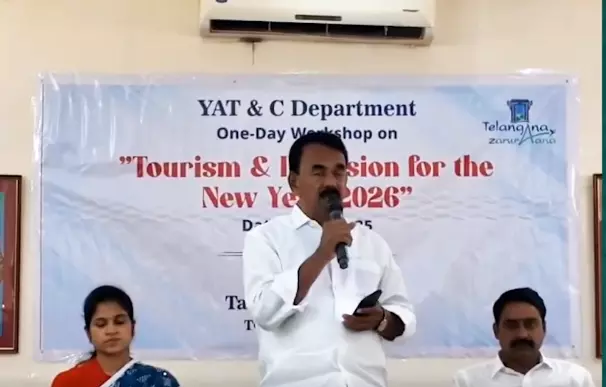
Telangana’s tourism minister, Jupally Krishna Rao, has called for a decisive shift in the State’s approach to tourism, urging officials to adopt international standards and position Telangana as a premier global destination. Speaking at a brainstorming workshop entitled ‘Tourism and Its Vision – 2026’ organised by the Telangana Tourism Development Corporation (TGTDC) at the Taramati Baradari Cultural Complex, the minister underlined the need for bold reforms and guaranteed full government support for the initiative.
Telangana global tourism hub plan to extend visitor stays
Mr Rao set a clear objective: to move away from transit tourism and encourage longer stays, with a target minimum of 48 hours per visitor. He told officials that the State should compete with established destinations and aim to surpass leaders in hospitality by improving accommodation, food and transport services without compromise.
The workshop began with the traditional lamp-lighting ceremony and the unveiling of the TGTDC Table Calendar – 2026, which the minister described as a strategic milestone for the department’s future roadmap. He said Telangana need not reinvent itself; nature, history and culture already provide a strong foundation. The priority, he added, is to refine and package those assets more effectively for national and international audiences.
Two-way cultural exchange to bridge rural and urban divides
A key proposal from the minister’s address was a two-way cultural exchange designed to introduce urban and international visitors to authentic rural and tribal lifestyles, cuisines and traditions. In turn, the programme will expose rural populations to urban growth, including visits to heritage sites, historic landmarks and modern infrastructure such as metro rail systems.
The initiative aims to deepen visitor engagement and create authentic experiences that encourage longer stays. Mr Rao also urged the development of cultural skits and performances as part of promotional efforts, and recommended aggressive campaigns in IT corridors, shopping centres and educational institutions to raise visibility among potential tourists.
Training and human resources formed another pillar of the 2026 vision. The minister called for the creation of a new cadre of skilled, multilingual guides to remove language barriers and enhance the visitor experience. Officials from the National Institute of Tourism and Hospitality Management (NITHM) were present at the workshop and will play a central role in delivering training and curriculum updates.
Attendees included TGTDC Chairman Patel Ramesh Reddy; Managing Director Kranti Valluru; NITHM Director Venkataramana; Archaeology Director Dr Arjun Rao; district tourism officers; Haritha Hotel unit managers; and staff from the NITHM and heritage departments. In recognition of contributions to the vision, the minister presented appreciation certificates to a number of officers and staff for their strategic suggestions and dedication.
Officials were directed to work in tight coordination to implement the reforms ahead of 2026. With government backing and a focused campaign to upgrade services and promote authentic experiences, Telangana seeks to convert its cultural and natural assets into a sustainable tourism economy that attracts longer-staying international and domestic visitors.








